
2,030 trillion won for Pyeongtaek-Yongin semiconductor cluster
425 trillion won for Gwangju chip fab and Haenam AI data center
140 trillion won for Chungcheong HBM fab and Asan display plant
60 trillion won for Gumi smartphone mother factory and Busan MLCC hub
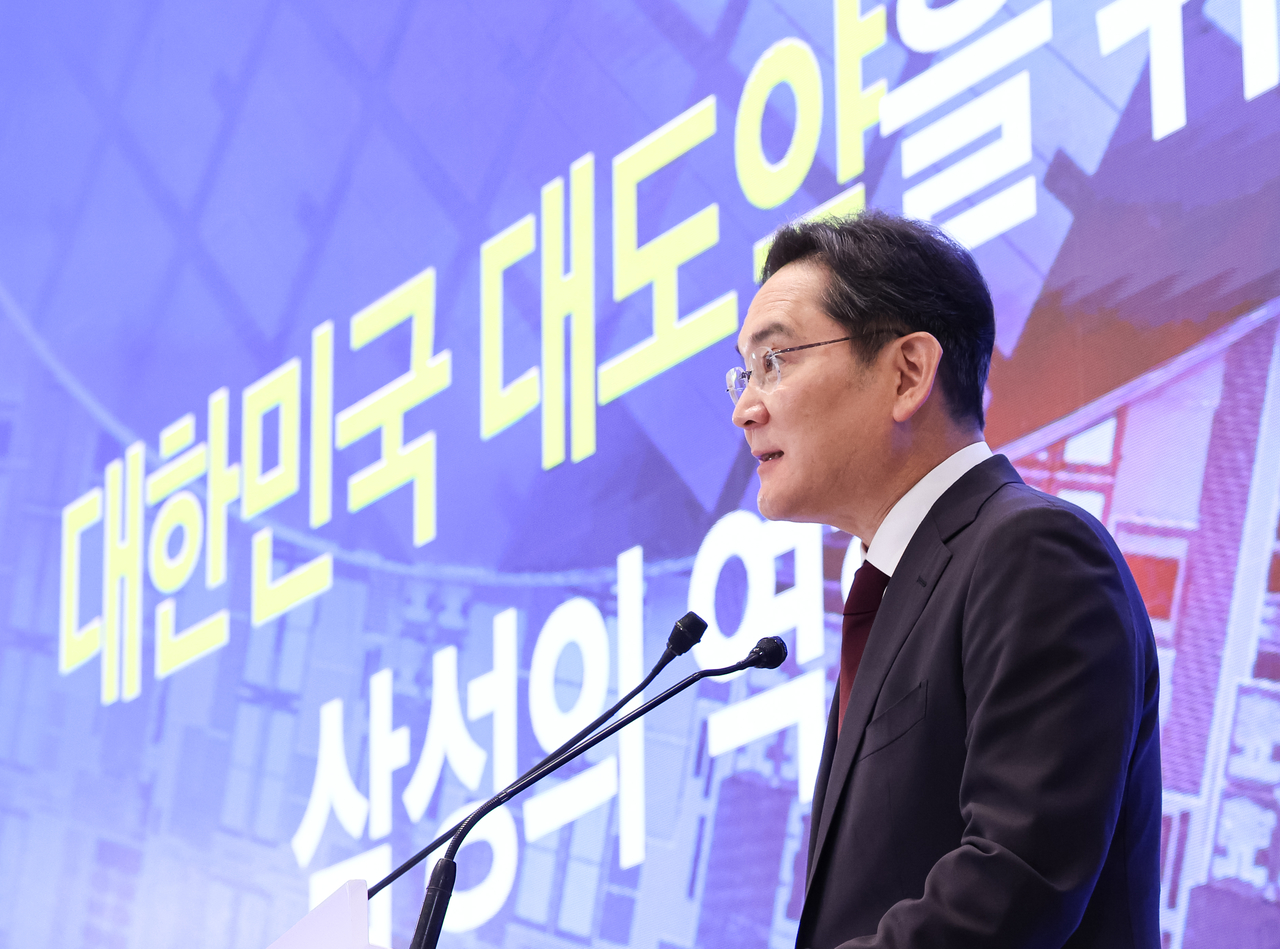
Samsung Electronics said Sunday it will invest a total of 2,655 trillion won (approximately $1.72 trillion) across the Honam, Chungcheong and Yeongnam regions and beyond to nurture future industries — spanning AI semiconductors, robots, batteries and IT components and materials — with the aim of transforming South Korea into a globally competitive advanced manufacturing cluster.
"To proactively respond to the technology paradigm shift occurring at an unimaginable speed in the AI era and to strengthen our future competitiveness, we will invest 2,655 trillion won domestically," the company said.
Of that total, 2,030 trillion won will go toward building out the semiconductor cluster anchored by the Pyeongtaek campus and the Yongin National Industrial Complex, while 625 trillion won will be directed to the Honam, Chungcheong and Yeongnam regions, focused on AI semiconductors, robots, batteries, and IT components and materials.
The Honam region will receive the largest share, at 425 trillion won. Samsung Electronics plans to invest 400 trillion won in the construction of two new semiconductor fabs in Gwangju to establish a world-class semiconductor cluster there.
Chairman Lee Jae-yong, speaking at the "Three Major Mega-Projects National Report to the People" event at the Cheong Wa Dae banquet hall on Sunday, explained the rationale behind the investments. "The market's view is that even with aggressive investment by chipmakers, it is not enough to meet explosive demand as AI drives technology paradigm shifts at an unimaginable pace," he said. "The investment timeline for the Yongin National Industrial Complex — following Giheung, Hwaseong and Pyeongtaek in Gyeonggi Province — has been significantly accelerated, and the point at which we need to prepare a new complex has also been moved up."
He added that Gwangju had been selected as the candidate site given the strong incentive support expected there, including power, water, workforce and various infrastructure. Once the Gwangju semiconductor cluster is established, it is expected to become one of two core clusters driving South Korea's semiconductor industry alongside the greater Seoul metropolitan area.
Samsung also plans to build an innovation hub factory at its Gwangju site based on digital twin technology for smart home appliances, and to set up production facilities for heat pumps and air-handling units needed for AI data centers.
In Haenam, Samsung SDS will construct the Solaseado AI Data Center to secure sovereign AI infrastructure. The facility is expected to serve as the government's AI transformation (AX) support headquarters — backing AX initiatives in finance, defense and public services — while also strengthening R&D capabilities at universities, research institutes and companies, and acting as a hub for industrial physical AI support and the creation of related industry ecosystems.
Concentrated investment is also planned to secure carbon-free future energy for the Honam region. Samsung C&T will invest in solar power generation facilities, nuclear-based hydrogen production plants and a demonstration complex for green hydrogen R&D in Honam. Samsung Electronics plans to build a state-of-the-art global logistics center in Gochang, North Jeolla Province.
140 trillion won for Chungcheong as semiconductor packaging hub; 60 trillion won for Yeongnam to integrate AX and robotics into manufacturing
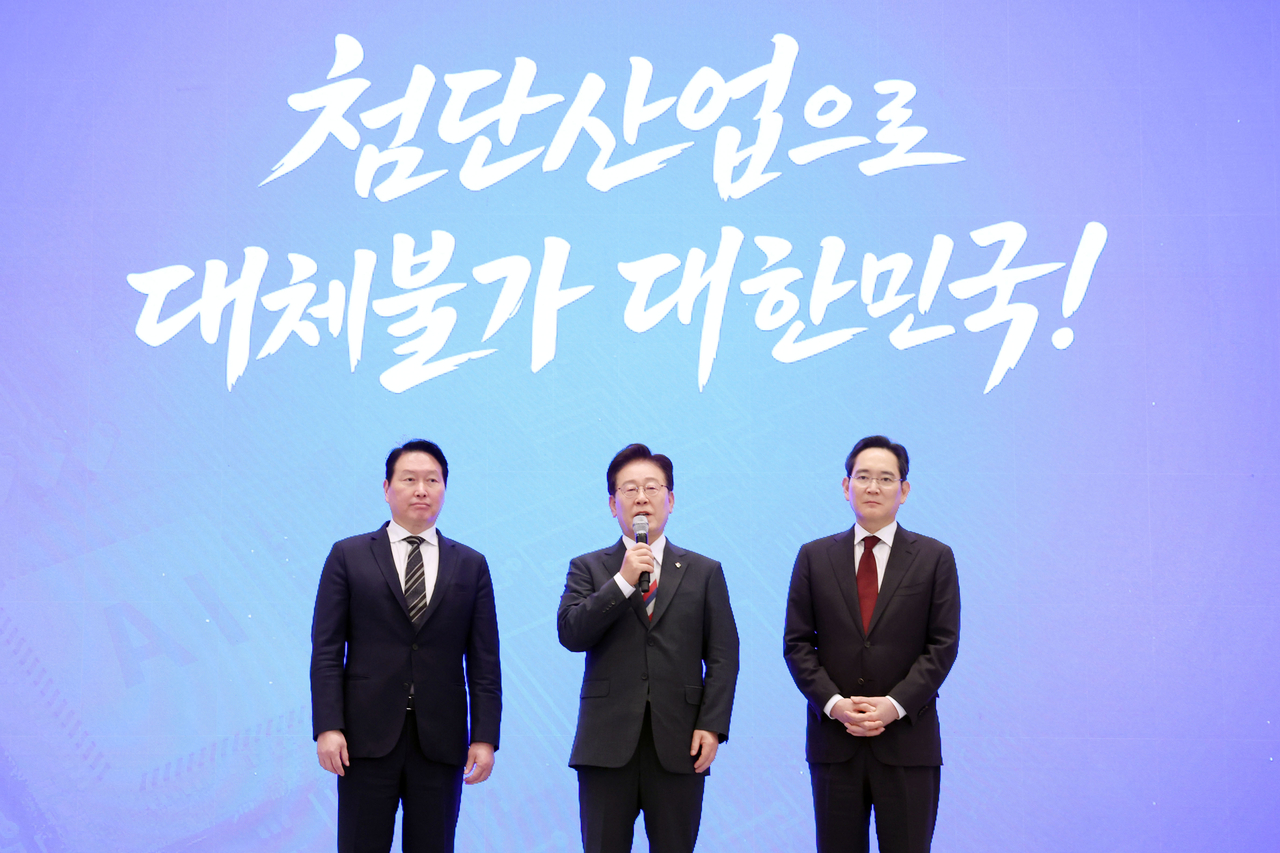
The Chungcheong region will receive 140 trillion won in investment, including funds to develop it as a semiconductor packaging hub. Samsung Electronics plans to spend about 56 trillion won in Cheonan and Onyang to build a cutting-edge HBM fab.
In Asan, Samsung Display will invest about 67 trillion won to construct a production base for next-generation smartphone displays — including foldable panels — and ultra-high-resolution micro displays. In Cheonan, Samsung SDI will establish a global mother factory for next-generation batteries, while Samsung Electro-Mechanics will set up an advanced AI server package substrate line in Sejong.
The Yeongnam region will also receive 60 trillion won in investment, aimed at integrating AX and robotics transformation (RX) into key manufacturing industries to strengthen their role as engines of the national economy.
In Gumi, Samsung Electronics will build a mother factory to serve as an innovation hub for global smartphone manufacturing, along with mass-production lines for physical AI and humanoid robots, while Samsung SDS will construct an AI data center.
In Busan, Samsung Electro-Mechanics will expand investment in a leading production hub for multilayer ceramic capacitors (MLCC) for next-generation IT devices and automotive applications, as well as advanced package substrate production.
In Ulsan, Samsung SDI will invest in next-generation all-solid-state batteries and batteries for energy storage systems (BESS), while Samsung Heavy Industries will develop a high-value-added shipbuilding hub in Geoje.
go@heraldcorp.com





