Kim Jung-nam, city's first progressive mayor, outlines agenda at inaugural press conference
"Gyeongpo Ramsar wetland registration, live-streamed mayor Q&A sessions planned"
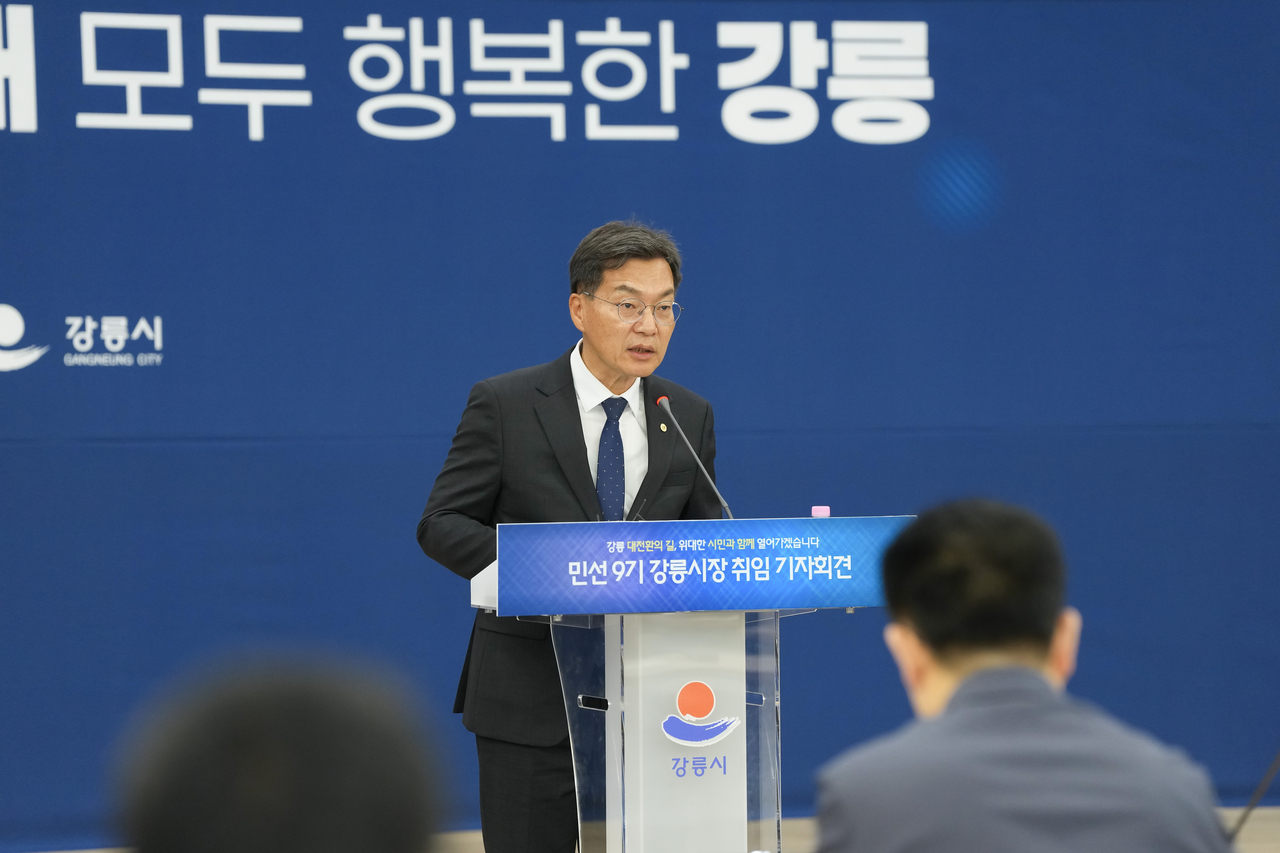
Gangneung Mayor Kim Jung-nam said Wednesday he would pursue a "great transformation" of the city through biotech, renewable energy, the registration of Gyeongpo as a Ramsar wetland, and a plan to develop Gangneung into a "philosophy city."
Kim, the first mayor from a progressive camp to take office in Gangneung since the introduction of civilian local elections, said at his inaugural press conference that he felt a deep sense of responsibility in response to "the citizens' solemn mandate to breathe dynamic vitality into a stagnant Gangneung." He said he would relocate the mayor's office to the first floor of city hall to engage with residents at eye level and make citizen happiness the top priority of his administration.
The city's governing slogan was set as "A future we change together, a Gangneung where everyone is happy." Kim said he would reflect citizens' voices in policy and realize a "great transformation of Gangneung" that changes people's lives.
Under the banner of an "open city that walks with its citizens," Kim outlined the following priorities: relocating the mayor's office to the first floor, establishing a press briefing room, pursuing a Yeongdong-area megacity initiative, live-streaming city council meetings in real time, and reorganizing advisory committees to incorporate public input. For a "healthy and warm city of reassurance," the agenda includes issuing emergency relief payments to all residents, launching a service called "Haedeurim" to address daily inconveniences faced by senior citizens, expanding a mobile health care program for senior centers staffed by traditional Korean medicine doctors and other practitioners, building a reliable emergency and essential medical care system for children and adolescents, and drawing up a comprehensive plan to improve working conditions and protect the rights of social welfare facility workers.
Under the "healing city that embraces nature" pillar, Kim said the city would pursue registration of Gyeongpo as a Ramsar wetland, develop a premium coastal stretch from Yeongjin to Jumunjin, convert the Doam Dam to a pumped-storage hydropower facility to secure water resources, foster the renewable energy industry, and seek designation as a distributed energy special zone.
For the "creative city connecting the world" category, Kim presented plans to create jobs through fair cultural administration and the cultural industry, develop Gangneung into a philosophy city centered on its historical figures, prioritize a gastronomic creative city and culinary tourism, foster a globally competitive MICE industry, and build the city into a top four-season sports city capable of hosting international competitions. Under the "young city full of opportunity" pillar, he proposed building an AI data center cluster, establishing a new KTX station at Nam-Gangneung, developing a national industrial complex for natural-product biotech in Gujeong, building a youth-settlement governance structure and platform in partnership with local universities, supplying youth housing, and developing Gangneung into a startup-friendly city for young entrepreneurs.
On civic culture, Kim said the city would eliminate wasteful practices — including ceremonial formality for appearances' sake, unnecessary event mobilization and a perfunctory reporting culture — through a bold "work diet," lower the threshold for civic engagement by opening the mayor's office and live-streaming key meetings, normalize the operation of the press briefing room, and diversify communication channels to guarantee citizens' right to know.
He added that an organizational restructuring in the second half of the year would establish and reorganize departments dedicated to key priorities of the ninth civilian administration, including AI and advanced industries, to strengthen the execution of campaign pledges.
abc@heraldcorp.com