Chairs export forum for South Jeolla and Gwangju firms
Hears grievances from 11 regional companies
Requests include foreign skilled-worker visas, SMR tax support, overseas marketing expansion
Visits Wooseong Jeonggong production facility
Checks export competitiveness of foundational industries
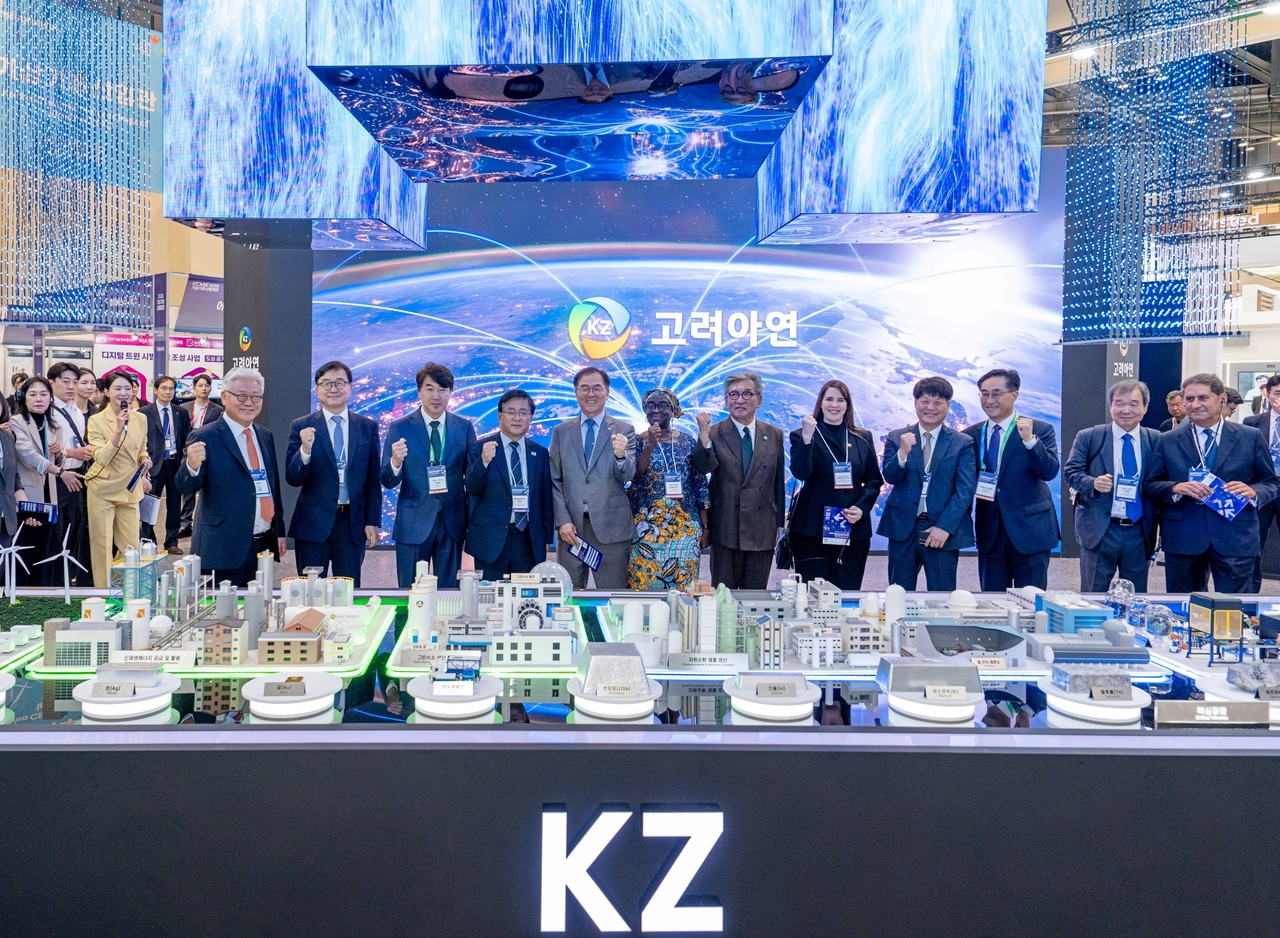
![Korea International Trade Association President Yoon Jin-sik poses for a photo with representatives of regional export companies at the South Jeolla-Gwangju Export Companies Forum held at the Holiday Inn Gwangju on July 2. [Korea International Trade Association]](https://wimg.heraldcorp.com/news/cms/2026/07/02/news-p.v1.20260702.e70a482a53c148248fb4f57aa53afab4_P1.jpg)
Korea International Trade Association President Yoon Jin-sik met with export companies from South Jeolla Province and Gwangju on July 2 to hear firsthand about their difficulties, including securing foreign skilled workers, obtaining tax support for small modular reactors and expanding overseas marketing. The association said it plans to relay the companies' concerns to the government and relevant agencies so they can be reflected in policy and regulatory improvements.
The Korea International Trade Association held the South Jeolla-Gwangju Export Companies Forum at the Holiday Inn Gwangju, chaired by Yoon. The forum was organized to assess the export competitiveness of the region's key industries and discuss ways to expand exports as South Jeolla Province and Gwangju move toward administrative integration into a unified special city.
Yoon has been visiting regional export hubs in line with the government's "5 Poles, 3 Specials" national balanced development strategy. He started with Jeju on June 24, visited the Honam region on July 2, and is scheduled to travel to Busan on July 22 to hear from local businesses.
The forum was attended by the heads of 11 export companies specializing in South Jeolla and Gwangju's key industries, including Park Hwa-seok, chief of Wooseong Jeonggong Co. and chairman of the Gwangju-South Jeolla Business Council, as well as representatives from S.D.M Co., Food Korea Co., Mujin Giyeon Co. and Eunhye Gieop Co. Before the forum, the association also toured Wooseong Jeonggong's production facility to inspect operations in foundational industries such as mold injection.
In his opening remarks, Yoon thanked the business leaders for their commitment to exports "amid a complex business environment marked by the spread of protectionism, supply chain restructuring and the accelerating AI transition." He added that the association would serve as "a reliable bridge to ensure that the difficulties companies face — such as overseas market diversification, logistics costs and workforce shortages — are fully reflected in policy and regulatory improvements."
Participating companies raised a range of requests: streamlining the hiring process for foreign skilled workers, designating SMRs as a national strategic technology, boosting seafood exports, expanding technology transfers to small and medium-sized enterprises, increasing the use of retreaded tires, easing free trade agreement and customs clearance difficulties, addressing disruptions to Middle East exports, and expanding overseas marketing support in Europe.
Labor shortages emerged as one of the most pressing concerns. Participants noted that developing skilled workers in sectors such as mold manufacturing takes years, while fewer young people are entering the field and the existing foreign skilled-worker visa system is failing to keep pace with demand on the ground.
"Some industries, including mold manufacturing, require more than 10 years to train skilled workers, but workforce development is difficult because young people are avoiding these fields," participants said. They added that the E-7-4 visa for foreign skilled workers carries only a two-year validity period and involves strict screening, leading to frequent turnover that undermines the continuity of skills transfer.
In response, Yoon said that "securing skilled workers in foundational industries within the manufacturing supply chain — such as mold manufacturing — is a critical foundation for maintaining the productivity and export competitiveness of domestic manufacturing." He said the association would convey the difficulties foundational industries face in hiring skilled workers to the government and push for regulatory improvements, including extending the foreign skilled-worker visa validity from two years to three to five years and simplifying the screening process.
Tax support for SMRs was also a major agenda item. Participants pointed out that SMRs, which can provide stable power supply in an era of AI competition, are currently excluded from the list of national strategic technologies under the Restriction of Special Taxation Act, limiting tax support for investment and research and development.
Yoon said the association would urge the relevant ministries and the National Assembly to move quickly on the matter, noting that related legislation is already under way in the Assembly.
The association plans to deliver the requests raised at the forum to the government, the National Assembly and relevant agencies, and to follow up on the outcomes. It will also regularly assess export-related difficulties across regions and explore sector-specific support measures covering workforce, customs clearance, logistics and overseas marketing.
kwater@heraldcorp.com