New AI and industrial safety subcommittees to identify workplace challenges
Hiring algorithm bias, shifting job prospects for women in clerical work among key topics
The Ministry of Employment and Labor will significantly expand the role of its Gender Equality Committee to address labor market changes driven by the spread of AI, moving the body beyond a purely advisory function to one that actively identifies gender-equality policy tasks in the field and issues recommendations to the government.
The ministry said Thursday it adopted a plan to restructure the Gender Equality Committee at its second plenary session of 2026, chaired by Vice Minister Kwon Chang-jun.
Under the revamped structure, the committee — which had previously been limited to receiving progress reports on the ministry's gender-equality initiatives and offering opinions — will form subcommittees on key issues such as the AI transition and industrial safety. Those subcommittees will hold field consultations and gather expert input before identifying policy improvement tasks and submitting formal recommendations to the ministry.
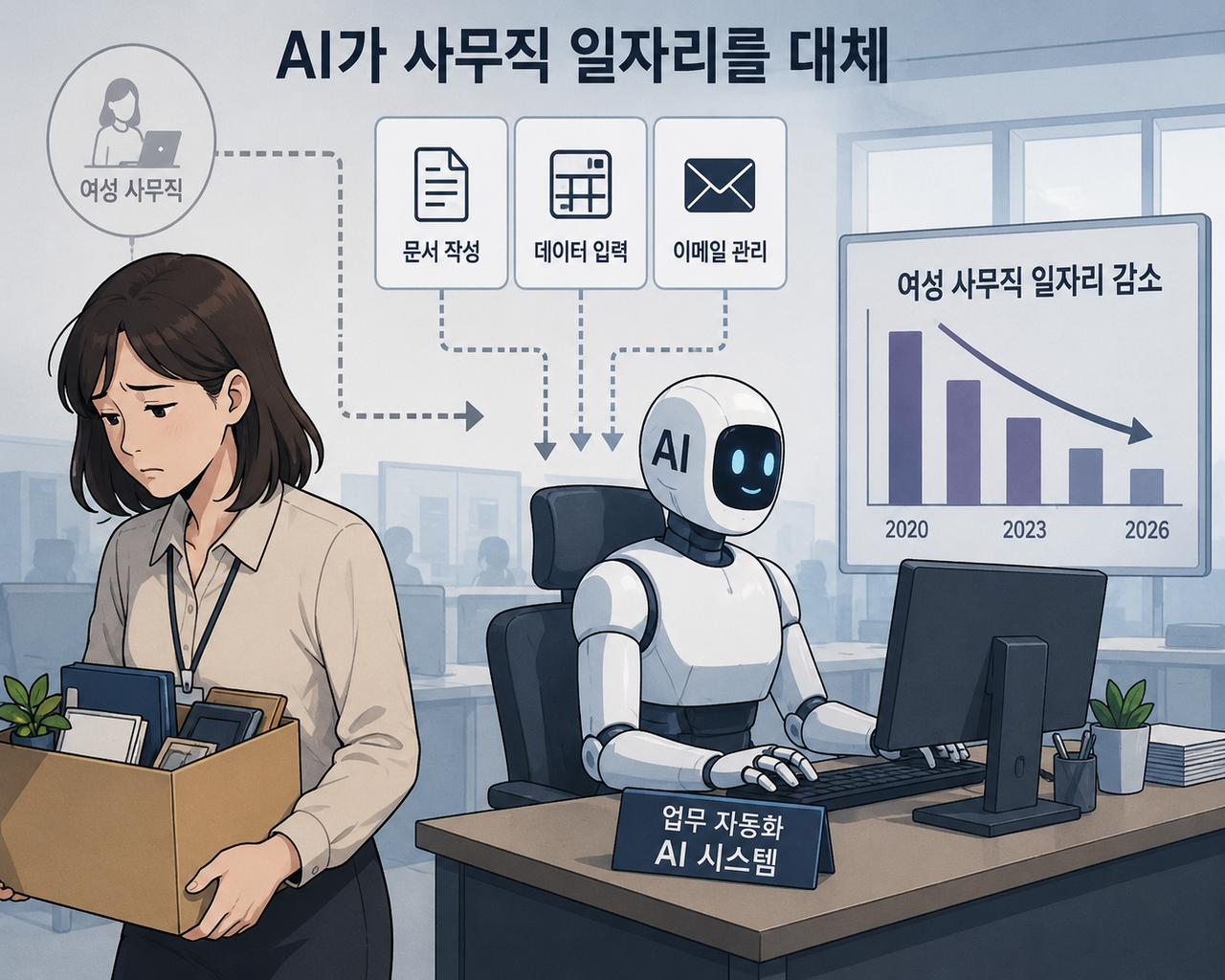
The ministry will first focus discussions on how the AI transition is affecting the labor market, examining shifts in corporate hiring demand, changes in recruitment and job placement practices, and gender bias embedded in AI training data. It plans to later expand the agenda to industrial safety challenges in sectors with a high proportion of female workers, including emotional labor and care work.
At Thursday's meeting, Jang Ji-yeon, a researcher at the Korea Labor Institute, presented on the theme "Whose jobs does AI change?"
Jang said that overseas, women show higher occupational exposure to AI while men show higher rates of actual AI use — a divergence that is widening the gender wage gap. "In South Korea, AI's impact on employment still appears to vary more by age than by gender," she said, "but there is a notable slowdown in hiring in clerical work — traditionally a key entry point for women — making it necessary to explore alternative pathways into the workforce."
Kwon Oh-sung, a professor at Yonsei University, warned that bias in algorithms and training data used in AI-driven hiring could reproduce existing gender discrimination, and called for the institutionalization of bias audits and disclosure requirements. "What is particularly problematic in AI recruitment is not the employer's explicit intent to discriminate, but the way the structure of training data and variable selection reproduces existing gender inequality," Kwon said. "Because data and algorithmic bias, along with opaque decision-making, can lead to employment discrimination, we need to institutionalize bias audits and information disclosure."
Vice Minister Kwon Chang-jun said a gender-sensitive perspective — recognizing that policy outcomes can differ not only by company size and employment type but also by gender — is essential. "We will gather broad input from field experts and work to build a labor market where everyone can work free from discrimination," he said.
fact0514@heraldcorp.com