![The gate pillar of the Sindang-dong tteokbokki food street [Courtesy of Seoul Museum of History]](https://wimg.heraldcorp.com/news/cms/2026/07/07/news-p.v1.20260707.479d90ad32044ecf885098df6c1f0b9c_P1.jpg)
Sindang-dong, just east of Dongdaemun in central Seoul, has earned a new nickname: "Hipdang-dong." The term "hip place" carries roughly the same meaning as "hot place," a phrase that was widely used about a decade ago.
Sindang-dong's cool credentials stretch back to the 1980s, when tteokbokki restaurants with resident DJs clustered in the neighborhood. As café culture eclipsed the teahouse DJs who had been popular in the 1970s, Sindang-dong's tteokbokki joints — where diners could enjoy spicy rice cakes while listening to a DJ's banter — drew bigger crowds than the old DJ teahouses ever had. It was a remarkably inventive idea for its time.
The neighborhood's fame spread further when comedian Jang Du-seok, one of the biggest stars on weekend variety television, recorded a song called "Sindang-dong Tteokbokki Restaurant." The song later became the subject of a copyright dispute after an unknown composer claimed authorship. Those seven syllables alone were enough to stir a wave of nostalgia in anyone who heard them.
Long known for its hip sensibility, Sindang-dong has now acquired the formal nickname "Hipdang-dong" as atmospheric cafes, curio shops and original design studios have moved in, drawing a new generation of young visitors from Korea and abroad.
The neighborhood's appeal, however, runs deeper than any recent trend — it holds layers of history that no single fashion can fully explain.
Beneath Sindang-dong's reputation for fresh ideas lies a much older identity: the neighborhood was once a dense settlement of shamans who served a pantheon of deities.
The Seoul Museum of History on Tuesday released a report titled "Sindang-dong: Spirits, New Beginnings, Hip" as part of its Seoul Lifestyle and Culture Survey series. The report analyzes the neighborhood through three keywords — "shin" (spirits/deities), "shin" (new) and "hip" — tracing how a single place accumulated such distinct layers of meaning.
The report carefully reconstructs the trajectory by which a space that straddled life and death in the Joseon era established a modern urban structure through the Japanese colonial period and liberation, ultimately evolving into one of Seoul's most distinctive neighborhoods.
Sindang-dong was originally a space of healing and consolation.
According to the Seoul Museum of History, the very name Sindang-dong contains the word "sindang," meaning "a house where deities are enshrined."
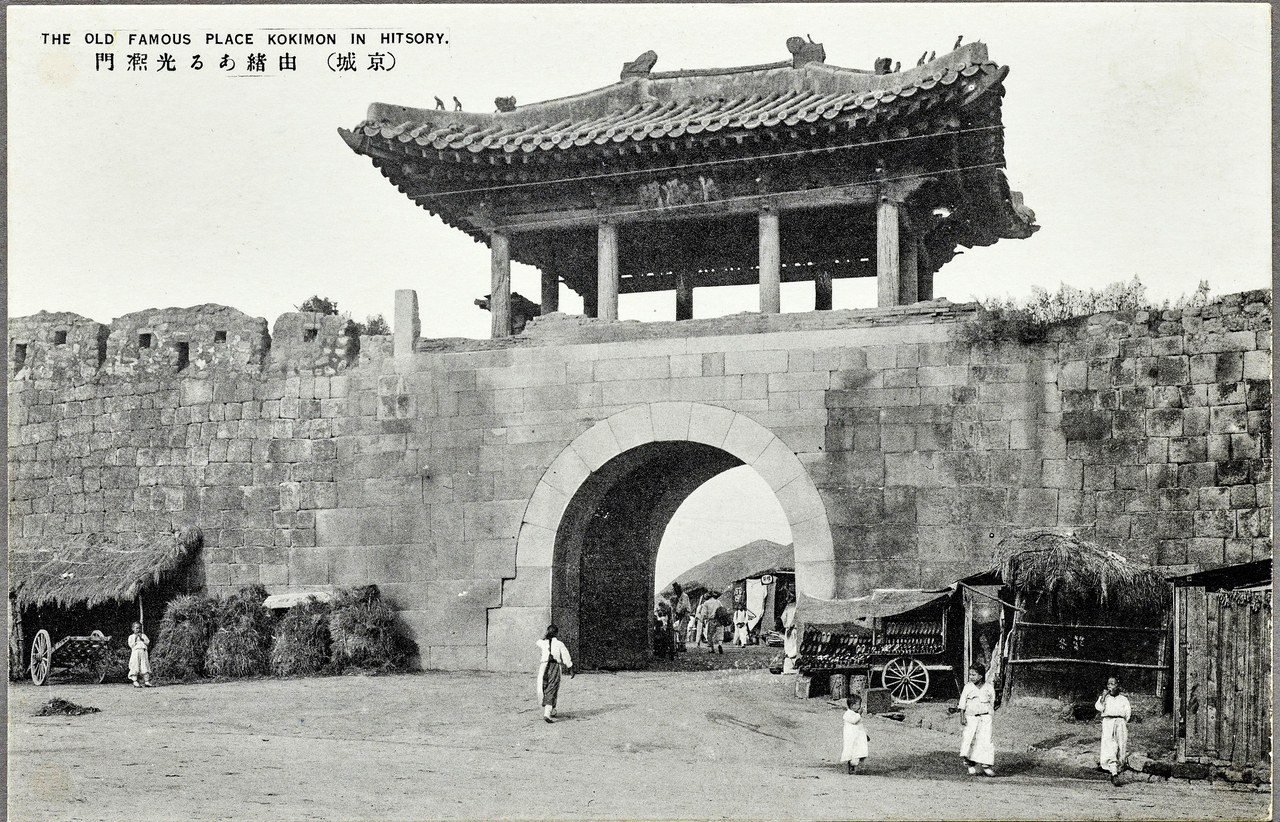
Outside Gwanghuimun gate — also known as Sigumun, the "corpse gate" — in the Joseon era, the city's dead were carried out through the walls, and a public relief institution called Donghwalimseo cared for the sick.
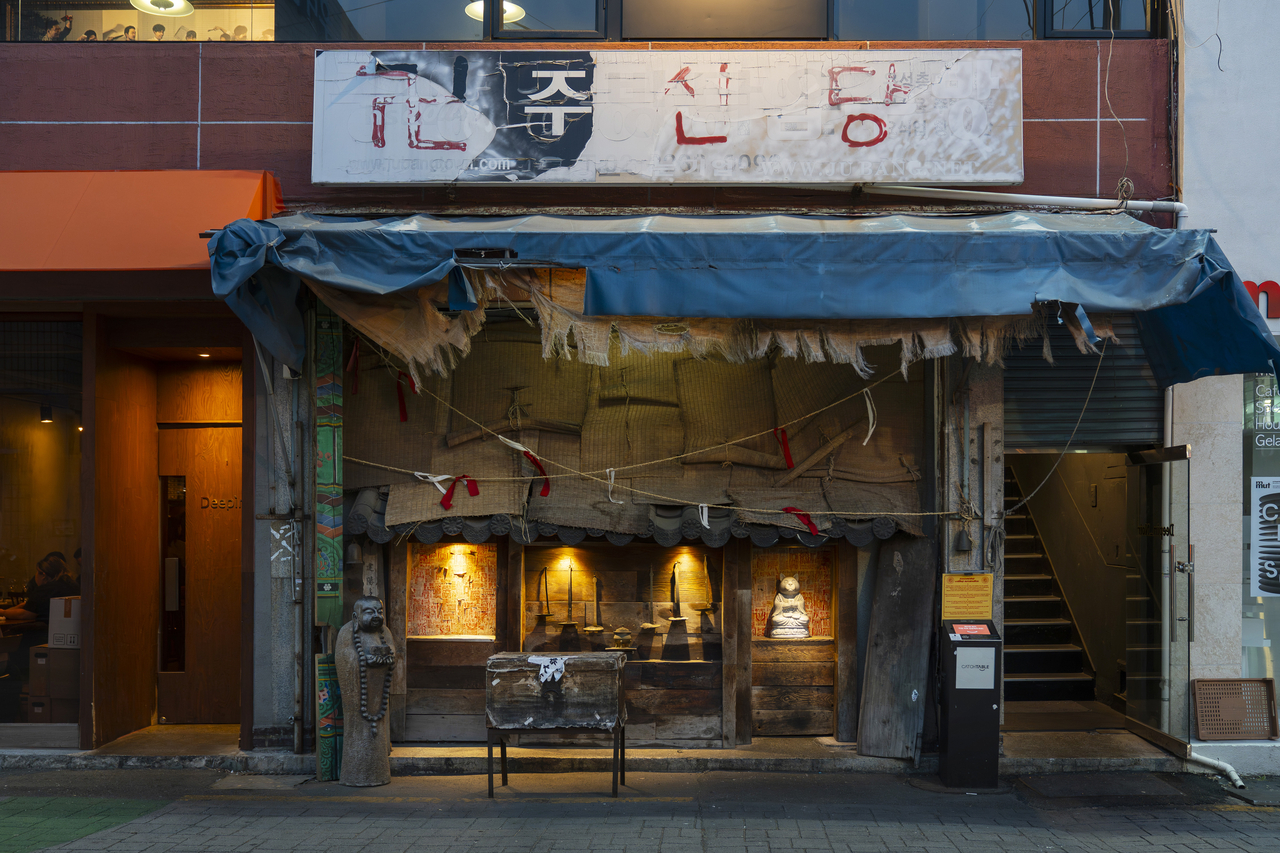
Shamans, who were barred from living inside the city walls, gathered near Donghwalimseo and formed a village of their own. They turned the area into a space of healing — curing the illnesses of the living and soothing the spirits of the dead.
After the Gabo Reform of 1894, the Chinese character for "deity" in the neighborhood's name was replaced with the character for "new," but the old identity lingered in place names: Mudang-gaul (Shaman Stream), Mudang-dari (Shaman Bridge) and Mudang-gogae (Shaman Pass) all preserved the memory of what had been there.
In the Joseon period, Sindang-dong was a hilly area outside the city walls, a mix of dense forest, communal graves and cremation grounds. Japanese colonial authorities erased or relocated those traces, laid roads, and rebranded the area as a "culture village" — engineering it as a residential district for Japanese settlers and a Korean middle class that had managed to accumulate some wealth under occupation.
After liberation, the Korean War sent the population soaring as refugees and Koreans returning from abroad flooded in. A land-readjustment project ultimately gave Sindang-dong the urban skeleton it has today.
Merchants from across the country then poured into the neighborhood, filling every alley with shops and building new lives with fierce determination. Over time, those alleys differentiated into four distinct commercial streets.
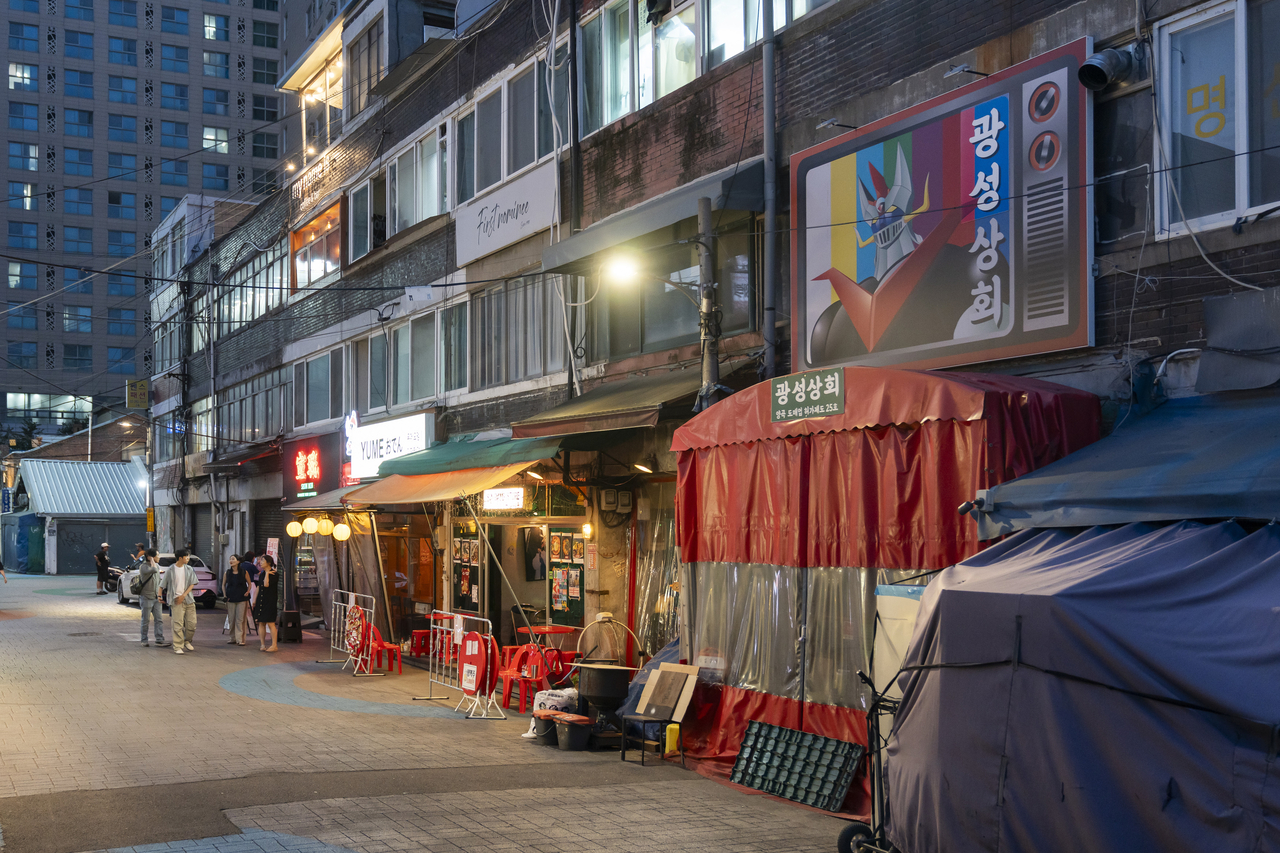
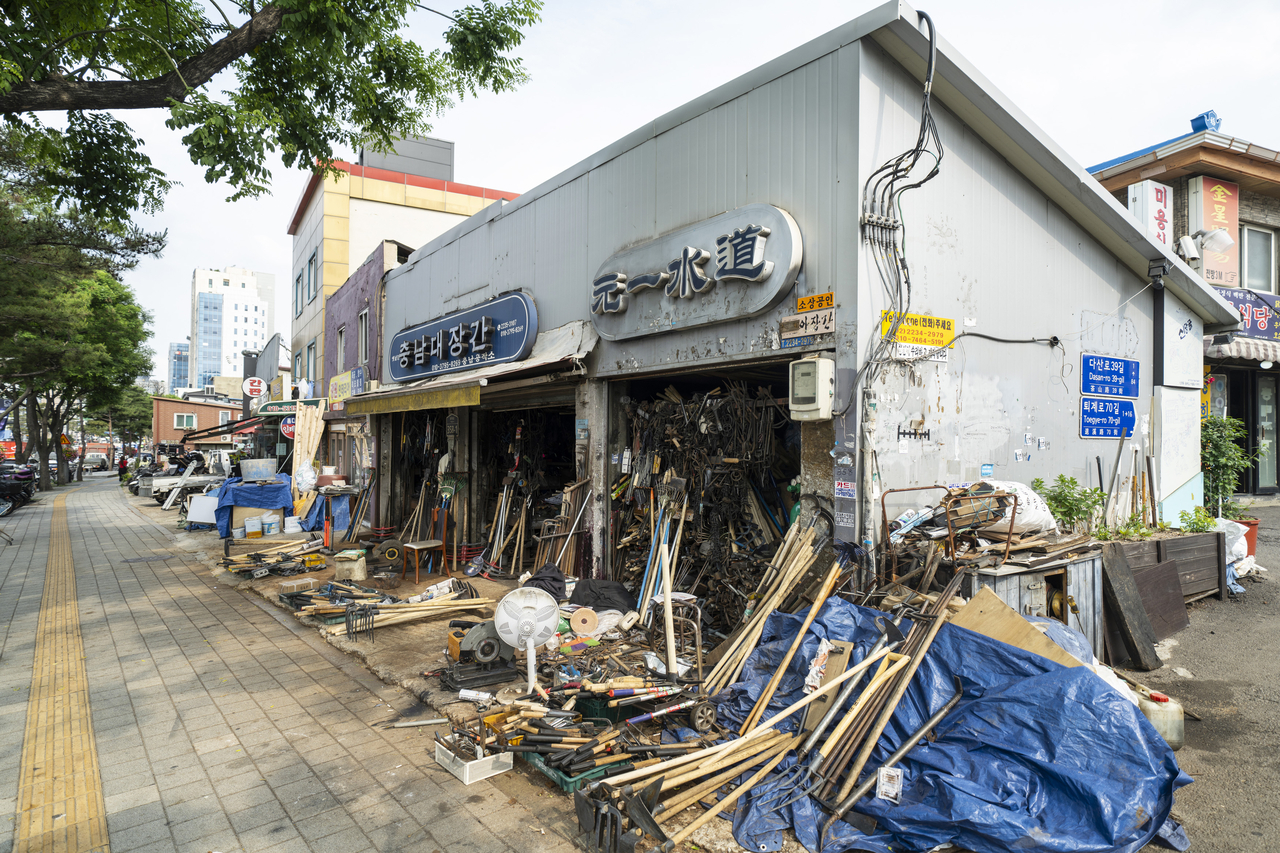
Youth creativity and technological innovation now fill the neighborhood's four alleys.
The most iconic are Ssajeon-geori — a rice-dealers' alley that grew up around grain merchants — and the tteokbokki alley, whose origins trace to the 1950s when Grandmother Ma Bok-rim began selling rice cakes in a distinctive sauce of gochujang and black bean paste, a recipe that made the street synonymous with Sindang-dong.
Two other streets round out the quartet. Gaemi Golmok, or Ant Alley, takes its name from the industrious residents of the 1950s and '60s shantytown who kept working steadily despite harsh conditions. The ironworks alley had more than 100 metal workshops by the late 19th century, went into decline after the disbandment of the Korean army in 1907, and then flourished again under Japanese colonial rule, earning a reputation as the capital of blacksmithing.
Today, Sindang-dong retains what is worth keeping from its past while younger residents transform the rest through ingenuity and technological innovation.
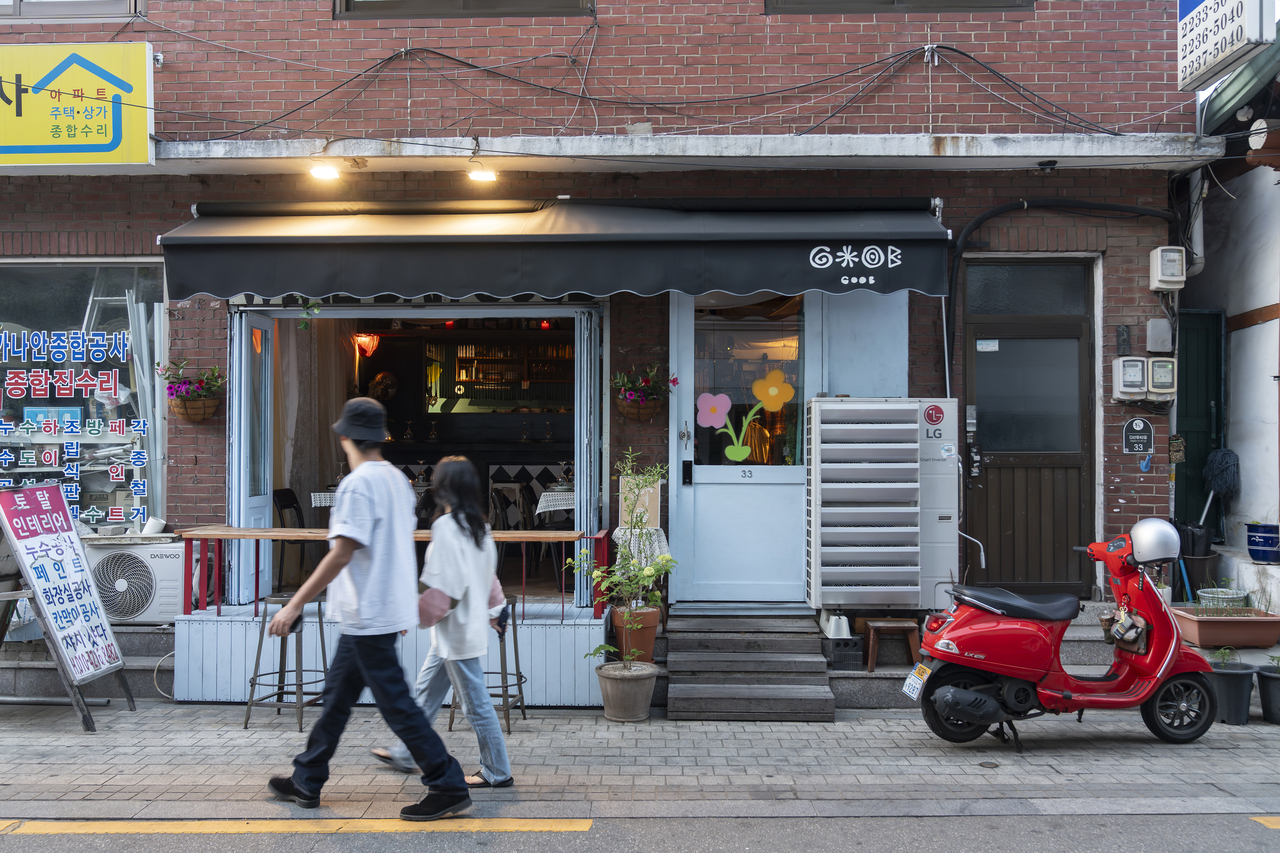
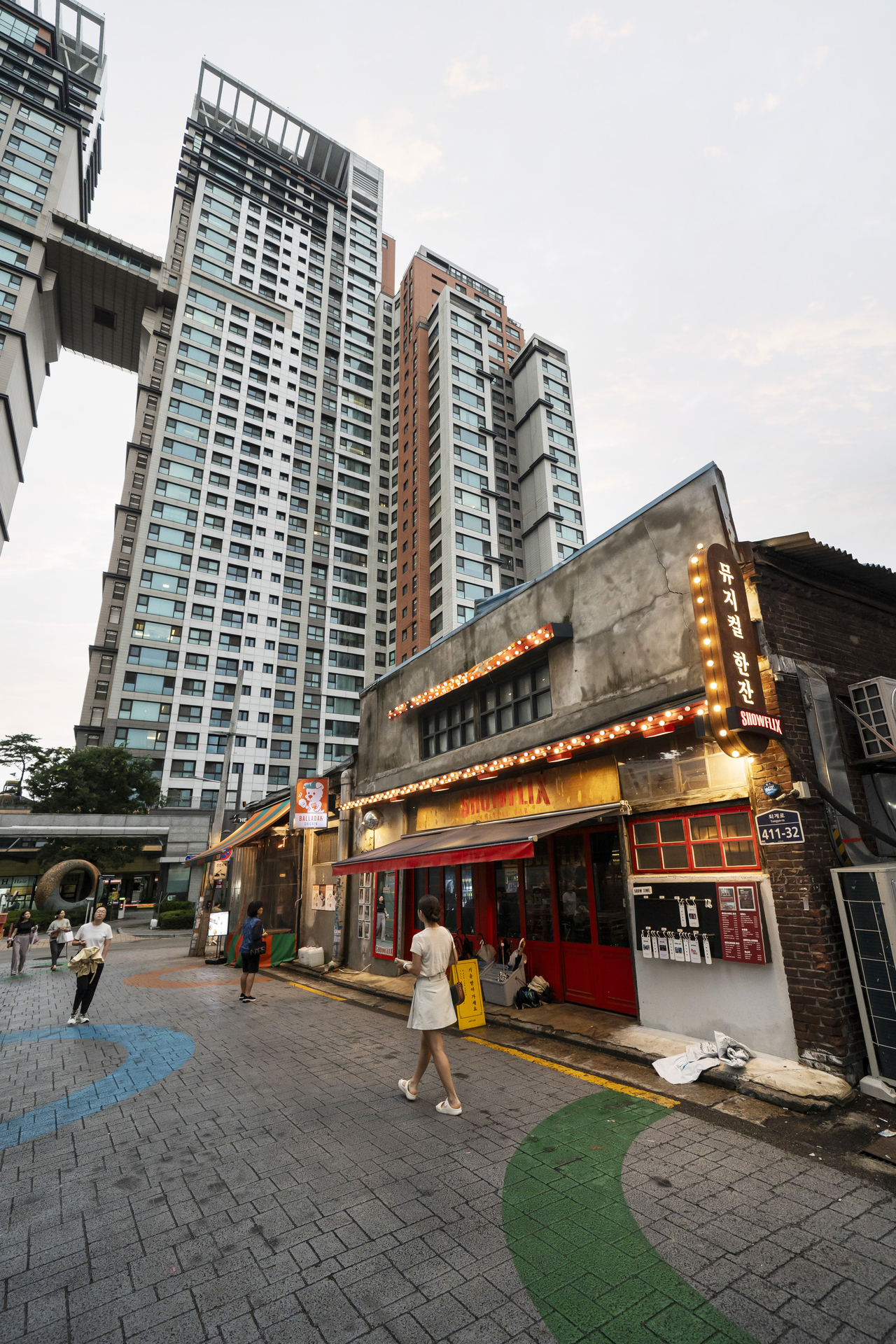
Western tourists have been visiting in noticeably greater numbers lately. A staff member at Grandmother Ma Bok-rim's House, the tteokbokki alley's most storied restaurant, said that while Asian visitors from Japan, China and elsewhere had long made up the bulk of the clientele, the trend has shifted. "As Sindang-dong has become known through overseas content, the number of Western tourists visiting has been on the rise," the staff member said.
Kwak Hyeon-geol, owner of Showflix, a musical pub in the neighborhood, said the proximity to Dongdaemun was "the key factor that makes it easy for foreigners to access." Jang Ji-ho, owner of Jusindang — a bar built around the concept of Korea's 12 zodiac deities — said about 40 percent of weekday visitors are foreign. "The concept of a space dedicated to the Korean zodiac, which might seem unfamiliar, is drawing strong interest from Westerners," Jang said.
Choe Byeong-gu, director of the Seoul Museum of History, described Sindang-dong as "a vast museum that compresses the dramatic transformation of Seoul as a city into a single neighborhood — from Joseon-era shamanic faith, through the residential and commercial dynamism of the modern era, to the trendy energy that young people and foreigners are passionate about today."
abc@heraldcorp.com