Samsung Electronics extended its earnings-surprise streak in the second quarter, riding a semiconductor boom that is pushing annual profit expectations to new heights.
The company posted 147 trillion won ($96 billion) in operating profit in the first half alone, and analysts expect it to clear 100 trillion won every quarter in the second half. Full-year operating profit is forecast in the 370–380 trillion won range — a level that could let Samsung surpass Nvidia as the world's most profitable company.
The consumer-facing businesses — mobile, home appliances and TVs — are expected to see continued weakness in the second half as they did in the first. The semiconductor division's unprecedented performance, however, is expected to underpin a record annual result.
Analysts say the memory chip supercycle, which has driven prices sharply higher, is likely to persist for some time, and long-term supply agreements with memory customers are expected to add a further layer of earnings stability. Attention is also turning to whether the foundry division can secure additional customer orders in the second half.
At its conference call on July 30, Samsung Electronics is expected to detail divisional results alongside updates on long-term supply agreement progress with memory customers and HBM contract volumes for next year.
Brokerages forecast Q3 operating profit above 110 trillion won
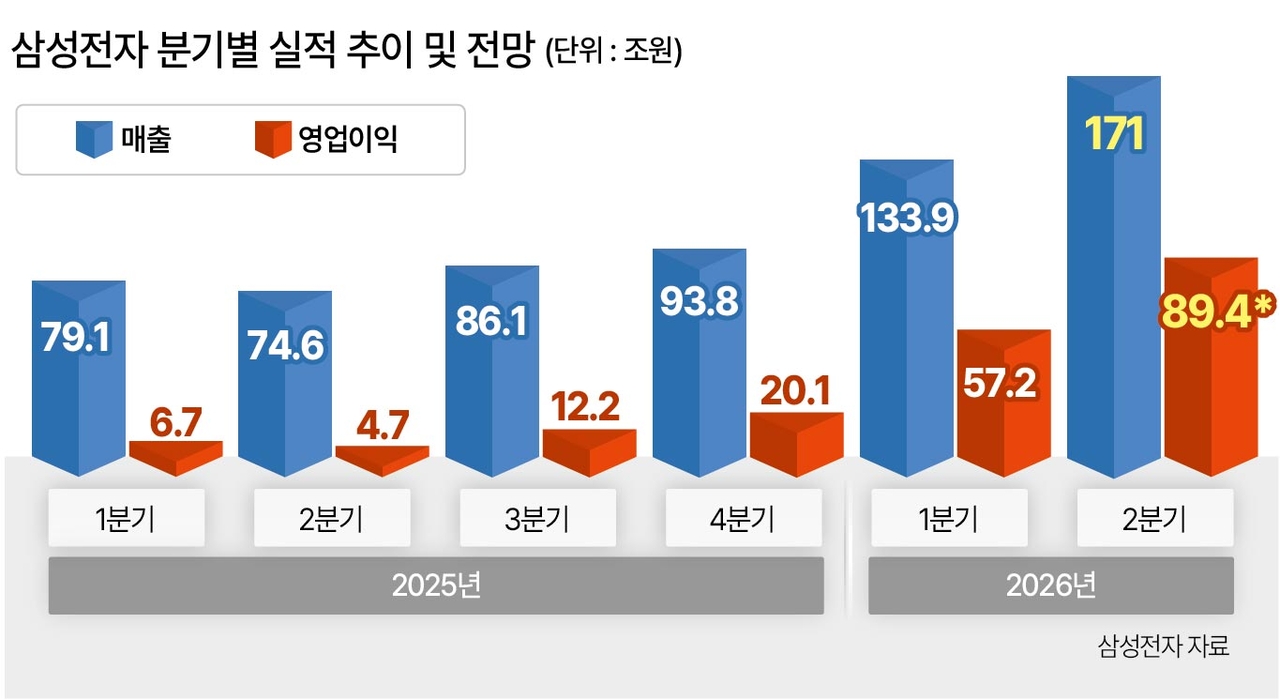
Samsung Electronics' preliminary second-quarter operating profit of 89.4 trillion won, announced Tuesday, is the largest ever recorded by a listed Korean company and ranks among the highest posted by any major global corporation in recent reporting seasons.
Stripping out an estimated 17–19 trillion won in performance-bonus provisions, the underlying operating profit for the quarter reaches as much as 108 trillion won.
For comparison, Nvidia reported operating profit of $53.78 billion for the first quarter of its fiscal year 2027 (February–April 2026). Alphabet, Google's parent, posted $39.7 billion for the January–March quarter.
Microsoft and Apple recorded operating profit of $38.4 billion and $35.88 billion, respectively, for the same January–March period.
Direct comparisons are complicated by differing fiscal periods, but analysts say Samsung's run of record quarterly results puts it on course to overtake Nvidia as the world's most profitable company on an annual basis.
Brokerages expect Samsung's operating profit to climb into the 110 trillion won range as early as the third quarter, marking what analysts are calling the arrival of the "dream 100 trillion won era." Full-year profit forecasts have risen sharply since the start of the year: Samsung Securities projects 372 trillion won, while Meritz Securities puts the figure at 380 trillion won.
Nvidia's annual operating profit for fiscal year 2027 (February 2026–January 2027) is estimated at around $250 billion, according to Korea Investment Securities. That sets the stage for a direct contest between Samsung, powered by its memory chip dominance, and the world's leading technology companies.
Semiconductors account for 99% of profit; memory bubble fears dismissed
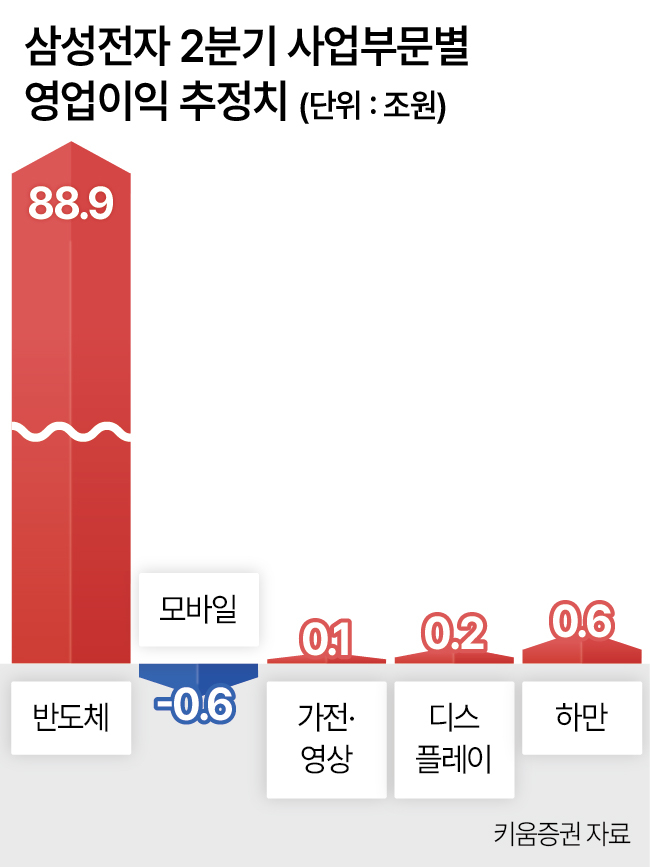
Semiconductors generated an estimated 99 percent of Samsung's second-quarter operating profit. The Device Solutions division, which houses the semiconductor business, is estimated to have posted operating profit of around 88.9 trillion won — effectively carrying the entire company.
The gains appear to stem from sharp increases in memory chip prices, driven by an unprecedented supply shortage triggered by surging demand for AI inference workloads.
According to market research firm TrendForce, prices for general-purpose DRAM jumped 58–63 percent in the second quarter from the first. With its commanding production capacity, Samsung is estimated to have earned operating profit of around 60–70 trillion won from DRAM alone.
Sixth-generation HBM4 also contributed to earnings growth. Industry sources estimate Samsung's HBM4 sales reached $1.2 billion in the four months since shipments began in February.
NAND flash, where Samsung holds the global No. 1 position, also advanced, with supply prices rising 55–60 percent from the first quarter. Enterprise solid-state drives — increasingly favored as storage devices in AI data centers — were a particular driver of margin expansion.
Some observers have raised concerns about a memory bubble and a potential supply glut next year. The prevailing view in the industry, however, is that the current memory supercycle is lasting longer than previous ones, and that long-term supply agreements with major technology customers have secured a stable earnings base.
Meanwhile, the foundry division continues to narrow its losses, though a return to quarterly profit is not expected until next year. Prospects are brightening: following orders for Nvidia's "Grok 3" chip, Samsung is also moving closer to securing a contract to manufacture AI chips for Anthropic, the developer of the Claude AI model.
Mobile unit faces first-ever loss as soaring memory costs bite
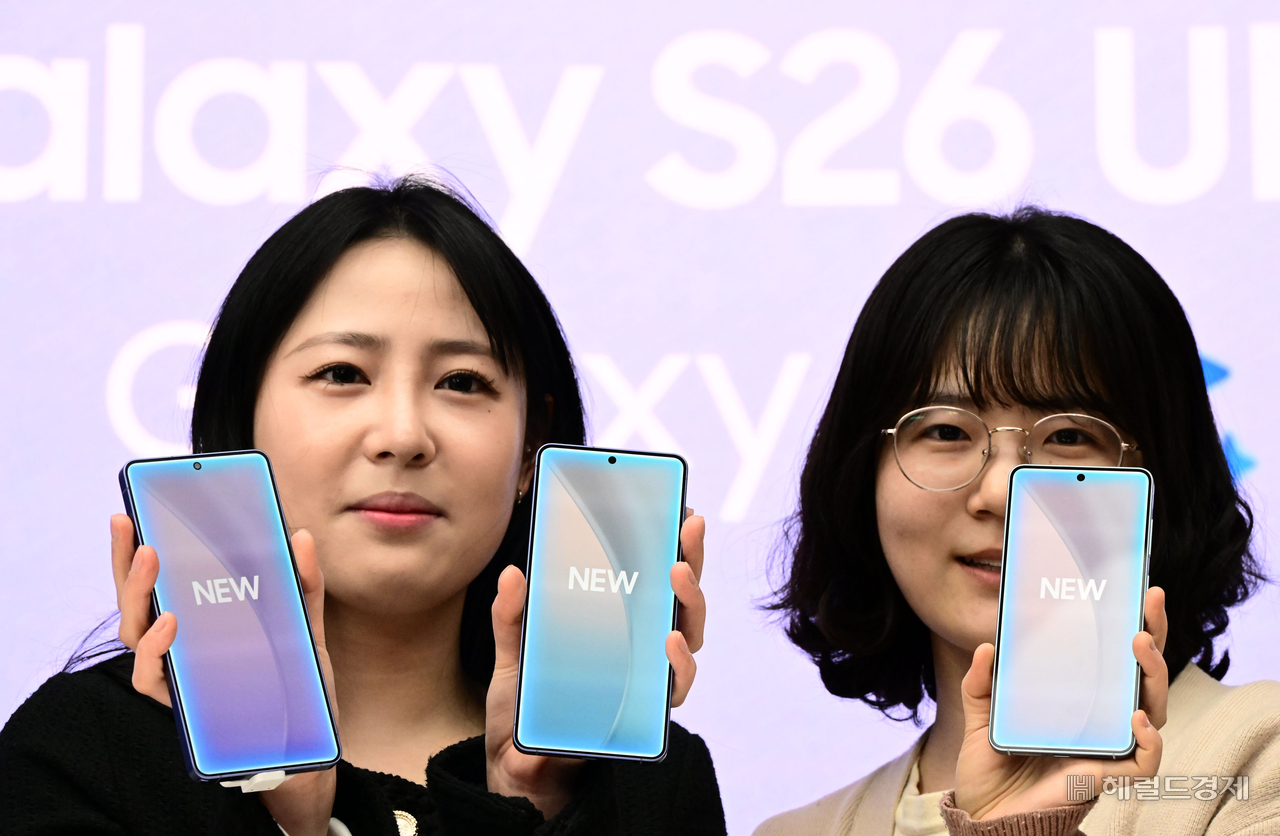
The Mobile Experience division, which alongside semiconductors has long been a pillar of Samsung's earnings, took a direct hit from surging memory prices. After posting 3.1 trillion won in operating profit in the second quarter of last year, the unit may now record its first-ever operating loss in the same period this year. With a new foldable phone set to be unveiled next month, analysts warn the division could remain in the red through the third quarter as well.
The Visual Display and Digital Appliances divisions, which handle TVs and home appliances respectively, are estimated to have barely avoided a loss in the second quarter, each posting profit of around 100 billion won. A four-week "Thank You Festival" promotion that ran from June 8 is estimated to have generated about 2 trillion won in sales.
The consumer product businesses face worsening profitability in the second half as intensifying competition from Chinese rivals compounds the burden of higher memory costs. The widening gap with the record-breaking semiconductor division points to deepening polarization across Samsung's business units.
joze@heraldcorp.com
go@heraldcorp.com