"Who's going to buy a mango for 4,000 won?"
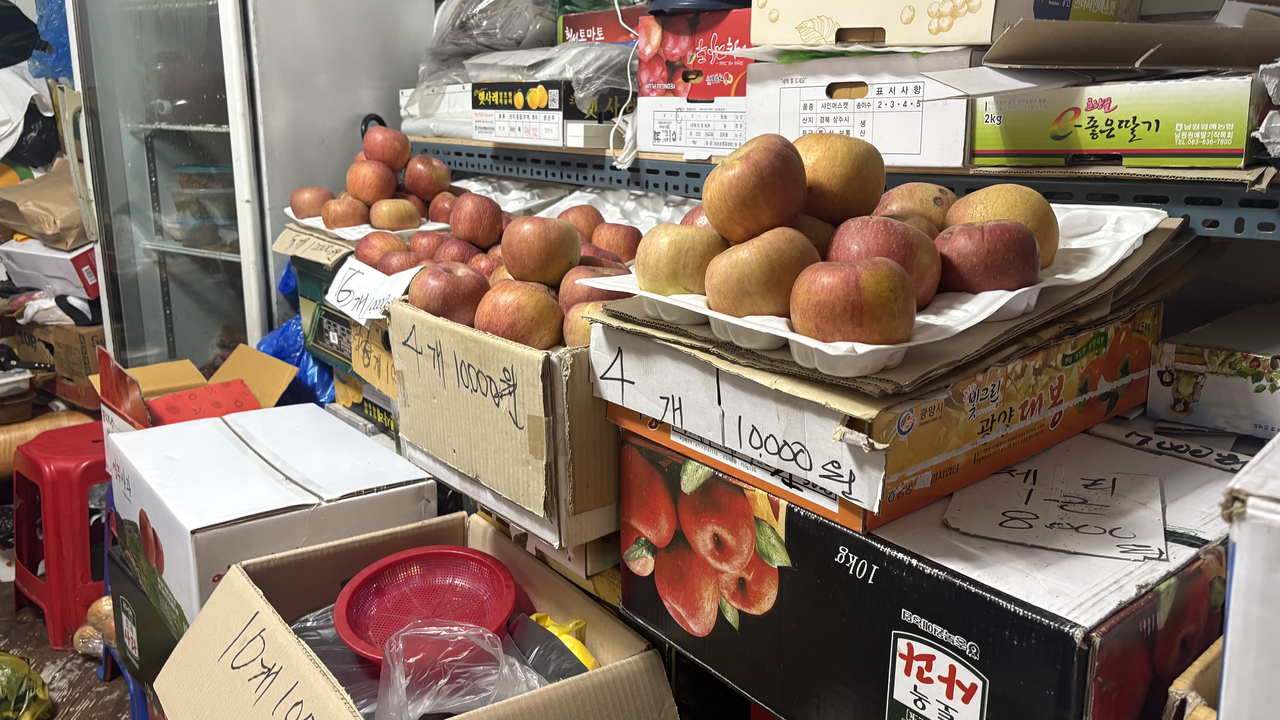
A fruit shop in Mapo-gu, Seoul, had no mangoes in stock on Monday. The owner, a 74-year-old who has run the shop for 40 years, stopped ordering them after prices jumped. "Customers at neighborhood fruit shops are very price-sensitive," he said. "I decided not to sell them because I end up with more left over than sold."
Mango-based menus — from hotel mango shaved ice and buffets to mango pasta — remain popular, but prices have kept climbing. Rising import costs and supply disruptions during peak summer demand have turned the fruit into a luxury item. According to the Korea Agro-Fisheries and Food Trade Corporation's agricultural market information system, the retail price of a single mango stood at 5,761 won ($4) on Monday, up 37.9 percent from a year earlier. The wholesale price for a 5-kilogram box also rose 38.7 percent to 52,625 won.
Those in the retail supply chain say the shortage is real. A wholesale produce dealer, identified only by his surname, said he was worried about keeping his clients supplied. "There simply aren't enough mangoes to deliver," he said. "Apple mangoes, which cafes use heavily, are especially hard to secure."
Even Sungsimdang, the iconic Daejeon bakery, has been affected — it plans to sell mango products in limited quantities starting Wednesday due to supply difficulties. At hypermarkets, the market price of Thai Nam Dok Mai mangoes rose about 33 percent year-on-year in June and remains about 20 percent higher than a year ago in July.
The causes are multiple. The exchange rate has risen about 15 percent from last year, and the Thai baht has also strengthened against the won, pushing up local procurement costs. Maritime freight and logistics expenses have climbed alongside the war in the Middle East. Thailand — the main source of supply — has also seen above-average temperatures and irregular rainfall this year, cutting output. Mango imports from January through May totaled 19,202 tons, down 11.6 percent from the same period last year.
The impact of the high exchange rate and rising logistics costs extends beyond mangoes. The consumer price of a single pineapple rose 5.0 percent year-on-year to 7,107 won, a pack of 10 kiwis climbed 12.5 percent to 11,228 won, and bananas rose 3.6 percent to 315 won per 100 grams. The government has extended a tariff quota on 13 items including bananas, pineapples and mangoes through Aug. 15, applying a 5 percent rate in place of the standard 30 percent tariff.
Choi Cheol, a professor of consumer economics at Sookmyung Women's University, said upward pressure on mango prices has intensified because Korea relies entirely on imports for the fruit, and its growing use in beverages and desserts has driven consumer demand higher. "With the high exchange rate, the price burden on imported fruits will persist for now," he said.

siuu@heraldcorp.com