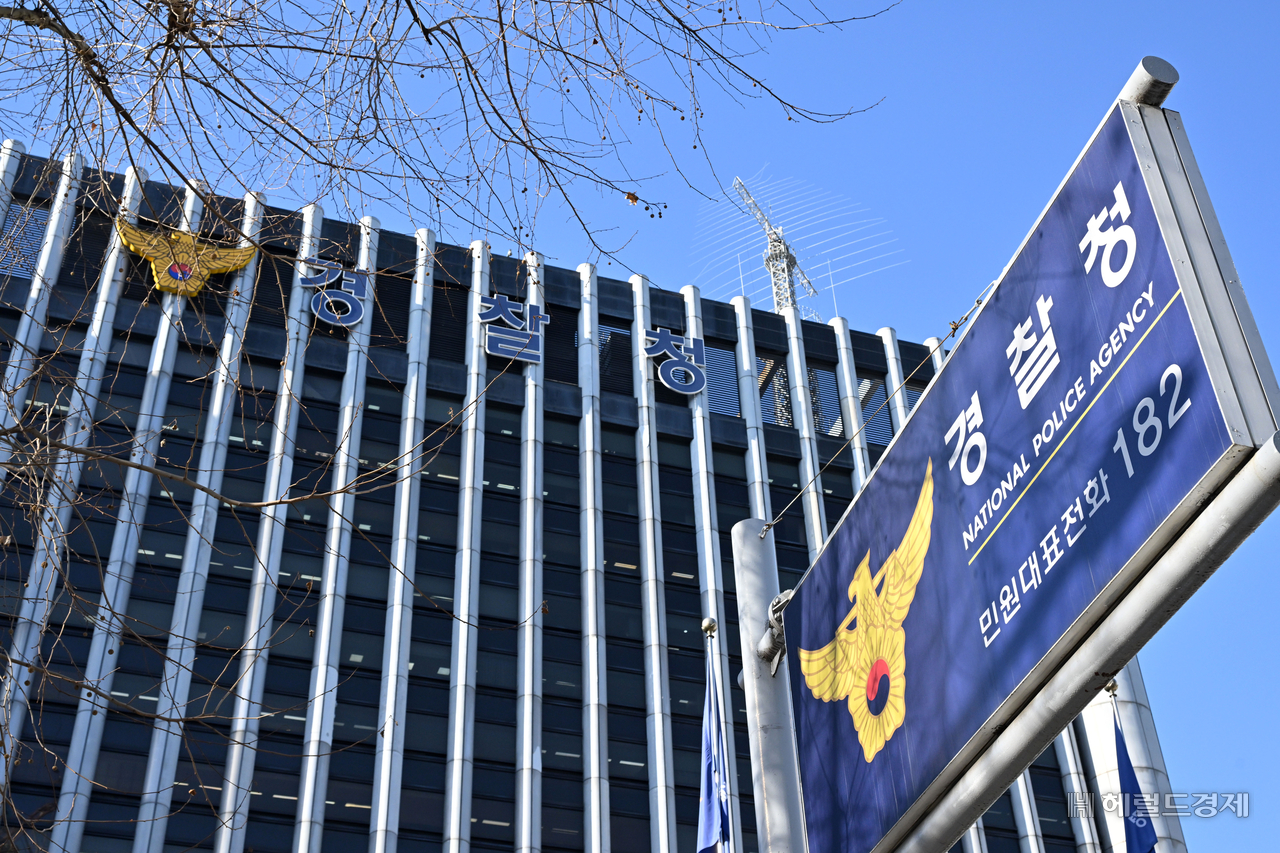
The Korean National Police Agency said Tuesday that an active-duty officer who destroys evidence in a case involving a family member cannot be criminally prosecuted under a legal exemption for relatives — but can still face disciplinary action.
The statement came after prosecutors, through a supplementary investigation, found that Jang, a police inspector attached to the Gwangju Metropolitan Police Agency and the father of Jang Yun-gi (23), had destroyed evidence linked to his son's crimes. Jang Yun-gi was indicted and detained June 2 on charges of raping and killing 16-year-old Lee Chae-won, a girl he had no prior acquaintance with. The inspector was also found to have contacted the officers investigating his son's case multiple times to monitor how the probe was progressing, raising allegations of collusion with the investigative team. As controversy grew over what critics called a shoddy investigation into the family of an active-duty officer, the agency issued its position Tuesday.
In a press notice, the agency said that while criminal law's family exemption applies when a relative destroys evidence in a case, "if that family member is a police officer, disciplinary measures will be taken in accordance with relevant laws, including the State Public Officials Act and the Police Officers Disciplinary Decree."
The agency also said it strictly prohibits officers from contacting investigators to inquire about ongoing cases under a case-inquiry ban introduced as part of its 2020 anti-corruption package, and that violations are subject to disciplinary action. It added that under a 2024 plan to prevent the leaking of investigative information, officers who leak such information face severe consequences, including removal from investigations and expulsion from investigative units.
The agency said it would "review additional measures to improve transparency in handling cases involving relatives of police officers, based on an analysis of the problems identified through the Jang Yun-gi case."
Meanwhile, the agency on Monday dispatched investigators from the National Investigation Headquarters to the Gwangju agency to form a special investigative team tasked with establishing the facts of the case. The team is examining not only potential misconduct by the inspector and the officers who led the original investigation, but the entire investigative process.
The special team, which formally launched its investigation Monday, applied for an arrest warrant Tuesday morning for the lead investigator at the Gwangju Gwangsan Police Station who had handled the Jang Yun-gi case. The team is also looking into why investigators at the time failed to properly secure evidence, including cable ties used in the crime.
arin@heraldcorp.com