Anyone who has owned a cat knows the scene: the animal nibbles at its food, walks away from a still-full bowl, then comes running back the moment the old kibble is swapped for fresh.
The behavior has long been dismissed as feline fickleness. But new research suggests it has nothing to do with a full stomach — cats stop eating because they have grown bored of the smell.
A study published in issue 311 of the international journal Physiology & Behavior, led by professor Masao Miyazaki of Iwate University in Japan, found that cats stop eating not because their stomachs are full, but because their sense of smell has grown accustomed to the scent of the food.
For cats, taste wasn't the deciding factor
The research team ran experiments on 12 healthy cats. The animals were fasted for 16 hours, then given 20 grams of food over a 10-minute period.
Even when hungry, the cats ate only about one-third of the food before stopping — an average of 6.8 grams. Out of 120 trials, the bowl was completely emptied just eight times.
To find out why the cats left food behind, the team ran a series of sessions in which each cat was given food for 10 minutes, rested for 10 minutes, and repeated the cycle six times in total.
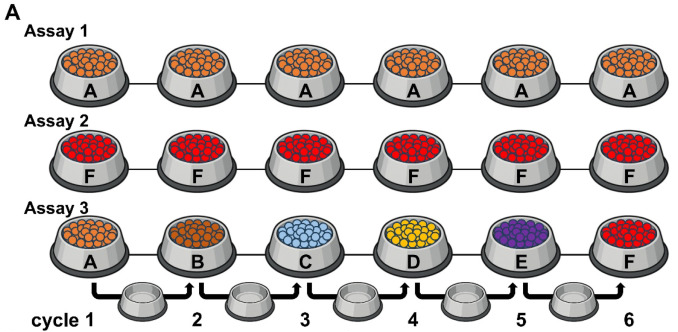
When cats were given the same food across all six sessions, the amount they ate dropped steadily with each serving. The same pattern held even when the food was switched to the most palatable option available — regardless of taste, repetition led to reduced intake.
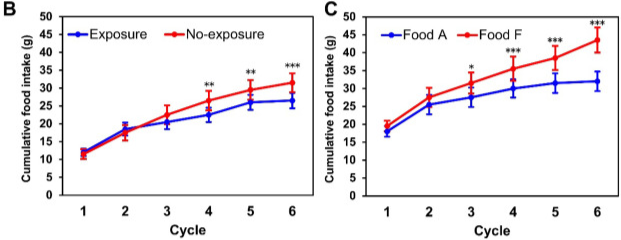
When cats received a different food in each of the six sessions, however, the decline was far less pronounced and total consumption was significantly higher — even higher than when the most palatable food was offered all six times.
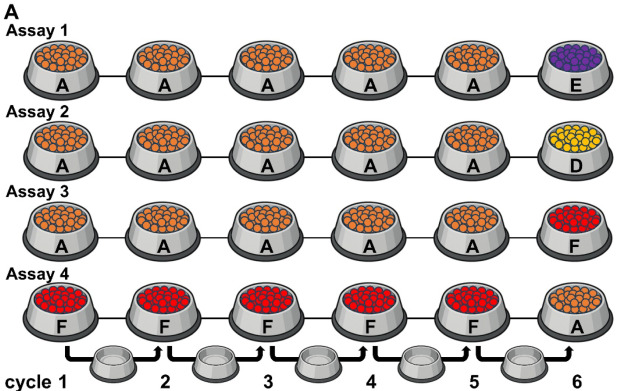
In another trial, cats were given the same food five times, then switched to a different food on the sixth serving. Their intake rebounded — even when the new food was less palatable than the original.
The findings suggest that novelty itself, not taste, drives a cat's appetite.
Smell, not taste, was the key
The research team then ran additional experiments to determine whether the renewed interest was triggered by a change in taste or a change in smell.
Using a specially designed double-compartment bowl, the team placed the cat's usual food in the upper section and a different food in the lower section, separated by a perforated partition. The design allowed the cat to smell the food below without being able to eat it.
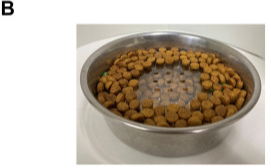
After a cat had eaten the same food five times and lost interest, the team introduced a new scent in the lower compartment on the sixth serving. The cat began eating again — even though the food it was actually consuming had not changed.
A change in smell alone was enough to shift the cat's preference. When the scent was left unchanged, intake did not recover.
The team also ran a reverse experiment, exposing cats to the same food smell continuously during the rest periods between servings.
Intake dropped even more sharply afterward. The more continuously cats were exposed to a scent, the less interest they showed in it — and the less inclined they were to eat again.
A similar phenomenon occurs in humans: prolonged exposure to the same food smell reduces the satisfaction it provides, as the brain's reward centers become less responsive. The research team said cats appear to experience the same mechanism — olfactory habituation suppresses appetite.
Cats and dogs: opposite responses
Dogs, though also carnivores, behave in the opposite way. They eat readily even when given the same food repeatedly, having inherited from their wolf ancestors a tendency to consume as much as possible whenever food is available.
Cats are different. Their ancestor, the African wildcat, was a solitary hunter that preyed on small animals such as mice and birds multiple times a day — eating small amounts frequently rather than large amounts at once.
The research team concluded that cats' sensitivity to new scents and their tendency to tire quickly of familiar ones are evolutionary remnants of this hunting lifestyle — the same instinct that once drove their ancestors to pursue different prey each time is still at work in front of the food bowl today.
However, the team acknowledged limitations: the study involved only 12 cats over a short period, and all subjects were intact, non-neutered animals. Further research is needed to determine whether the same results would hold for neutered cats or with different types of food.
Reference
DOI: 10.1016/j.physbeh.2026.115328
Takumi Takahashi, Shota Ichizawa, Sara Kikuchi, Nanami Hara, Reiko Uenoyama, Tamako Miyazaki, Masao Miyazaki, "Olfactory habituation and dishabituation dynamically regulate feeding motivation in domestic cats," Physiology & Behavior, Volume 311, 2026.
dbsdn1110@heraldcorp.com