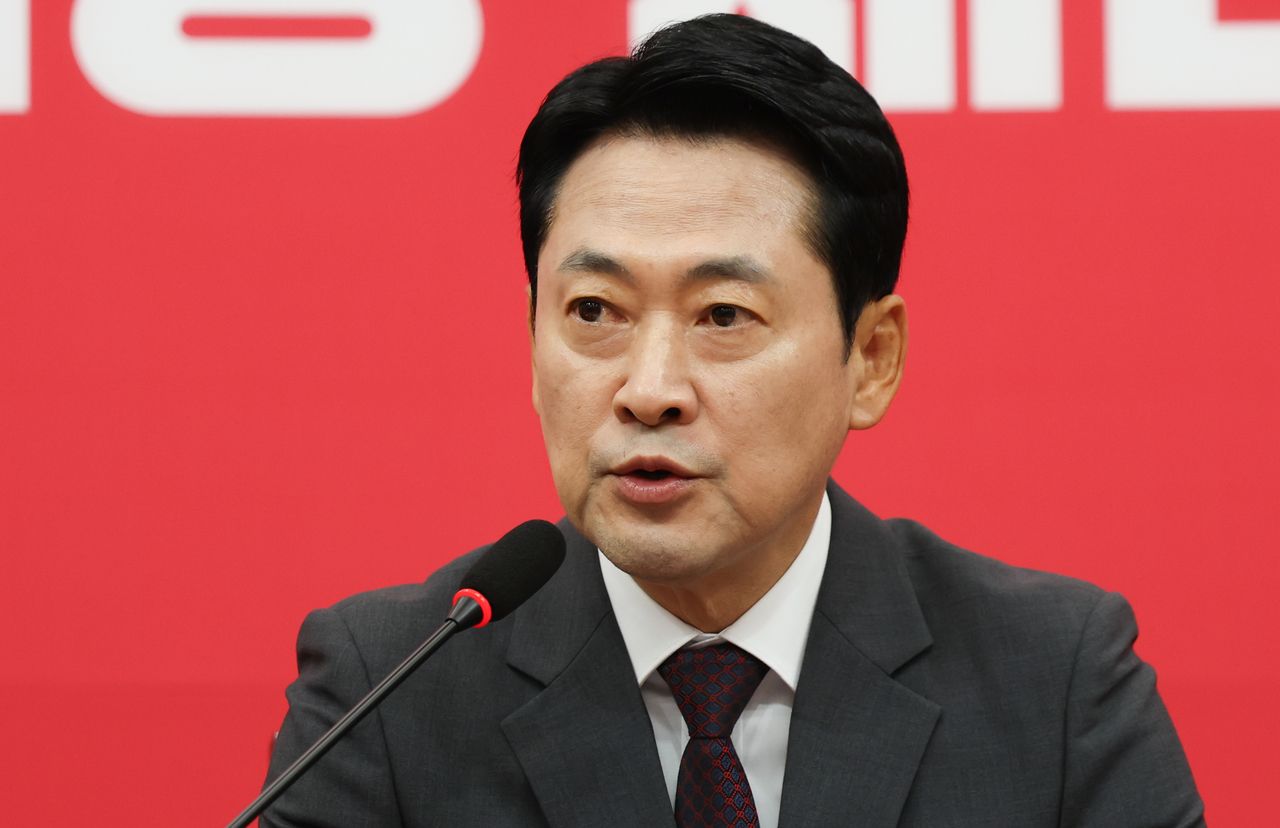
![Kim Eojun. [Yonhap]](https://wimg.heraldcorp.com/news/cms/2026/07/09/news-p.v1.20260604.922f8ce30d2a4776b78f0bea3b704209_P1.jpg)
A YouTube channel run by media personality Kim Eojun was reported to authorities for allegedly violating the so-called "fake news law" on Tuesday, the day the amended Act on Promotion of Information and Communications Network Utilization and Information Protection — aimed at curbing the online distribution of false and manipulated information — took effect. However, because the reported videos were posted before the law came into force, prosecution under the new statute is expected to be difficult.
Lee Dong-jae, a former Channel A reporter, announced Tuesday on social media that he had filed a report against videos on Kim's YouTube channel "Ddanji Broadcasting Station," saying the content was "a textbook case that precisely matches the legislative intent of the amended telecommunications network act."
The videos Lee reported were clips posted between April and October 2020 on the "Das Boeida" segment of the Ddanji Broadcasting Station channel.
In those clips, Kim repeatedly claimed that Lee had approached Lee Cheol, the then-imprisoned former head of Value Investment Korea (VIK), and threatened him into saying he had given money to former politician Yoo Si-min.
The claims were based on a Facebook post published in April 2020 by Choi Kang-wook, who was at the time a proportional representation candidate for the Open Democratic Party.
Choi had written that Lee told the former VIK head: "It doesn't have to be true. If you want to survive, say you gave money to Yoo Si-min. That's all it takes."
Courts later ruled that Choi's claims were false, and the Supreme Court last year upheld a fine against Choi. The 10 million won ($6,550) fine was finalized.
Lee was indicted on charges of attempted coercion in connection with the case but was acquitted in January 2023.
Lee filed a complaint against Kim with the Seoul Seongbuk Police Station in February 2022, and prosecutors indicted Kim in April last year.
Kim is currently standing trial at the Seoul Northern District Court on charges of defamation through false information under the telecommunications network act, as well as defamation through publication.
Kim's legal team has maintained that he believed Choi's Facebook post to be true and that there were reasonable grounds to do so.
Prosecutors sought a one-year prison sentence for Kim at the closing arguments hearing in May, and sentencing is scheduled for Tuesday, July 14.
Meanwhile, the amended telecommunications network act, which took effect Wednesday, requires social media platforms, video-sharing services and online communities with an average daily user base of 1 million or more to establish systems for reporting and handling false and manipulated information, as well as self-regulatory policies governing such content.
Because the videos reported in Kim's case were uploaded before the law took effect, they are not expected to be subject to punishment under the new statute.
The Korea Communications Commission told Newsis that "the relevant provisions do not apply retroactively to content posted before the amended telecommunications network act came into force."
yeonjoo7@heraldcorp.com