![US President Donald Trump holds a press conference at the NATO summit in Ankara, Turkey, on Wednesday (local time). [Reuters]](https://wimg.heraldcorp.com/news/cms/2026/07/09/rcv.YNA.20260709.PRU20260709045901009_P1.jpg)
Fresh armed clashes between the United States and Iran are threatening to unravel a ceasefire memorandum of understanding signed last month. At the heart of the renewed confrontation is control of the Strait of Hormuz, which has emerged as a nuclear-grade bargaining chip in follow-on negotiations. Iran regards that control as its "golden weapon" and has signaled it is prepared to absorb further military escalation with the US rather than surrender it. For President Donald Trump, however, a prolonged conflict carries serious political risks: with midterm elections in November, a surge in oil prices could trigger an inflationary backlash at the polls. With neither side able to back down, the Middle East is once again on the brink.
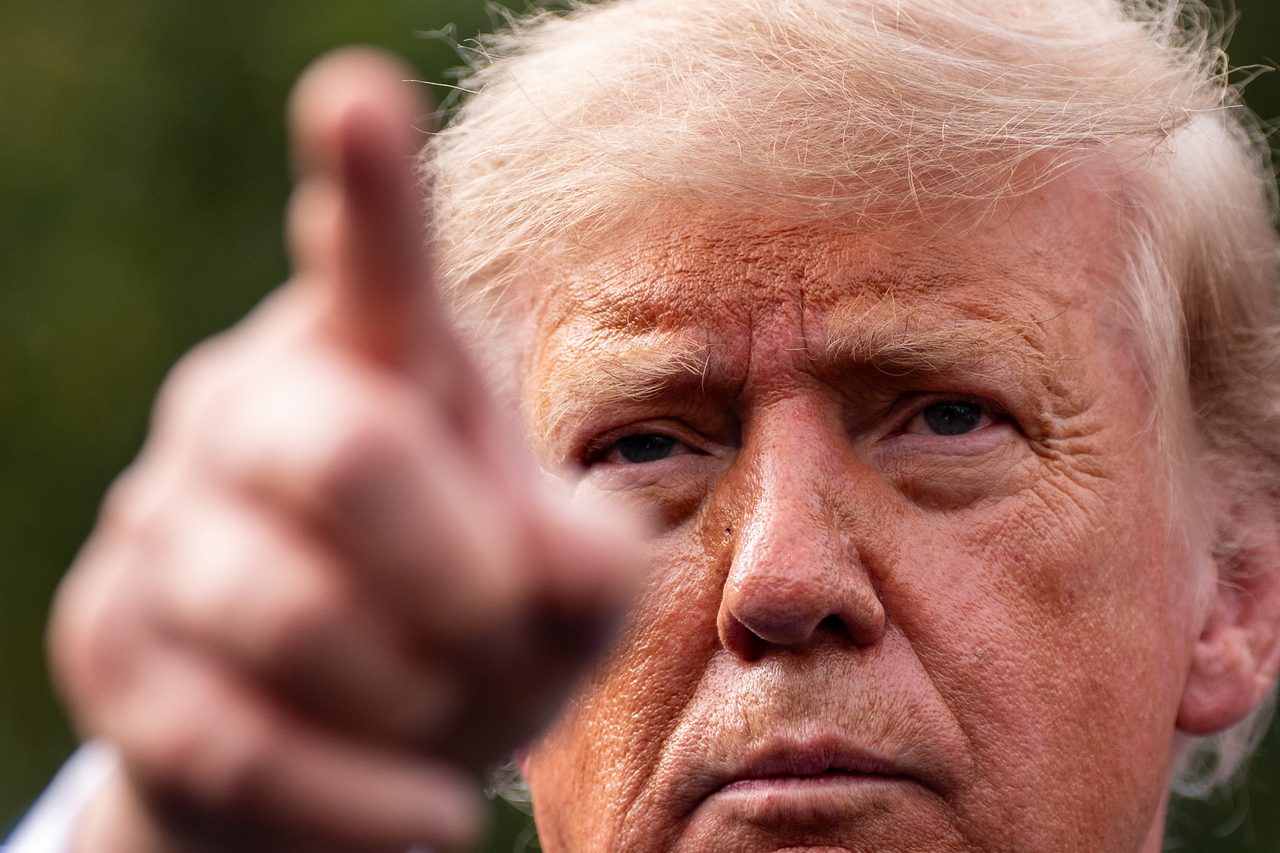
On the sidelines of the NATO summit in Ankara, Turkey, on Wednesday (local time), Trump met with NATO Secretary General Mark Rutte and declared that the ceasefire MOU appeared to be "finished." He lashed out at Iran, saying he did not want to deal with them and calling Iranians "sick people" and "trash."
After the US carried out airstrikes on two consecutive days, Iran announced retaliatory strikes targeting US-linked military facilities, pushing military tensions between the two sides to a new peak.
Reuters and the Financial Times reported that the core of the current conflict is not the nuclear issue but a struggle for dominance over the Strait of Hormuz.
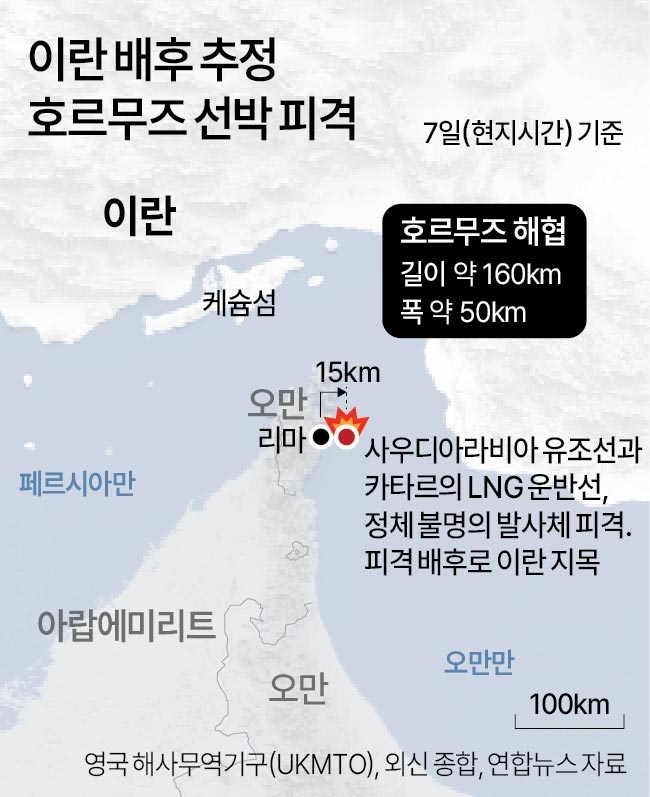
In practice, the clashes between the two sides have repeatedly centered on competing shipping routes through the strait. Iran has been pressing vessels to use lanes closer to its own coastline, seeking to entrench its authority over the waterway as a fait accompli. The US, by contrast, has advised ships to use routes closer to the Omani coast. Iran has attacked vessels that ignored its designated lanes, and the US has responded with strikes on Iranian military facilities — a cycle that has repeated itself multiple times.
Iran had long restrained itself from blocking the Strait of Hormuz, through which roughly 20 percent of the world's crude oil and liquefied natural gas passes. Tehran now views control of the strait as its most powerful lever in negotiations with the West. Iranian officials believe it was precisely the shock that a Hormuz blockade delivered to global energy markets that compelled the US to halt hostilities and come to the table.
"At the highest levels of the Iranian leadership, the prevailing view was that no country could afford to give up such a vital negotiating card," a senior Iranian official said. "Hormuz is Iran's golden weapon, and the West is now trying to take it away."
Ebrahim Azizi, a member of the Iranian parliament's National Security and Foreign Policy Committee, posted on social media that the US should "recognize Iran's new order in the Strait of Hormuz — that is the only solution."
![Vessels navigate the Strait of Hormuz. [Reuters]](https://wimg.heraldcorp.com/news/cms/2026/07/09/rcv.YNA.20260708.PRU20260708361901009_P1.jpg)
Iran's insistence on keeping Hormuz as its top priority is rooted in deep distrust of the United States, Reuters reported. Trump unilaterally withdrew from the existing nuclear deal in 2018, and after agreeing to a ceasefire last summer, resumed hostilities again this year. A surprise attack carried out while diplomatic negotiations were still under way hardened the view inside Iran that Washington can no longer be trusted.
"If Iran steps back from Hormuz, Trump will demand more concessions — not just on the nuclear file but on conventional missile capabilities as well," a senior Iranian official said. "That would amount to surrender, and it is unacceptable."
Iran had repeatedly threatened to close the Strait of Hormuz in the past but had always treated it as a last resort, wary of international isolation and the damage a blockade would inflict on its own economy. That calculus changed after the supreme leader and top military commanders died in US and Israeli strikes on Feb. 28. Operating under the conviction that it had nothing left to lose, Iran shifted strategy — blocking passage for all vessels except its own — and ultimately forced the US back to the negotiating table, in Tehran's telling.
The economic toll of the blockade on both sides ultimately produced the ceasefire, but Iran draws a clear lesson: a single closure of the strait was enough to bring the US to the table, which means control of the waterway must be preserved at all costs going forward.
Trump, for his part, faces real constraints on prolonging the conflict. The Hormuz blockade that followed the late-February strikes on Iran sent international oil prices soaring and stoked inflation fears, inflicting a sharp political cost. With midterm elections approaching in November, a spike in energy prices is seen as a variable that could fuel inflation and hurt Republicans at the polls.
Under the MOU, the two sides had planned to spend 60 days negotiating nuclear issues and sanctions relief, but the dispute over Hormuz has left those follow-on talks effectively stalled before they could begin. The Financial Times reported that Iran will not relinquish its most important negotiating card before a final agreement is reached.
"Iran will not give up the Strait of Hormuz as a 'weapon of mass disruption' until a broader deal on easing US economic sanctions is in place," said Ellie Geranmayeh of the European Council on Foreign Relations. "Conversely, for Trump, reopening the strait is the centerpiece of the MOU — if that does not happen, he will face enormous pressure from Republican hardliners to restart the war."
Geranmayeh added that "both sides should have established mutually acceptable procedures for operating the strait before signing the memorandum of understanding," warning that "the longer such an agreement is delayed, the more the Strait of Hormuz will become deadlocked — and the greater the risk that the US and Iran slide back into all-out war."
More than 570 vessels have transited the Strait of Hormuz since the MOU was signed, including more than 150 oil tankers, according to the Financial Times. However, some ships have switched to Iran's designated routes rather than those recommended by the US, and maritime traffic has yet to fully normalize.
The '1 Trump a Day' newsletter, published by The Herald Business international desk, delivers a daily briefing on Trump-related issues. Click 'Original Article' below the headline to read more.
mokiya@heraldcorp.com