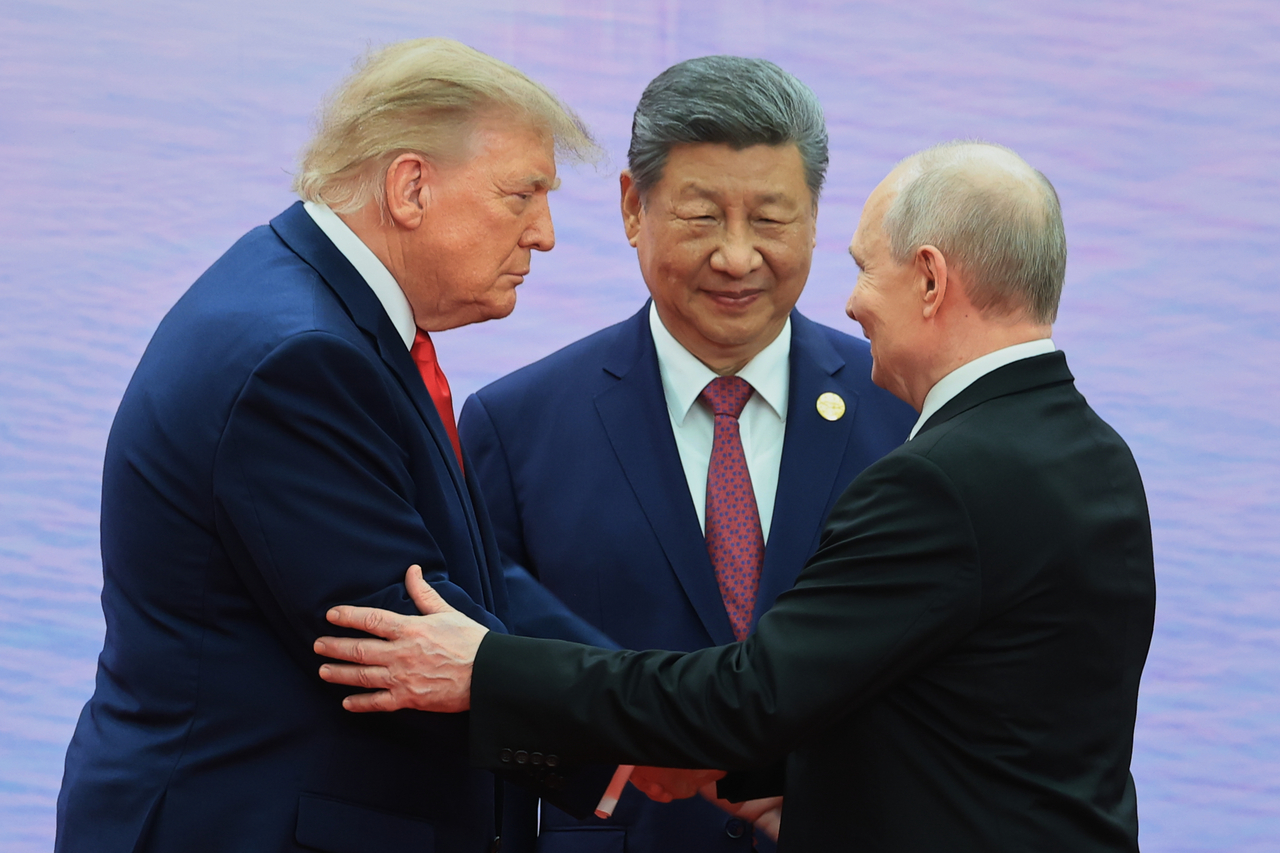
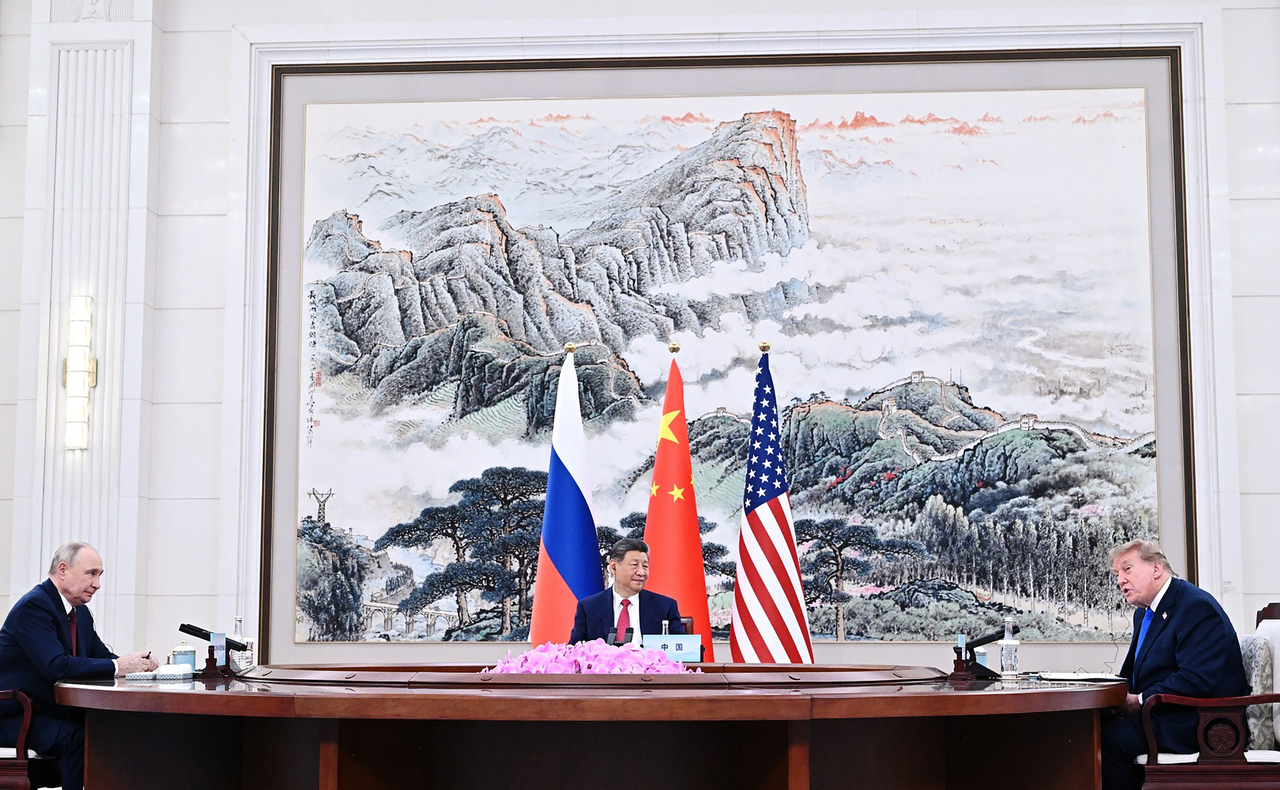
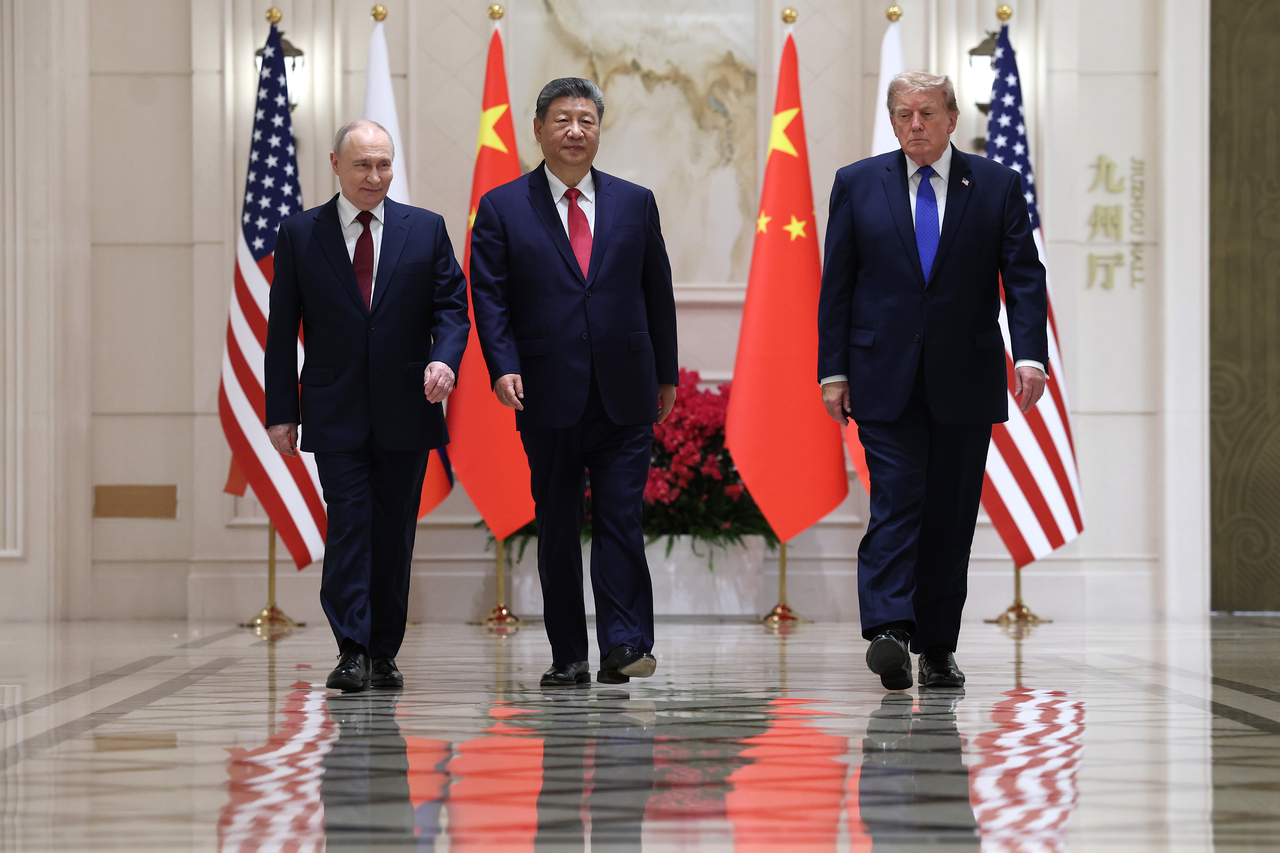
A scene Donald Trump had long dreamed of finally became reality. The leaders of the world's three great powers sat down together at one table, with no one else in the room. For Trump, at least, it must have looked like a grand tableau.
The trouble is back home. While Trump was projecting strength in China, Democrats swept both chambers of Congress in this month's midterm elections. He may cut an imposing figure abroad, but at home he faces the threat of a lame-duck presidency.
The New York Times reported Thursday (local time) that Trump appeared to be in high spirits at the trilateral summit with Chinese President Xi Jinping and Russian President Vladimir Putin in Shenzhen, declaring "We are really making history."
Trump nodded to Xi and said "it's an honor to be with you," then turned and said the same to Putin. Cameras caught it all — the hugs, the shoulder pats, the broad smiles.
But the substance was thin. The working-level coordination that typically precedes a summit had not been properly carried out. A joint statement covering energy development and nuclear risk reduction was issued, though whether follow-up discussions will materialize remains unclear.
The contrast at home is striking. Senate Floor Leader Chuck Schumer and House Floor Leader Hakeem Jeffries have yet to receive a White House invitation, even well after the midterm results came in. The same Trump who was so warm toward Xi and Putin has not met with the leaders of the domestic opposition.
The atmosphere is turning hostile. The administration has threatened to open criminal investigations into Democratic figures who plan to ramp up oversight starting next year. White House Counsel Will Sharp recently sent a letter to Democratic lawmakers warning that attempts to investigate the administration could be construed as intimidation and could "cross the line into clear criminal conduct."
Trump himself, in a CBS interview on election day, said: "The presidency is considered a powerful position. You can do a lot." He went further in a Fox News interview in Shenzhen. "They can pass whatever bills they want. I'll just veto, and veto, and keep vetoing." It amounted to a declaration of all-out confrontation with the incoming Congress.
It is common for a president whose approval rating has hit a low and who has lost Congress to turn to foreign policy — but that does not mean it goes as planned. The Iran war has been deadlocked for nine months, leaving him with less room to maneuver than before. Foreign leaders, moreover, are well aware that Trump is a lame-duck president who will leave the White House in just over two years.
Even so, The New York Times noted, the summit must have offered Trump a welcome release. He has long expressed admiration for authoritarian leaders like Putin and Xi — frequently calling them "strong" and on multiple occasions voicing envy at their ability to push through whatever they want without worrying about Congress or the courts.
After the summit, Putin told reporters that the two men share similar views on "civilizational values." When asked about democracy, he shot back, "What is democracy, exactly?" — then suggested it had become, in effect, a liberal attempt to monopolize power, what he called "liberal dictatorship."
Trump's view of power traces back to his days as a businessman. At the Trump Organization, a family company, there was no board to report to and no outside shareholders to answer to. His word was the final word. When he began his first term in 2017, he was reportedly shocked to discover the government does not run like a company.
In a New York Times interview in January, when asked whether there were any limits on his power, Trump answered: "Yes. One thing. My own morality. My own thinking. That's the only thing that can stop me."
The people around Trump are cut from the same cloth. The clearest example is Steven Miller, whom Trump installed as chief of staff immediately after the midterm defeat. Miller has long argued that presidential authority should be expanded to its maximum. In January, while explaining the Greenland initiative, he dismissed any discussion of international law, saying: "The real world we live in is one governed by strength, governed by physical force, governed by power." Even among Trump's own aides, there were concerns that Miller was going too far.
Secretary of State Marco Rubio, in a speech to the Federalist Society, invoked the words of the ancient Roman general Pompey to take aim at the International Criminal Court: "Do not quote the law to men who carry swords." Rubio himself acknowledged it was "not a politically correct thing to say." Defense Secretary Pete Hegseth posted the clip online, capitalizing "Men Who Carry Swords" for emphasis. Even on the right, there was pushback. Justin Amash, a former congressman who left the Republican Party, fired back: "This is ultimately just an argument that might makes right."
As it turned out, the one point on which all three leaders at the Shenzhen summit clearly found common ground was something else entirely. The joint statement included language declaring that immunity for heads of state is "of paramount importance." Putin is the subject of an ICC arrest warrant.
Not energy, not nuclear weapons — on this one point, the United States, China and Russia were in full agreement.
mokiya@heraldcorp.com