Sewage sludge biogas to yield 500 kg of hydrogen daily
Output to expand to 2 tons by 2030 under local-production model
W2H ecosystem to extend to Chungju, Paju and Indonesia
![HTWO Energy Cheongju. [Hyundai Motor Group]](https://wimg.heraldcorp.com/news/cms/2026/07/09/news-p.v1.20260709.0231c52232ac4e1d8c1465d22de2e3cd_P1.jpg)
Hyundai Motor Group has built a waste-to-hydrogen (W2H) production facility in Cheongju, North Chungcheong Province, that converts biogas extracted from sewage sludge into clean hydrogen. The group said the project aims to create a self-sustaining hydrogen ecosystem — where locally generated waste resources are consumed locally — to accelerate South Korea's green hydrogen economy and advance carbon neutrality.
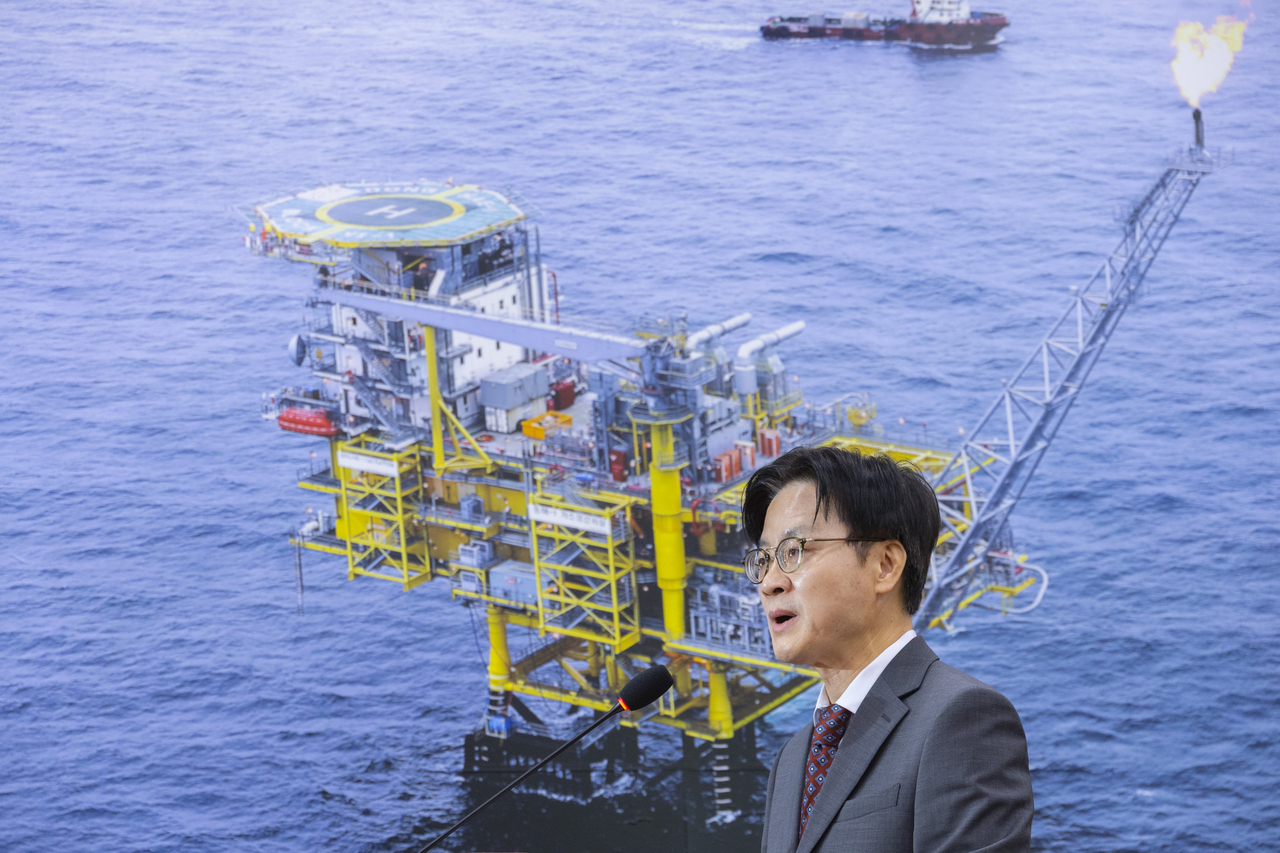
The group held a completion ceremony for "HTWO Energy Cheongju" on Thursday, attended by Seo Gang-hyeon, president of Hyundai Motor Group's planning and coordination division; Lee Ho-hyeon, vice minister of the Ministry of Climate, Environment and Energy; Shin Yong-han, governor of North Chungcheong Province; Lee Jang-seop, mayor of Cheongju; National Assembly member Lee Gwang-hui; and Kim Jin-gyun, president of the Korea Institute of Industrial Technology.
"HTWO Energy Cheongju is a case study in building a circular economy model — one that converts locally generated waste resources into clean hydrogen energy and consumes it within the same region," Seo said. "Hyundai Motor Group will actively contribute to establishing Cheongju as a leading inland hydrogen city representing South Korea, and will use this as a springboard to expand the locally self-sufficient hydrogen production model into global markets."
Group's first waste-to-hydrogen facility produces 500 kg per day
HTWO Energy Cheongju is Hyundai Motor Group's first directly operated W2H production and charging complex. The facility produces and supplies clean hydrogen using biogas extracted from sewage sludge generated within the Cheongju area.
The group chose Cheongju as the site for its first W2H hub because the city is geographically positioned to serve as a key logistics and distribution hub for hydrogen, and because the Ministry of Land, Infrastructure and Transport last year selected it as a recipient of its "hydrogen city development project." Under that designation, Cheongju is comprehensively pursuing systematic management of hydrogen infrastructure, expansion of hydrogen mobility, a transition to an eco-friendly transportation system, and increased production of clean energy.
HTWO Energy Cheongju was built on a roughly 7,500-square-meter site within a public sewage treatment plant. It can produce about 500 kilograms of hydrogen per day — enough to fill approximately 100 Nexo hydrogen fuel-cell passenger cars or about 30 hydrogen fuel-cell buses.
The facility comprises a range of production and charging equipment: an upgrading unit that refines biogas into high-quality biomethane, a hydrogen extraction unit that reacts biomethane with steam to produce hydrogen, and a liquefied carbon dioxide manufacturing unit that captures and purifies the carbon dioxide generated during hydrogen production.
Hyundai Motor Group plans to expand HTWO Energy Cheongju's average daily hydrogen output to 2 tons by 2030. The plan is linked to a multilateral MOU the group signed last year with North Chungcheong Province and Cheongju, as well as the city's plans to build an integrated biogas facility for organic waste treatment.
The group also plans to supply all hydrogen produced at HTWO Energy Cheongju to North Chungcheong Province and the Cheongju area, contributing to the region's transition to a clean energy system and its achievement of carbon neutrality. This approach is expected to cut costs associated with transporting and storing hydrogen produced elsewhere, securing economic viability while boosting hydrogen resource independence for Cheongju and surrounding areas.
![The hydrogen charging station at HTWO Energy Cheongju. [Hyundai Motor Group]](https://wimg.heraldcorp.com/news/cms/2026/07/09/news-p.v1.20260709.d50b2f7c7ddf479da4071858ae6608ef_P1.jpg)
W2H projects at home and abroad aim to spread energy self-sufficiency
Hyundai Motor Group is actively pursuing W2H projects in partnership with domestic and overseas companies, institutions and local governments, with the goal of replicating the energy self-sufficiency model demonstrated at HTWO Energy Cheongju.
In South Korea, the group has successfully advanced W2H ecosystem development projects in Chungju, North Chungcheong Province, and Paju, Gyeonggi Province, building biogas-based clean hydrogen production facilities and establishing frameworks for energy utilization.
Overseas, the group is pursuing hydrogen ecosystem development projects in Indonesia and Hong Kong, designing and applying hydrogen solutions tailored to local markets.
Meanwhile, Hyundai Motor Group is participating in the 2026 New Energy Fair Osong, held Wednesday through Friday at the Osong Convention Center in Cheongju, where it is promoting HTWO Energy Cheongju. The group has set up a booth for HTWO — its hydrogen brand and business platform — showcasing the all-new Nexo and introducing a range of hydrogen technologies and applications.
Last month, the group participated in the 2026 International Hydrogen Energy and Fuel Cell Vehicle Conference held in Kunshan, Jiangsu Province, China, through HTWO Guangzhou, its hydrogen fuel cell system production base in China. There it shared updates on its hydrogen business and explored opportunities for expanded industry cooperation as part of its broader effort to build a global hydrogen industry ecosystem.
eyre@heraldcorp.com