Many South Korean companies have flexible work and parental leave policies in place but fail to put them into practice, a new study shows. Analysts say the central challenge for work-life balance is no longer whether a policy exists, but whether workplace culture allows employees to use it without fear of repercussions.
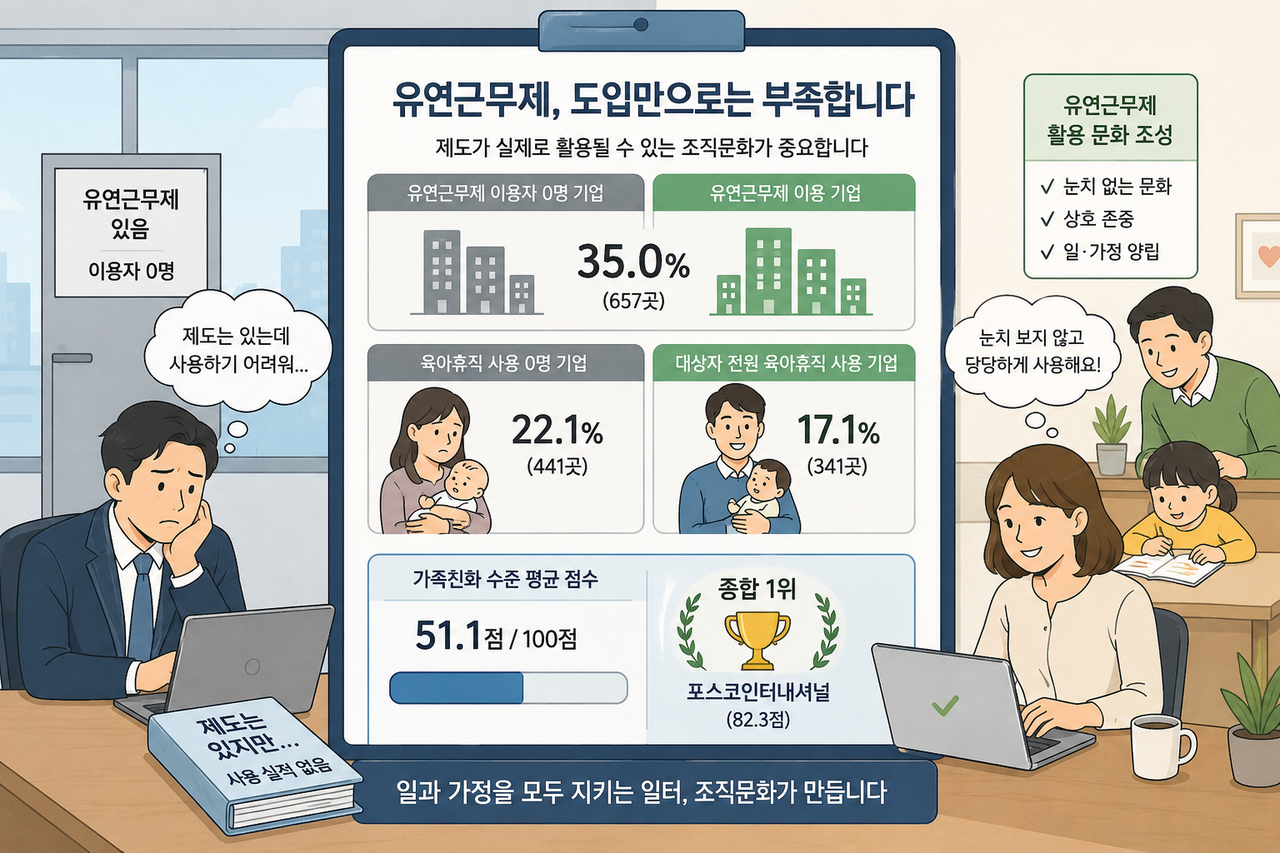
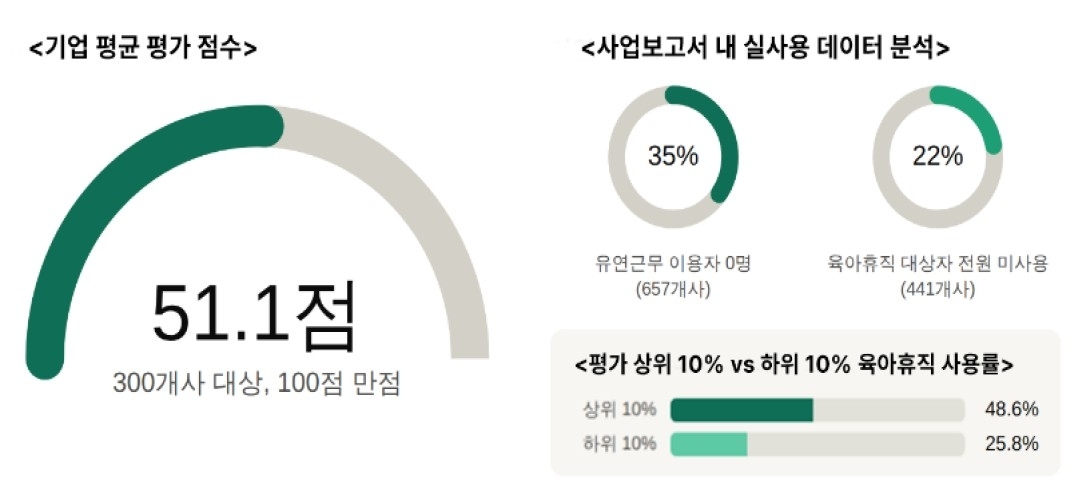
According to a survey released Thursday by the Korea Peninsula Future Population Institute, 657 of 1,877 companies — 35 percent — that had adopted flexible work systems recorded zero actual users. The institute conducted the comprehensive survey between March and May this year, drawing on business reports filed by listed companies.
The survey is the first comprehensive, company-by-company analysis conducted since listed firms became required to disclose work-life balance data.
Parental leave fared little better. Among 2,000 companies operating parental leave programs, 441 — or 22.1 percent — had eligible employees yet recorded no one actually taking leave. Only 341 companies, or 17.1 percent, saw all eligible employees use the benefit.
The institute attributed the stark gap in utilization — even among companies running identical programs — to differences in organizational culture. It noted that workplace environments where employees still hesitate to take leave out of concern over promotions or other career penalties remain widespread.
Overall family-friendliness scores among companies were also low.
In an assessment of 300 companies that published sustainability reports, the institute evaluated support for childbirth and child-rearing, work-life balance programs, and birth-friendly corporate culture. The average score was 51.1 out of 100.
Posco International topped the overall rankings with 82.3 points, followed by Lotte Chilsung (81.3 points), KB Securities and Lotte Wellfood (79.2 points each), and Kookmin Bank, KT&G, Hotel Lotte and Shinhan Card (77.1 points each).
Notably, companies with assets below 1 trillion won ($662 million) or in the 1 trillion to 5 trillion won range appeared among the top performers, suggesting that management commitment and corporate culture matter more than company size in determining how well such programs function.
"If employees who actually need these policies cannot use them, the policies have no real effect," said Lee In-sil, director of the Korea Peninsula Future Population Institute. "It is important to create an environment where flexible work systems genuinely operate in the workplace, so that young people can balance work and family life."
fact0514@heraldcorp.com