![An LG Chem researcher conducts product testing. [LG Chem]](https://wimg.heraldcorp.com/news/cms/2026/07/10/news-p.v1.20260521.36f530764de24566b7a3dcae2d058c00_P1.jpg)
South Korea's major biotech conglomerates are accelerating strategic partnerships in China, positioning the country as a key hub for early-stage R&D open innovation. China has rapidly emerged as a central pillar of the global innovative drug ecosystem — backed by government support for drug development and streamlined clinical regulations — and Korean companies are moving to secure local R&D infrastructure and networks ahead of the competition.
Industry sources said Friday that LG Chem has signed a strategic collaboration agreement with OTR Therapeutics, a Shanghai-based biotech, to discover and develop oncology drug candidates. OTR raised $100 million in Series A funding late last year from investors including True Light Capital, a subsidiary of Temasek, Singapore's state investment fund, and has closed major deals with global pharmaceutical companies.
Under the framework, OTR will use its local scientific network and business development capabilities to scout, identify and evaluate promising oncology drug candidates from multiple Chinese companies. The two sides have established a dual-track division of labor: OTR will handle preclinical and early-stage clinical development in China, drawing on the country's fast-moving drug development environment, while LG Chem will lead late-stage global clinical development, regulatory approval filings and commercialization outside China.
LG Chem's move to build a local collaboration framework in China reflects a dramatic shift in the standing of China-originated pipelines in the global drug market. According to a JPMorgan report on China's biopharma sector, Chinese drug candidates already accounted for 30 percent of the global innovative pipeline last year. Multinational pharmaceutical companies signed licensing deals with Chinese firms worth nearly $136 billion last year alone, cementing China's position as a core ecosystem that offers both development speed and cost competitiveness.
![Samsung Bioepis. [Samsung Bioepis]](https://wimg.heraldcorp.com/news/cms/2026/07/10/news-p.v1.20260130.e3e83a23d0894e59b099862188f78ed4_P1.jpg)
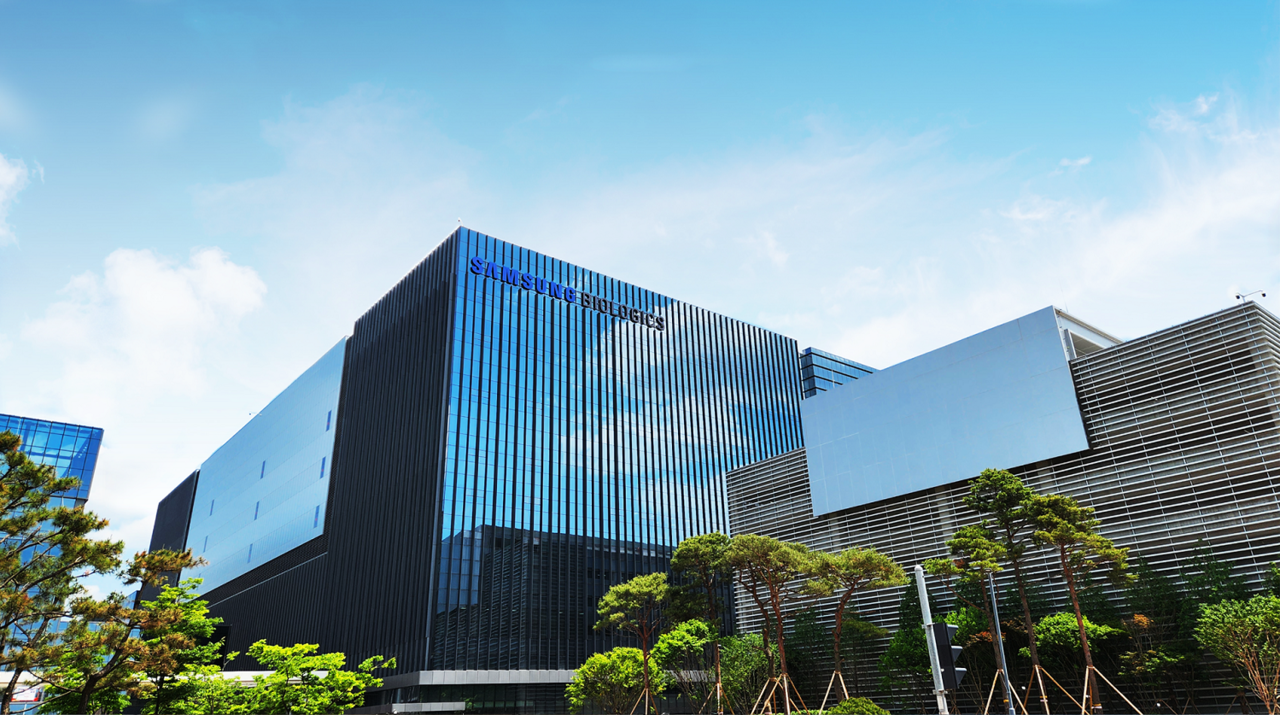
Beyond LG Chem, other leading Korean biotech companies are expanding their open innovation networks in China on multiple fronts. Samsung Bioepis has been the most active. The company signed a joint research partnership with China's Frontline Biopharma in October last year to develop antibody-drug conjugate drugs, then in May formally established a local R&D center in Beijing — Samsung Biologics Technology (China) Co. — to anchor its next-generation drug development operations in the country.
SK Biopharm is also tapping China's R&D infrastructure to target the Asia-based AI drug discovery ecosystem. Last month, the company signed a joint research agreement with Insilico Medicine, a global AI biotech that operates a large R&D center in Shanghai, to develop central nervous system neuroimmune therapies. The project is valued at up to $2.57 billion. SK Biopharm is pursuing what it calls an "East-West Bridge" strategy, linking its global clinical infrastructure with the generative AI-accelerated platform at Insilico Medicine's Shanghai laboratory.
"Major Korean conglomerates are now fully embracing an 'extended lab' model — using Chinese biotech firms and local R&D centers to shorten early-stage compound discovery timelines and cut costs," an industry official said. "A complementary collaboration model that combines China's rapid discovery capabilities with Korean conglomerates' global late-stage clinical and manufacturing competitiveness will open a new frontier for K-biotech's global expansion."
silverpaper@heraldcorp.com