Unlike its approvals in the US, Europe and South Korea, Omryklo secured a seasonal allergic rhinitis indication in Japan; Phase 3 switching data bolsters prescriber confidence for chronic urticaria; Celltrion the only Korean pharma-biotech company with a solo booth at the 100-nation allergy congress
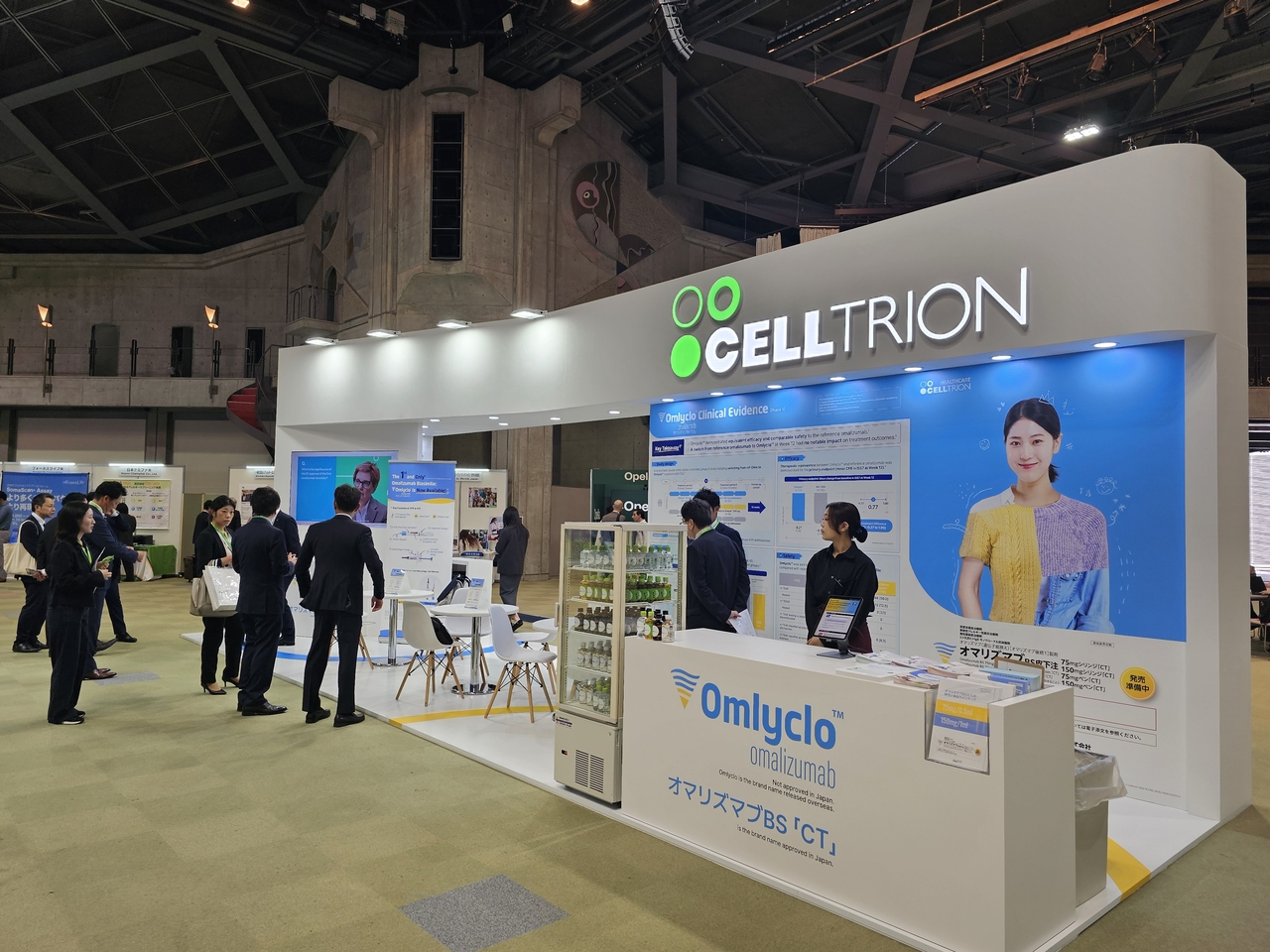
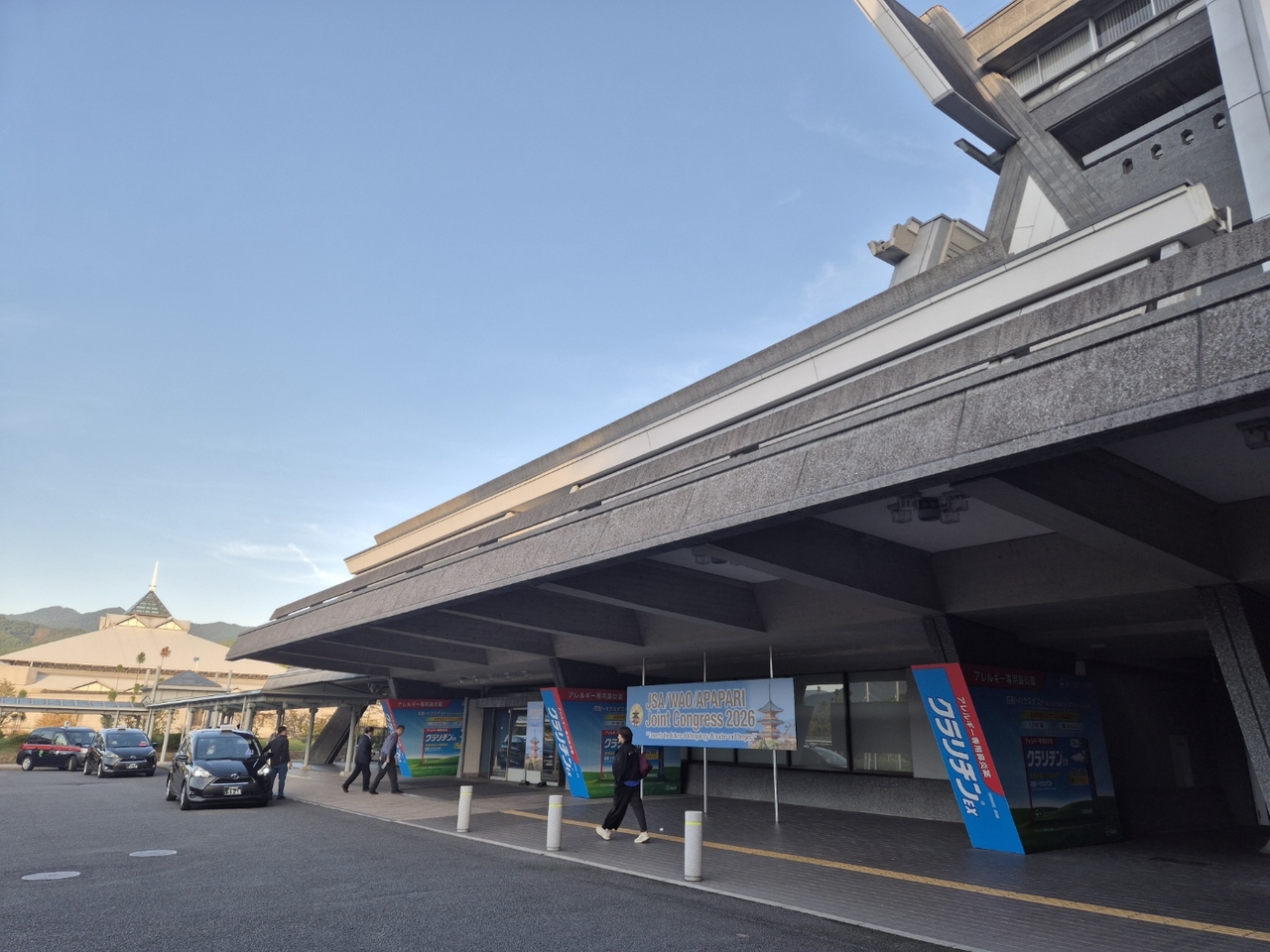
KYOTO — The exhibition hall of the World Allergy Congress (WAC 2026) opened Friday at the International Conference Center Kyoto (ICC Kyoto).
Past a corridor lined with booths from global pharmaceutical companies stood Celltrion's solo exhibit, its front wall dominated by Omryklo — the world's first omalizumab biosimilar.
A large display panel introduced the drug under its Japanese approval name, "omalizumab BS subcutaneous injection [CT]," and bore the phrase "listed at drug price standard" alongside a yellow circular badge reading "preparing for launch," signaling that a commercial countdown had begun.
Among the long list of indications printed across the wall, the term that drew the longest gaze from local physicians was by far "seasonal allergic rhinitis" — known in Japan as kafunsho, or pollen allergy.
The congress is a major academic gathering co-hosted by the World Allergy Organization (WAO), the Asia Pacific Association of Allergy, Asthma and Clinical Immunology (APAAACI), and the Japanese Society of Allergology (JSA), drawing thousands of allergy and immunology specialists from more than 100 countries.
The opening session and the WAO Cup researcher awards ceremony packed the main auditorium on Thursday, generating considerable excitement — and amid that atmosphere, Celltrion stood as the only Korean pharmaceutical and biotech company to operate a solo booth on the global stage.
Celltrion designed its booth in a wide horizontal layout to maximize brand visibility along the main visitor path, reinforcing its presence at the event.
The feature drawing the most attention at the booth was Omryklo's Japan-only indication for kafunsho — seasonal allergic rhinitis caused by pollen — an approval not included in the drug's clearances elsewhere. When Omryklo was approved in Europe in April 2024, South Korea in June 2024 and the United States in March 2025, the shared indications were asthma, chronic rhinosinusitis with nasal polyps, and chronic idiopathic urticaria. Japan's approval, obtained in March this year, added seasonal allergic rhinitis to reflect the country's unique market conditions.
Kafunsho affects a significant share of Japan's total population and is considered one of the country's defining public health burdens, yet the high price of the existing originator drug has severely limited access to biologic treatment even for patients with severe symptoms.
By securing the kafunsho indication on top of bronchial asthma and chronic urticaria, Celltrion said it has laid the groundwork to expand its prescriber network beyond internal medicine into ear, nose and throat clinics and pediatric practices across Japan. Analysts expect the biosimilar's lower price point to draw in a large pool of potential patients who had previously held off on treatment because of cost.
Kim Ho-woong, Celltrion's executive vice president and head of the JAL (Japan, Asia-Pacific and Latin America) division, said the move represents "a challenge to enter new specialty areas — pediatrics, pulmonology, otolaryngology, dermatology — that we have not previously reached, moving beyond the traditional focus on rheumatology and oncology." He added that Celltrion plans to "use the cost savings from the lower drug price to push for an expansion of insurance prescription guidelines, dramatically broadening treatment access to potential patients who have not responded to existing standard therapies."
Celltrion placed global Phase 3 trial data for chronic idiopathic urticaria (CSU) — one of Omryklo's core indications — at the front of its booth.
Chronic idiopathic urticaria is a condition in which the skin breaks out in red, swollen welts accompanied by intense itching comparable to pain, persisting for six weeks or more. About 40 percent of patients also experience angioedema — painful swelling of the lips, eyelids, hands or feet. While not directly life-threatening, the disease is a leading autoimmune condition known to cause severe sleep disruption, depression, anxiety and difficulty concentrating, dramatically reducing quality of life.
Celltrion presented detailed graphs from the trial showing that switching from the originator drug to Omryklo at week 12 of treatment produced no difference in efficacy or safety. Large monitors at the booth played video interviews with leading global experts, lending additional academic credibility to the data.
Professor Torsten Zuberbier, chair of the Global Allergy and Asthma European Network (GA²LEN) and a lead author of the global urticaria treatment guidelines, said he had "no doubt whatsoever" that demonstrated equivalence in chronic urticaria means Omryklo will show the same efficacy as the originator in other indications, including severe asthma.
Professor Marta Ferrer Puga, head of the allergy department at the University of Navarra in Spain, also lent her support, saying that "once physicians experience the same efficacy and safety in real-world prescribing, the shift to the biosimilar will happen very quickly and on a wide scale."
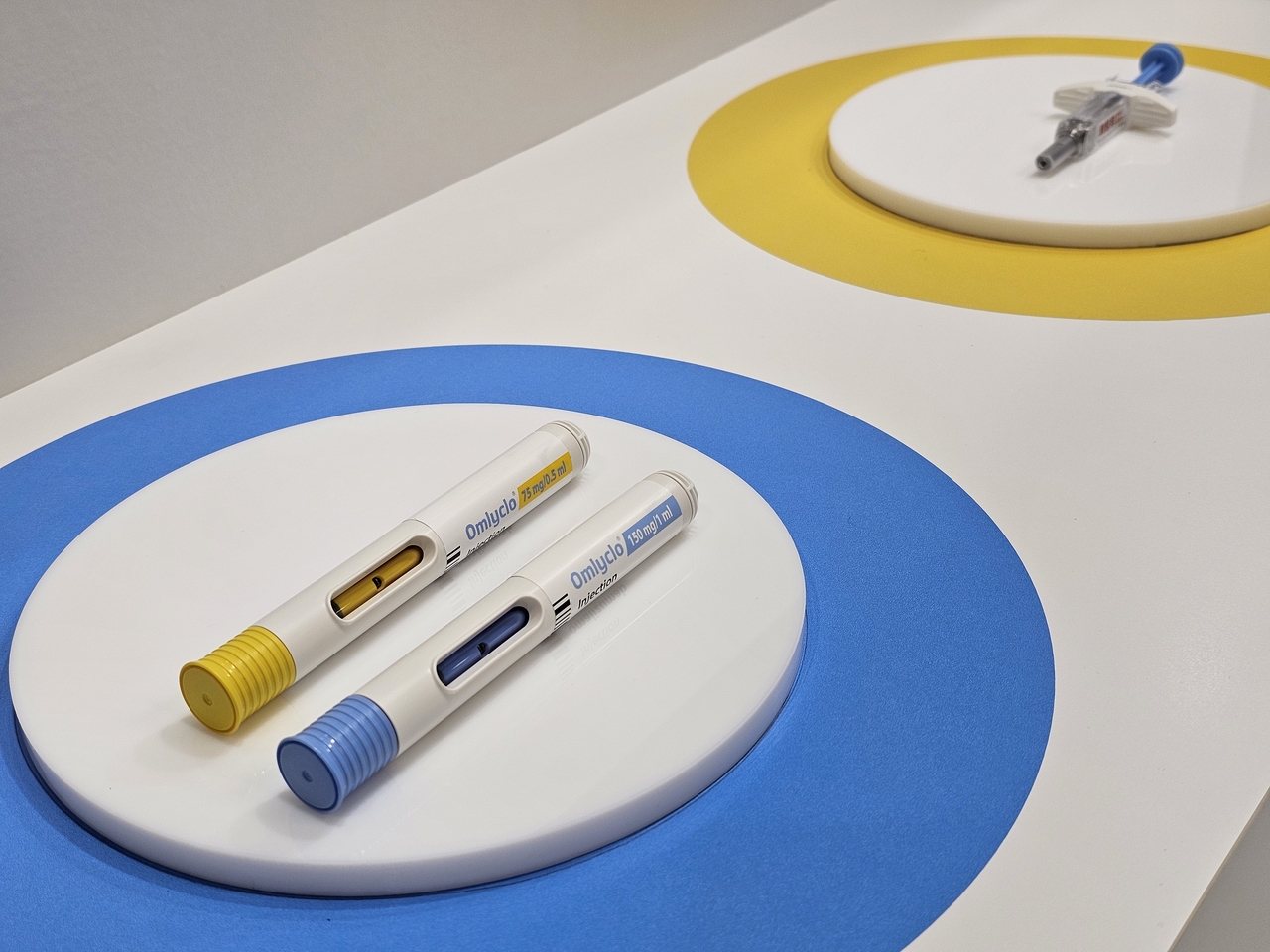
A "Device Zone" set up at one side of the booth also drew interest from medical professionals. Celltrion unveiled all four product configurations it plans to bring to the Japanese market this year — 75 mg and 150 mg doses, each available as a prefilled syringe (PFS) and a prefilled autoinjector pen (PFP). The lineup features a 27-gauge ultra-thin needle to reduce injection pain, a citrate-free formulation, and a latex-free design, all aimed at maximizing patient adherence.
silverpaper@heraldcorp.com