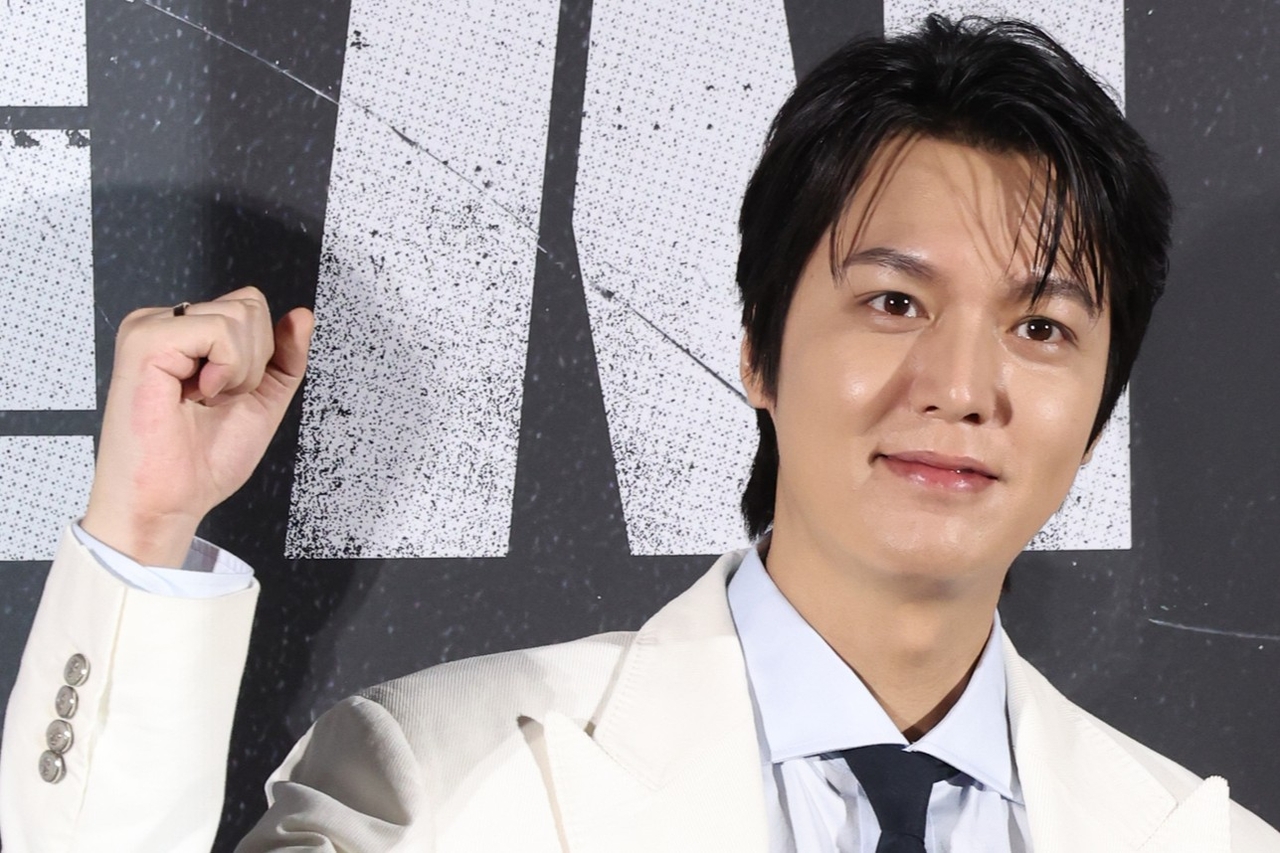
![Democratic Party of Korea lawmaker Jeong Jun-ho [provided by the lawmaker's office]](https://wimg.heraldcorp.com/news/cms/2026/07/14/news-p.v1.20260714.91c35ccc87944cf794aa241e2fdf0edf_P2.jpg)
Democratic Party of Korea lawmaker Jeong Jun-ho, who represents Gwangju's Buk-gu A district and sits on the National Assembly's Culture, Sports and Tourism Committee, said Monday he had introduced a bill requiring the Korea Football Association to elect its president by direct popular vote.
Political and sports circles say calls for governance reform at the KFA have intensified after South Korea's national team failed to advance past the round of 32 at the 2026 North and Central America World Cup. KFA President Chung Mong-gyu submitted his resignation on July 6, ending more than 13 years in office.
The KFA's credibility has been severely damaged by allegations of an illegally constituted electoral college, controversy over the process for appointing the national team's head coach, and improper administrative practices flagged during a Ministry of Culture, Sports and Tourism audit.
Under the current system, the KFA president is chosen by an electoral college of roughly 190 people — a tiny fraction of the country's football community. Critics have consistently described the arrangement as a "gymnasium election" that shuts out the roughly 100,000 people involved in Korean football and lacks democratic legitimacy.
The KFA has long resisted electoral reform, arguing that introducing a direct vote and electronic balloting would violate FIFA regulations.
Jeong dismissed that argument as "nothing more than an excuse to avoid reform." Article 19 of the FIFA Statutes requires only that elections or appointments within member associations be conducted through "democratic procedures" and with "complete independence." The provisions restricting secret ballots and electronic voting that the KFA cites, he said, apply specifically to elections for the FIFA Congress presidency — not to member-association elections. Applying those rules to the KFA's own elections, Jeong said, amounts to a selective and self-serving reading of FIFA regulations.
The bill would require sports governing bodies to elect their presidents through a direct vote open to all members, introduce electronic voting to ensure full participation, and allow election management to be entrusted to qualified independent bodies — measures Jeong said would strengthen democratic governance and transparency in sports organizations.
Jeong said the current indirect election system, in which "a tiny electoral college of 190 people decides everything," was the root cause of prolonged one-man rule and a closed-off association. "A direct election in which all 100,000 football people choose their own representative is the first step toward restoring democratic and transparent governance at the KFA," he said. "As a member of the Culture, Sports and Tourism Committee and as a ruling-party lawmaker, I will support reform of sports administration."
bigroot@heraldcorp.com