"Why is it already this hot in the morning?"
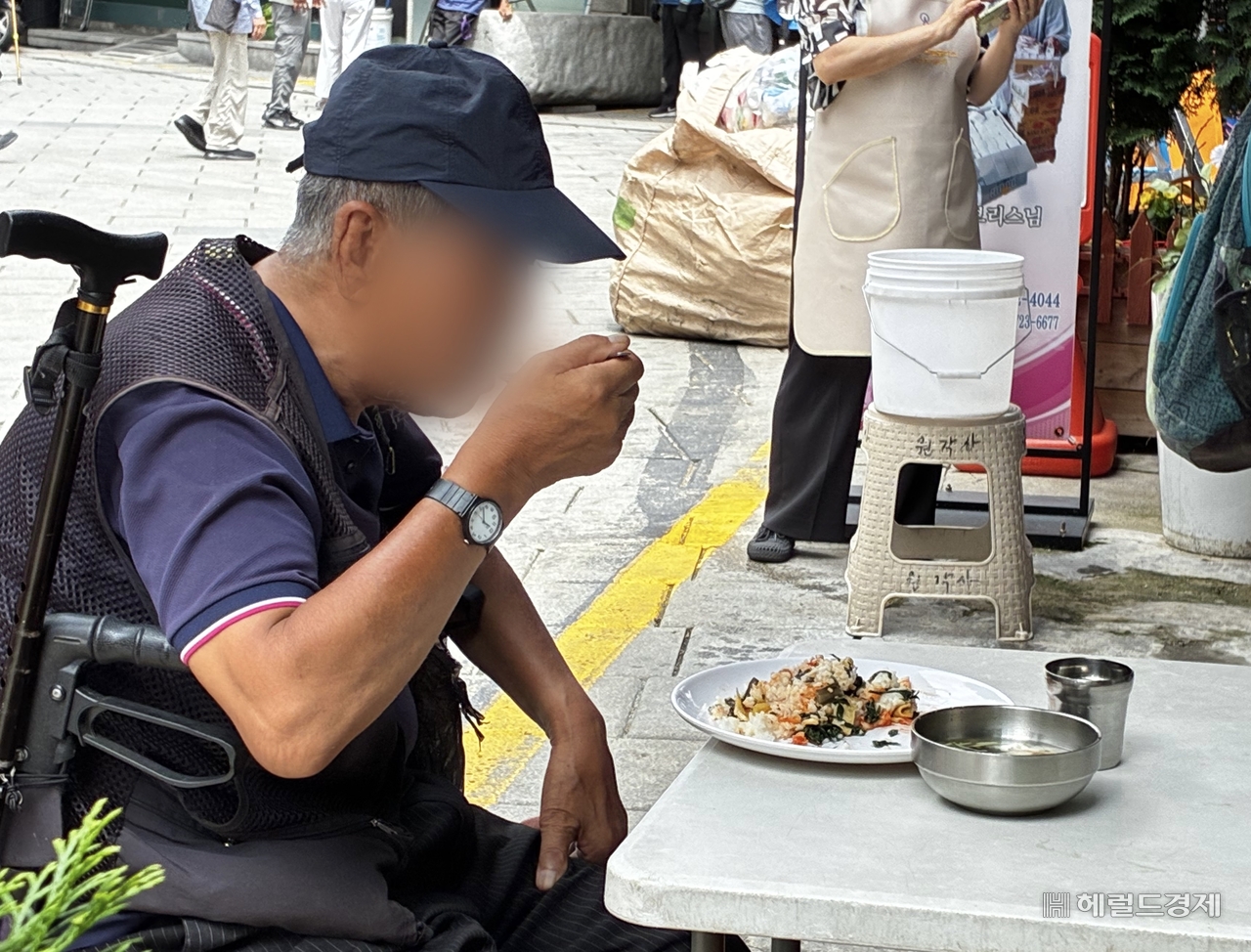
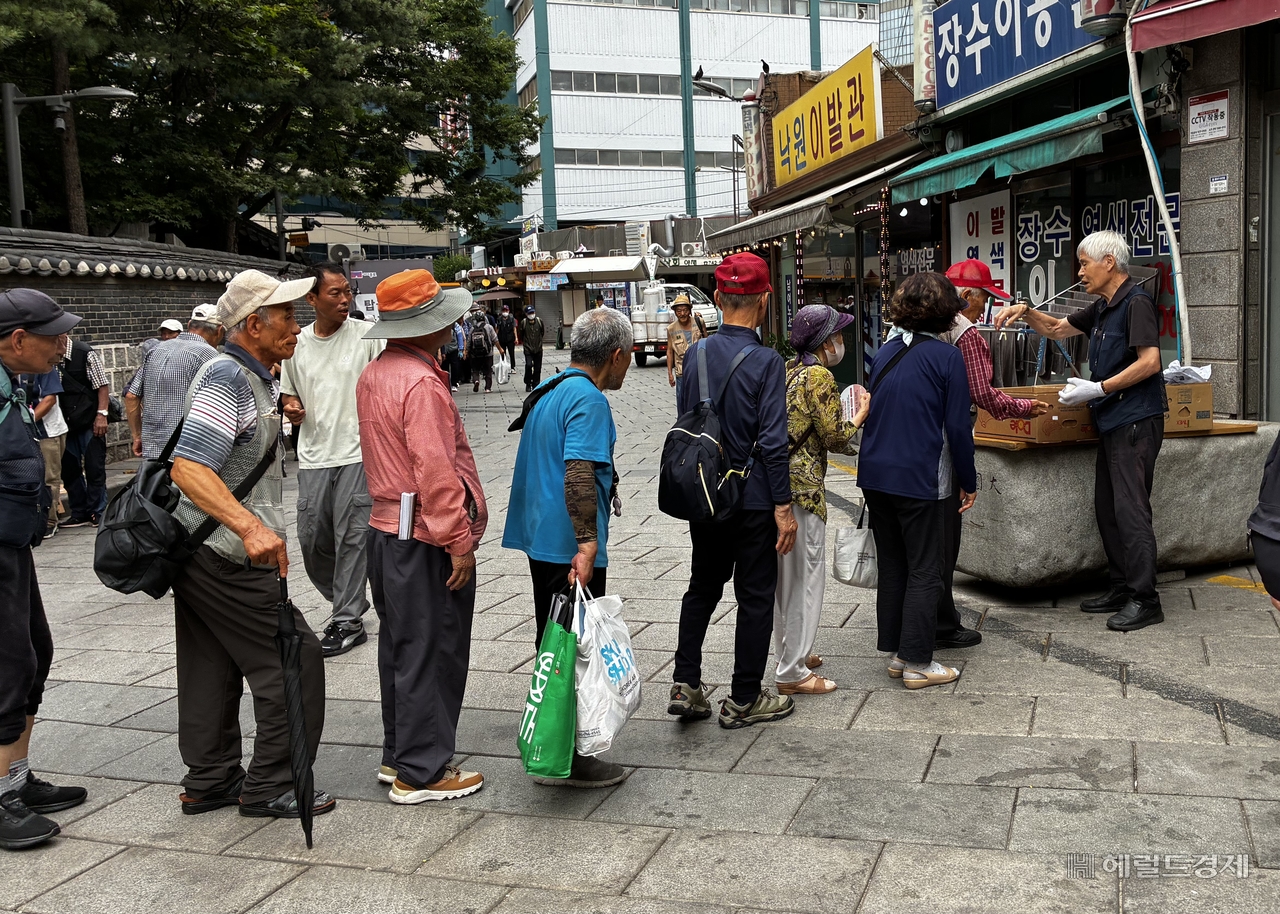
By 7 a.m. Monday, with heat advisories in effect across most of the country, more than 50 people had already formed a line outside the Wongaksa free meal center in Jongno-gu, Seoul — a full hour before the morning rice ball distribution was set to begin.
Elderly visitors fanned themselves with newspapers and folding fans, others pressed portable electric fans to their faces, and some lay on flattened cardboard boxes on the ground. Exhaustion was plain on every face. As the heat wave drags on, the free meal center has become more than a place to eat — it is a refuge where people can escape the heat, even briefly.
Seoul's daytime high reached 34 degrees Celsius that day, with the heat index climbing to around 35 degrees. The Korea Meteorological Administration issued a heat wave warning for northeastern Seoul at 2 p.m. Warnings remained in effect for the southeastern and southwestern parts of the city as well, and nine people in Seoul alone were treated for heat-related illness that day.
Meteorologists attribute the current heat wave to a "double heat dome" — the Tibetan High pressing down from the upper atmosphere while the North Pacific High covers the middle and lower layers, trapping hot air over the Korean Peninsula at the same time. The combination, compounded by an influx of hot, humid air from the south, has kept temperatures from dropping at night, producing a string of tropical nights.
Choi Jong-gu, 68, who lives in a goshiwon — a tiny rented room — in Changsin-dong, Jongno-gu, took the first subway of the morning to reach the meal center. He said his 200,000-won-a-month ($133) room put air conditioning out of the question. "Even the fan barely works. I barely slept last night," he said.
Kim In-yang, 70, who said she had come from Namyangju, noted that the subway was cooler than her home. "I come here often — I can eat and talk with people," she said. The heat was fraying tempers as well. A quarrel broke out in the line before the meal service began, with one person snapping, "Why are you picking a fight in this heat?" A volunteer stepped in with a warning that those causing trouble would not be served, and the situation was defused.
The Wongaksa free meal center serves 250 to 300 people a day, and up to 600 at peak times. Inside, two air conditioners and six large fans run continuously, but those waiting outside must stand in line for more than an hour. By lunchtime, the queue stretched nearly 200 meters to the entrance of Tapgol Park.
Bong Gwang-geun, 87, encountered at the meal center, said he makes a point of going out at least once a day. "If I stay in my room I can't breathe," he said. "This is the only place where I can eat, see people and forget the heat for a little while."
Choi, 71, who has volunteered at the center for seven years, said goshiwon rooms get even hotter in summer. "It's cool inside, so some people come early on purpose, and many linger after finishing their meal," he said.
'The room is hotter than outside': Surviving on a single fan in the single-room district
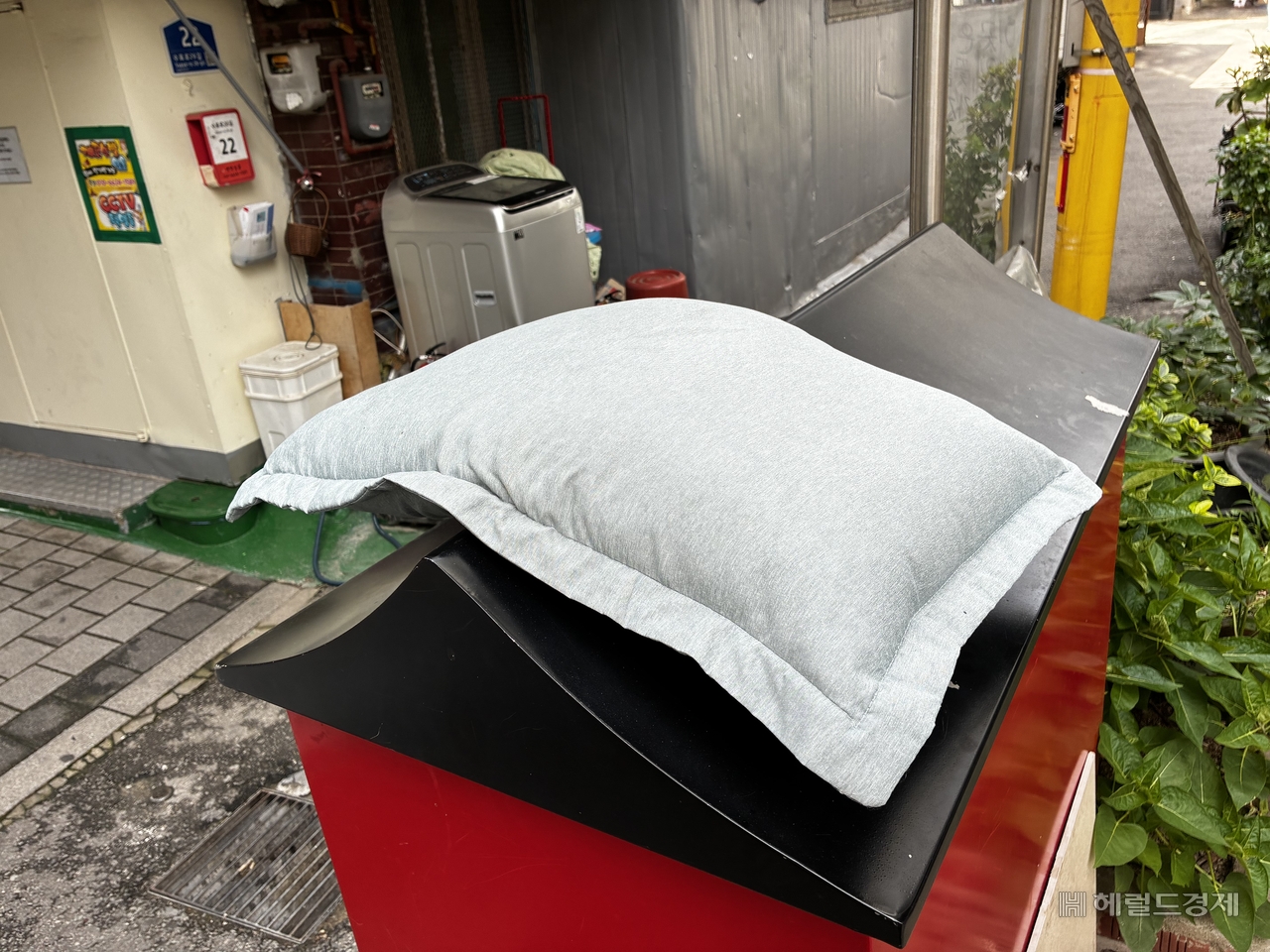
Most people who left the meal center Monday made their way to the nearby Donui-dong single-room district in Jongno-gu. Turning into the alley, a lone pillow sat on the side of the road. A resident explained that a neighbor slept outside every night to escape the heat and had left the pillow out to dry after rain soaked it.
Lee Do-hak, 65, lives in a roughly 10-square-meter room with no air conditioning. "There's nothing to do but endure it with one fan," he said. "When it gets too hot I shower five or six times a day, but even the shared bathroom has a line."
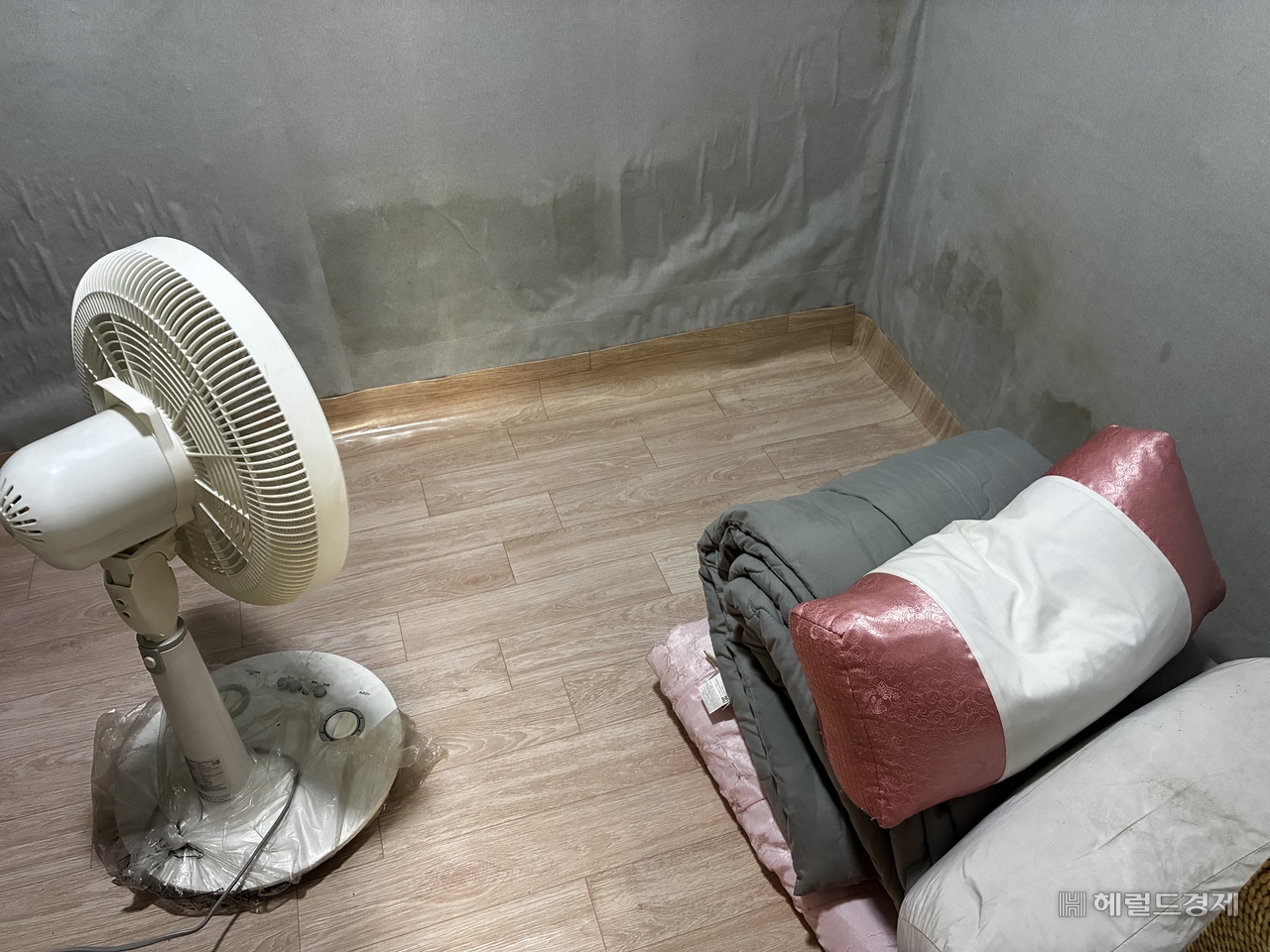
Yang Gil-suk, 72, said the inside of her room is hotter than the street. "There's no window, so at night I can barely breathe," she said. "I'm not even asking for air conditioning — I just wish I had a bigger fan."
One resident had been collecting bottled water, freezing it and handing out the ice to neighbors with mobility difficulties. "You have to hold onto ice just to get through it," he said.
The Seoul Metropolitan Government's Donui-dong Single-Room Counseling Center said a cooling mist system had broken down recently due to a motor failure and was being repaired. A heat relief shelter is also in operation, but some residents said they cannot use it because they are not registered as living at the address.
An official at the nearby Jongno Fire Station 119 said about five reports of people collapsing near the Donui-dong district had come in since the previous weekend. "Because the calls come in simply as collapse cases, we cannot determine on the scene whether heat illness was the cause, but some of them may have been affected by the heat," the official said.
Cooling blind spots across the city: 'Summer is something you just endure'
The heat was not confined to meal centers and single-room districts. Stepping into an underground art studio near Anguk Station in Jongno-gu that afternoon, reporters were met by a wall of hot air. Two household fans and a small portable cooler were running inside the enclosed space, but they were no match for the heat.
Jung Jae-sun, 63, who has run the studio there for about 40 years, said enrollment drops by nearly half every summer. "There's nowhere to put an outdoor unit, so we can't install air conditioning," she said. "Every summer I just worry about how we'll get through it."
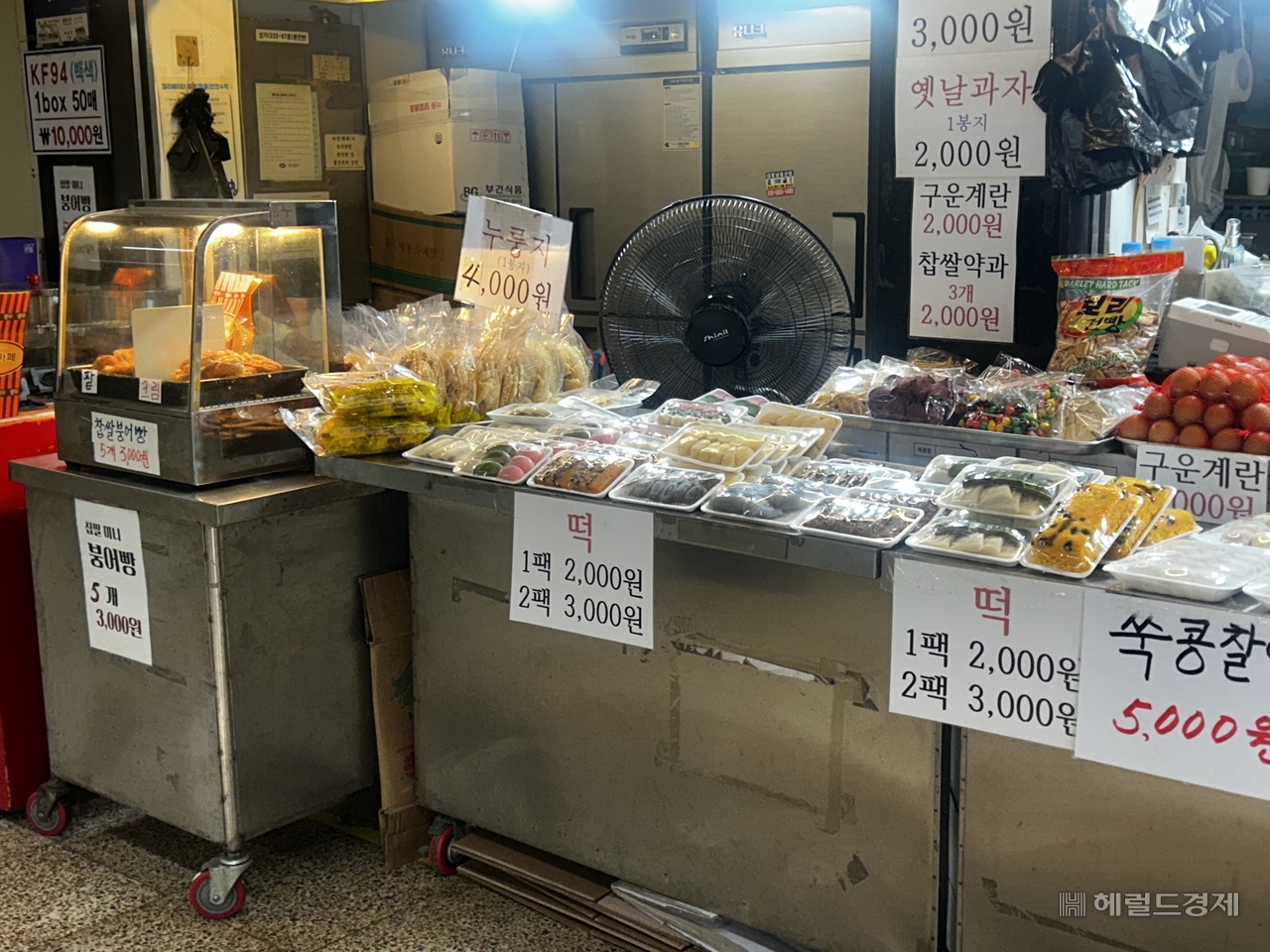
According to Seoul Metro, 51 of the 281 stations on Seoul subway lines 1 through 8 — 25 above ground and 26 below — have no air conditioning as of this year. Most lack it because their structure makes installation difficult or because large-scale renovation would be required. Many shops inside stations also operate without adequate cooling, citing a lack of space for outdoor units and the cost of installation.
Conditions were similar at Yangcheon-gu Office, Daelim and Guro Digital Complex stations in western Seoul, which reporters visited Monday. Rice cake shops and walnut cake vendors sweltered under heat thrown off by their ovens and cooking equipment. Merchants inside the stations, relying on portable coolers, fans and bowls of ice water, said: "I sweat just standing still" and "Summer is something you just endure."
Meanwhile, the heat is forecast to continue for now. The Korea Meteorological Administration said rain will fall across the country Tuesday, but the heat will persist. Once the rain clears, temperatures are expected to climb again, with the heat index forecast to hover around 33 degrees Celsius across most of the country.
jookapooka@heraldcorp.com
newday@heraldcorp.com
snsd@heraldcorp.com
young2@heraldcorp.com