Traditional markets across the country are enduring a punishing summer as an unrelenting heat wave compounds an already sluggish economy, keeping shoppers away in droves.
With daytime temperatures consistently topping 30 degrees Celsius and most traditional markets offering little shelter from the sun, vendors say sales have fallen to less than half of what they see during peak season. Some are closing up early and going home.
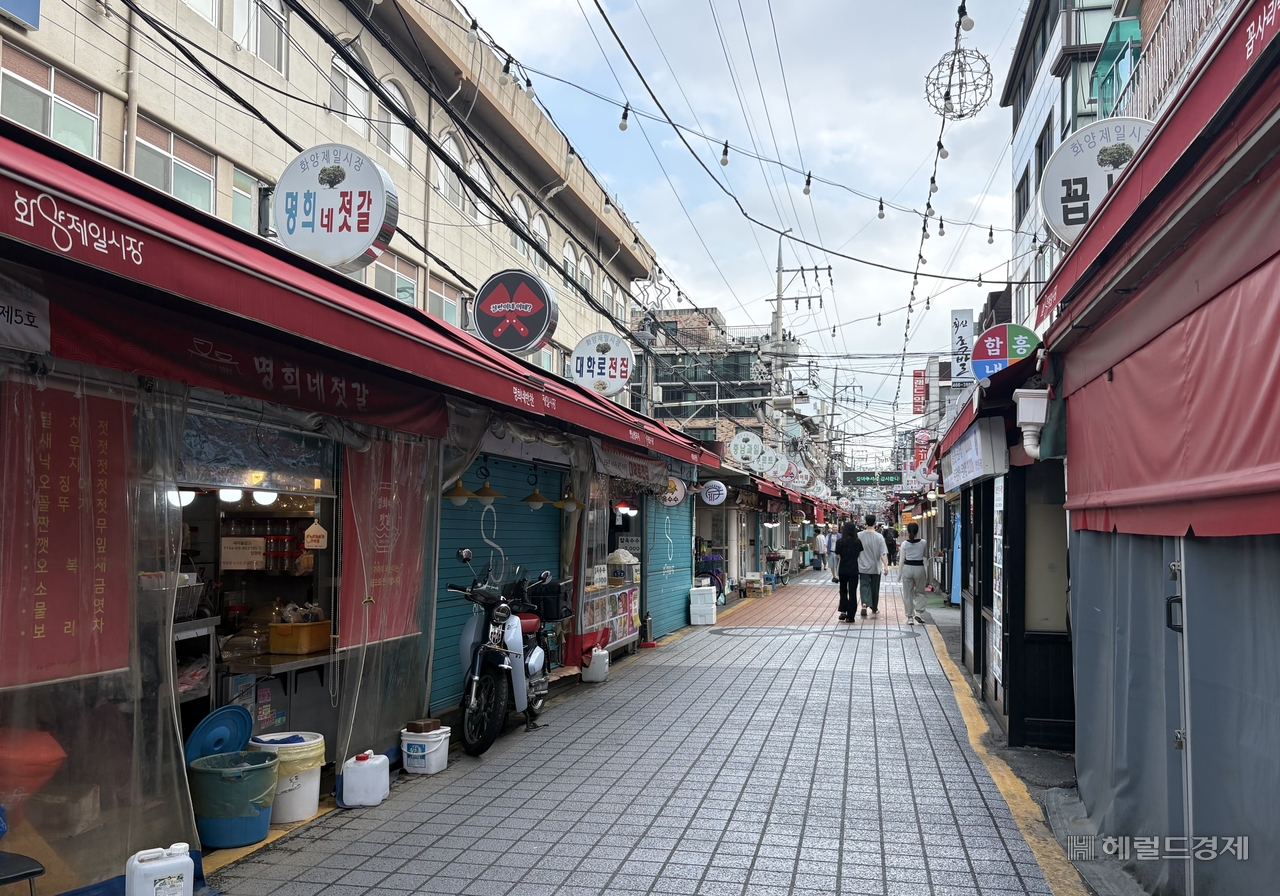
When a reporter visited Hwayangje-il Golmok Market in Gwangjin-gu, Seoul, on Wednesday around 3:30 p.m., the alleyways were nearly empty. Vendors fanned themselves with small electric fans, trying to beat the sweltering heat.
The market has no modern roofing, leaving stalls fully exposed to the sun. Vendors outnumbered shoppers, and even the smell of food wafting through the air was not enough to slow the few passersby.
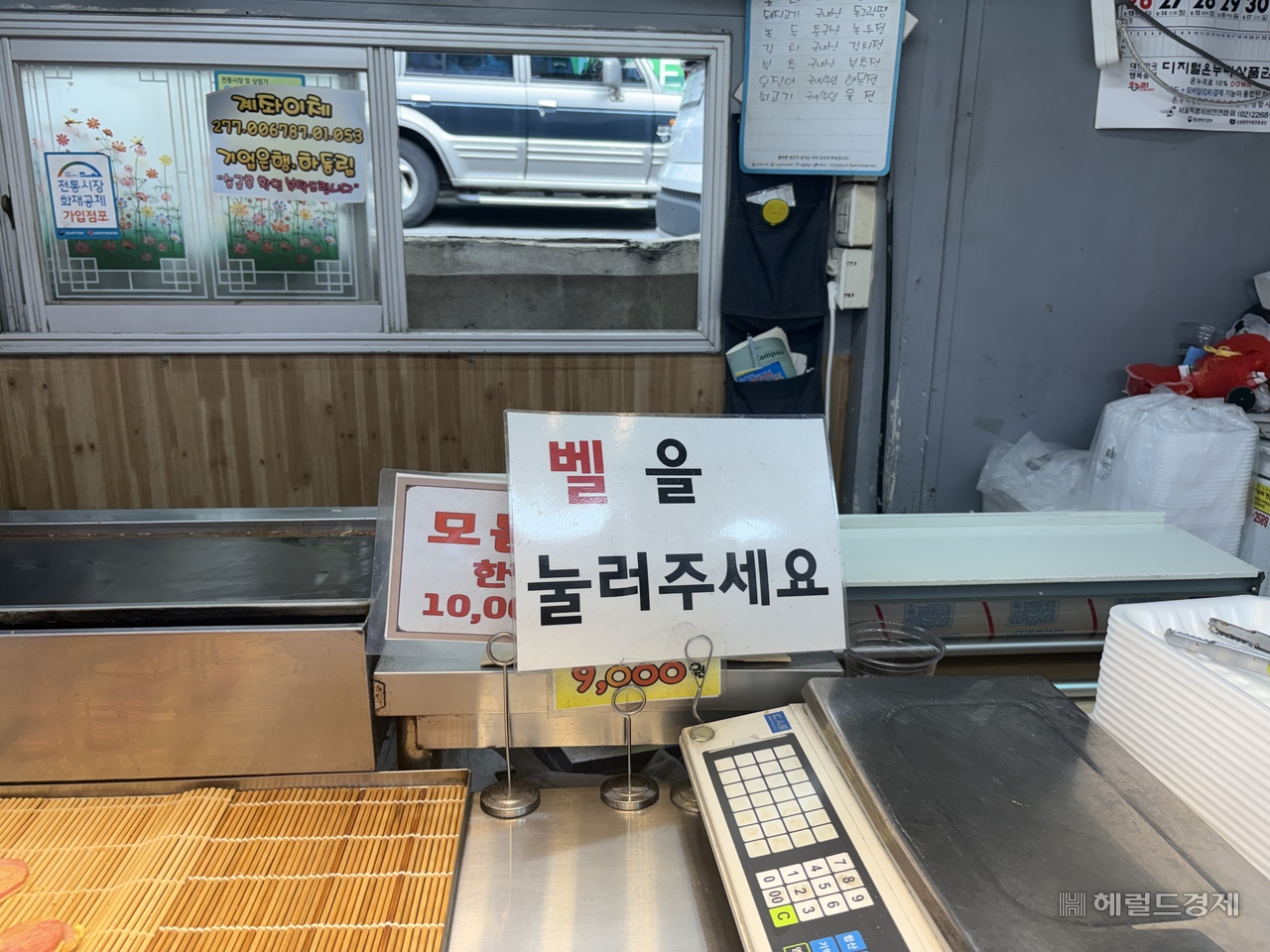
Ha Dong-rim, 64, who makes and sells corn and Korean pancakes at the market, has installed a doorbell at her stall so she can step away and wait nearby rather than stand over a hot griddle with no customers in sight.
"It's hot inside because of the griddle and hot outside because of the sun, so I wait somewhere close and come out when the bell rings," she said. Not a single customer had bought a pancake from her stall by that afternoon. "Business is completely dead these days," Ha said. "Compared to cooler weather, sales are nearly double — it's that big a difference."
The market's location near a university campus adds another layer of difficulty. Choi Jeong, a vendor in her 40s who runs a spicy fried chicken stall, said the summer slump hits especially hard. "The heat is one thing, but being near a university means the crowds disappear during vacation," she said. "When the economy is bad like now, you feel it even more." Kim In-gyeong, 64, who runs a toast shop, agreed. "Even the international students seem to have all gone back to their home countries — there's no one around this time of year," she said.
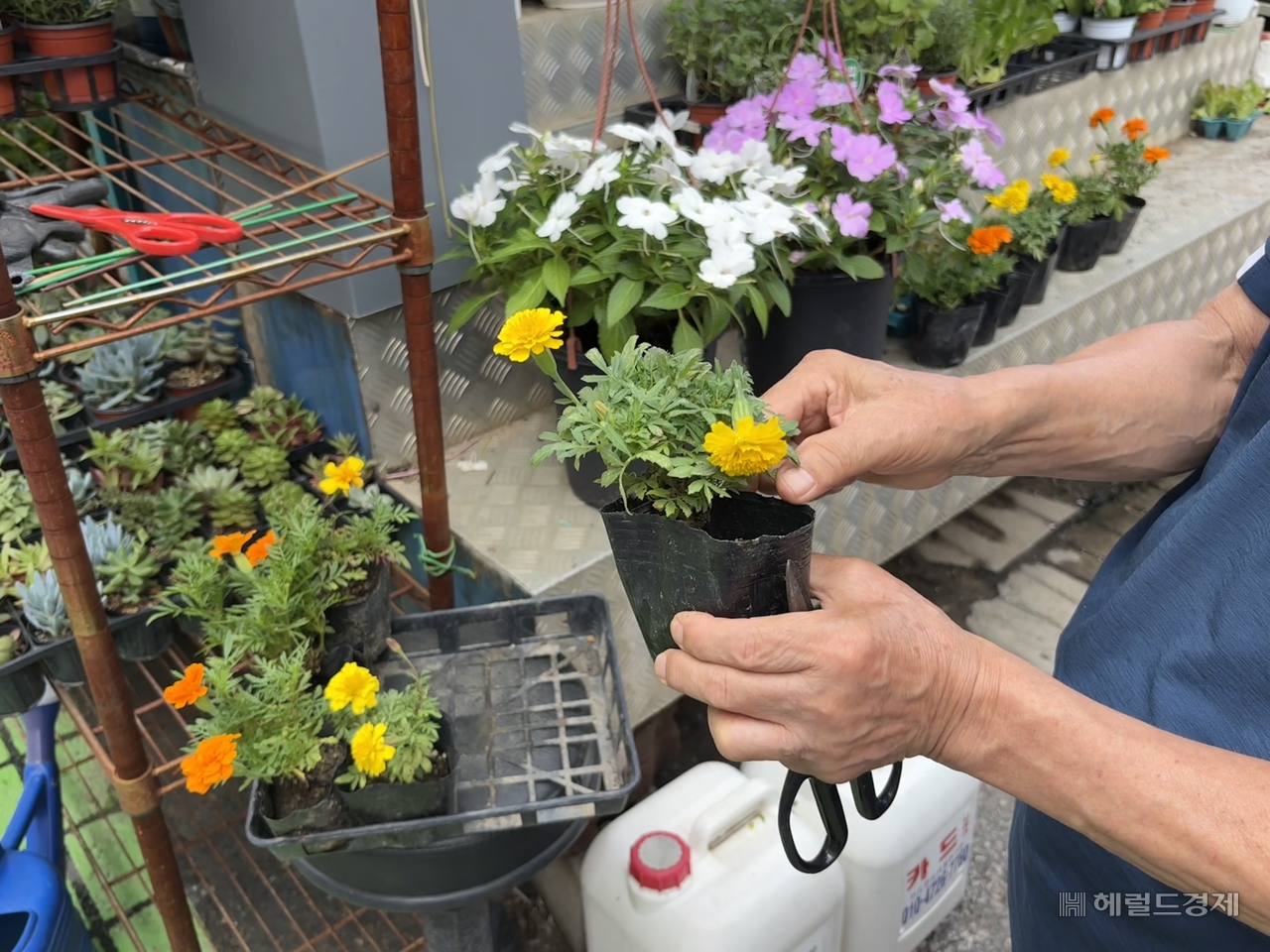
Son Jung-ha, 78, who runs the flower stall, is battling a different problem: product quality. Snipping away heat-damaged leaves, Son said summer is the hardest season for her trade. "The heat and the rainy season together mean the flowers deteriorate quickly," she said. "The condition is so poor that I end up with a lot of unsold stock."
Jang Mi-hyang, a representative of the Hwayangje-il Golmok Market merchants' association, voiced frustration at the gap between official economic indicators and the reality on the ground. "The news says the economy is getting better, but small business owners are really struggling," she said. "At least during COVID there was government support. Now there's simply no reason for people to come to traditional markets anymore."
Namdaemun Market in Jung-gu, Seoul — which has built a following as a trendy destination among tourists — is not immune to the summer slowdown either. Indoor sections, including wholesale kitchenware shops, have been largely insulated from the weather, but outdoor vendors are fully exposed to the elements.
A vendor in her 60s, identified only by her surname Kim, said she felt none of the usual holiday-season boost when a reporter met her outdoors at the market on Tuesday afternoon. "It's vacation season, but there are fewer people than you'd expect," said Kim, who runs a clothing stall. "Compared to the May peak around Parents' Day, sales are about double — it's a huge gap."
Jeong Seong-hun, 57, who sells clothes and hats, put it simply: "Whether it's scorching hot or raining, everyone retreats indoors, so there's almost no one outside." A sudden shower hit around 4 p.m. that day. As vendors scrambled to cover their displays with plastic sheeting, foreign tourists on the street quickly ducked into the indoor shopping arcade.
Lee Jong-nam, 70, who runs a vegetable stall, said she deliberately orders less stock in summer. "Traditional markets are heavily affected by the weather," she said, sighing. "And these days, you can buy everything online — why would people bother coming out?"
The vendors' worries are backed by data. According to a June 2026 business sentiment survey by the Korea Federation of Small and Medium Business, the business sentiment index (BSI) for traditional markets in July stood at 70.7, down 12.5 points from the previous month. A reading below 100 signals deteriorating conditions. Vendors cited a worsening economy and the seasonal off-peak period as the main reasons for the decline.
Experts say traditional markets also lack effective marketing strategies. Seo Yong-gu, a professor in the business administration department at Sookmyung Women's University, said markets need to reframe the summer visit as an experience. "They should prepare summer events and market the idea that coming to a traditional market is a way to beat the heat," he said. "They could also consider introducing 'cool rooms' — air-conditioned spaces where visitors can take a break from the heat. Most traditional markets have a lot of vacant units, so they need to think about how to put that space to use."
The Seoul Metropolitan Government is also rolling out targeted programs to draw visitors to traditional markets. A city official said the government is running a night food culture revitalization support program. "Foot traffic at traditional markets drops in hot weather, and we are using the support program to drive up both sales and visitor numbers," the official said.
20ki@heraldcorp.com
shy@heraldcorp.com