Seoul-wide deals fall from 59,750 to 51,239
Half of top 20 complexes by volume located in Nowon-gu
'Rising prices and loan barriers blocking upgrade moves'
One in every eight apartments sold in Seoul this year changed hands in Nowon-gu, according to new data. While transactions in the so-called "Mayongseong" belt — Mapo-gu, Yongsan-gu and Seongdong-gu — plunged 58% from last year, Nowon-gu jumped 54%, topping all 25 of Seoul's autonomous districts in sales volume. Half of the 20 most-traded apartment complexes in the city were also clustered in Nowon-gu. The pattern points to buyers being priced out of premium neighborhoods by rising apartment prices and tighter loan regulations, shifting demand toward more affordable outer districts.
According to the Ministry of Land, Infrastructure and Transport's actual transaction price disclosure system, Seoul apartment sales by individual buyers totaled 51,239 transactions in the January–September period this year, down 14.24% from 59,750 in the same period last year.
Even as overall Seoul volume declined, Nowon-gu transactions jumped 54.19%, rising from 4,062 deals last year to 6,263 this year. Nowon-gu's share of total Seoul transactions climbed 5.42 percentage points, from 6.80% last year to 12.22% this year.
Beyond Nowon-gu, transaction volumes rose sharply in Geumcheon-gu (up 65.32%), Dobong-gu (up 64.77%) and Jungnang-gu (up 49.15%). Geumcheon-gu posted the highest growth rate, with deals rising from 643 to 1,063. Over the same period, Dobong-gu climbed from 1,391 to 2,292 transactions, and Jungnang-gu from 1,349 to 2,012.
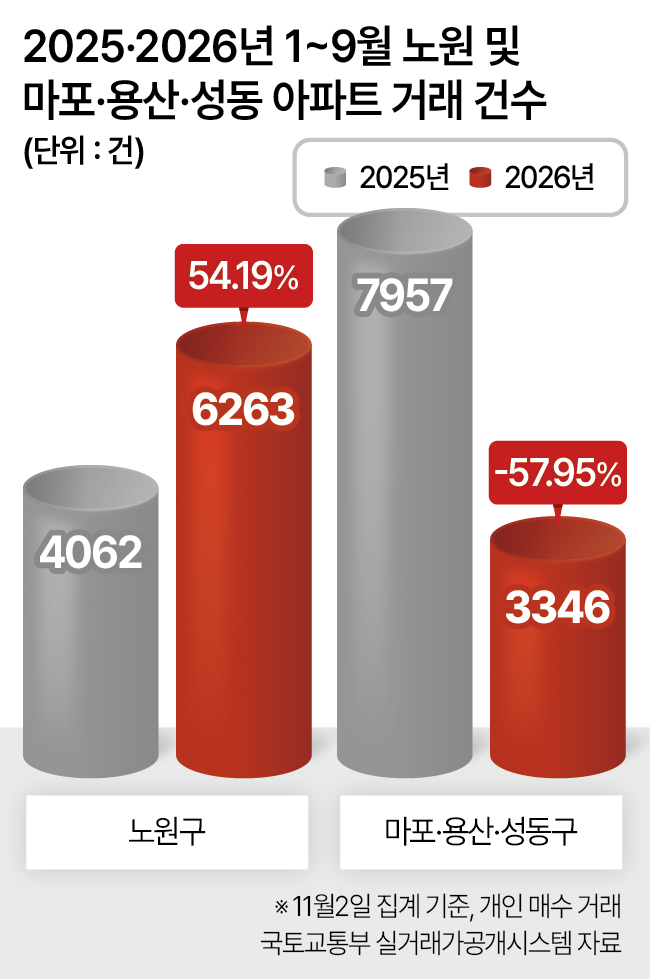
By contrast, transactions plunged in the Han River belt districts of Mapo-gu, Yongsan-gu and Seongdong-gu, as well as in Dongjak-gu, Gwangjin-gu and Gangdong-gu. Mapo-gu fell from 3,336 deals to 1,439, Yongsan-gu from 1,048 to 770, and Seongdong-gu from 3,573 to 1,137 — a combined drop of 57.95% for the three districts. Gwangjin-gu fell 57.12%, from 1,651 to 708 transactions; Dongjak-gu dropped 46.03%, from 3,200 to 1,727; and Gangdong-gu declined 38.12%, from 4,147 to 2,566.
District rankings shifted accordingly. Gangdong-gu, which led all Seoul districts in transactions last year, fell to sixth place this year, while Seongdong-gu dropped from fourth to 20th. Dobong-gu, meanwhile, climbed from 19th to ninth. Even as overall Seoul volume contracted, outer districts with relatively lower price points captured a growing share of real demand.
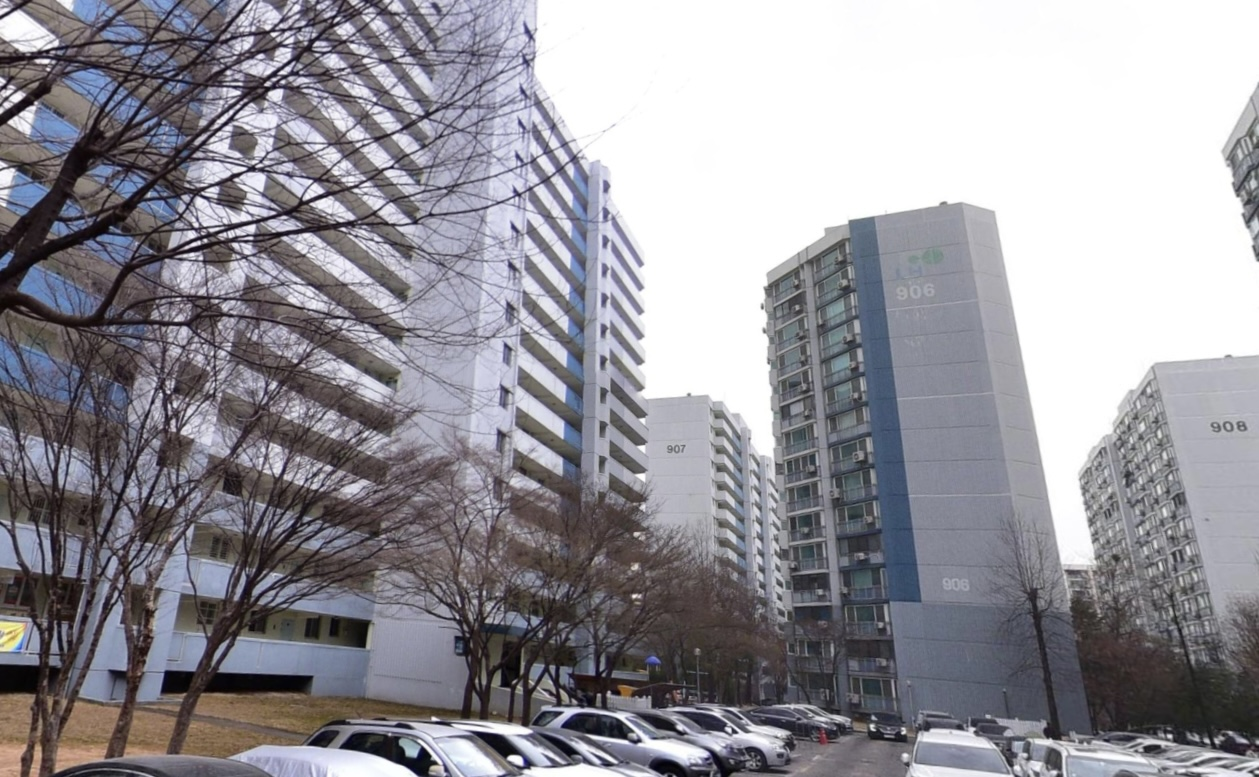
The buying surge in Nowon-gu was equally pronounced at the individual complex level. Ten of the 20 most-traded apartment complexes in Seoul during the January–September period were located in Nowon-gu. Sanggye Jugong Complex 9 and Complex 6 ranked third and fourth with 154 and 153 transactions, respectively. Junggye Green Complex 1 came in fifth with 145 deals, and Sanggye Jugong Complex 7 tied for seventh with 143. Sanggye Jugong complexes 14, 2, 16 and 1, along with Junggye Mujigae and Boram Apartment, also made the top 20.
Sanggye Jugong Complex 9, with 2,830 units, and Complex 6, with 2,646 units, both recorded more transactions than Songpa-gu's Helio City — a complex more than three times their size at 9,510 units — which logged 144 deals. The most-traded complex overall was SK Bukhansan City in Gangbuk-gu with 213 transactions, followed by Ricenz in Songpa-gu with 155.
The contrast with last year is stark. Only one Nowon-gu complex — Junggye Green Complex 1, in 20th place — appeared in last year's top 20. The upper ranks were then dominated by large complexes in Gangdong-gu and Songpa-gu, including Godeok Graysium, Park Rio and Helio City.
Analysts attributed the polarization in transaction volumes to a contraction in upgrade-driven demand across Seoul's apartment market. Yoon Su-min, a real estate specialist at NH NongHyup Bank, said higher price levels in Han River belt apartments, combined with lending constraints, have broadly blocked the upgrade market. "In outer areas like Nowon-gu, many tenants feeling the burden of jeonse are trying to convert to ownership by maximizing their use of loans," Yoon said.
However, Yoon cautioned that districts such as Nowon-gu are highly sensitive to financial conditions. "If interest rates rise and loan limits tighten further under the stress-based debt service ratio rules, buying momentum could slow," Yoon added.
shy@heraldcorp.com