Gwangjin-gu has rolled out six AI tools developed in-house by its own field civil servants for use across all staff operations, the district announced.
The six tools carry a combined development value of approximately 1.5 billion won ($1.01 million) when assessed against standard software cost-estimation guidelines. The district achieved this without allocating a separate budget, delivering significant cost savings through entirely self-directed development.
A key feature of the tools is that they are optimized for the administrative procedures and security environments specific to public institutions. They are expected to sharply reduce the time spent on repetitive tasks that have long consumed staff hours — including document reuse, meeting-material summarization, verifying the basis for civil complaint responses, and address cleanup.
The six tools are: Kordoc, which assists with document summarization and rewriting; a legal tool that looks up statutes and confirms citation sources; a statistics tool that retrieves data along with its sources; a building tool that queries building registers and permit information; Pyojun Juso Sillok, which displays non-standard addresses on a map; and Anything, which rapidly searches documents stored on a user's computer.
The legal, statistics and building tools are integrated with Gwangjin-gu's own "Gwangjin GPT" platform, allowing staff to verify accurate original texts and sources directly — eliminating the AI "hallucination" problem in which the system fabricates information.
In addition, the district has established four management principles to underpin the safe and fair use of AI tools, putting in place a rigorous security and quality-control framework.
The core principles are: no entry of personal information or non-public data; mandatory verification of original sources and citations; final judgment responsibility resting with the officer in charge and their team leader; and operation of a dedicated inquiry channel.
From August, the district plans to run AI-skills seminars for all staff based on real workplace cases, and will continue identifying and refining practical AI agents to automate repetitive tasks. It also intends to manage its self-developed AI tools as a shared organizational asset and a model case for local government innovation, while identifying additional high-demand areas to extend its AI-driven administrative reforms.
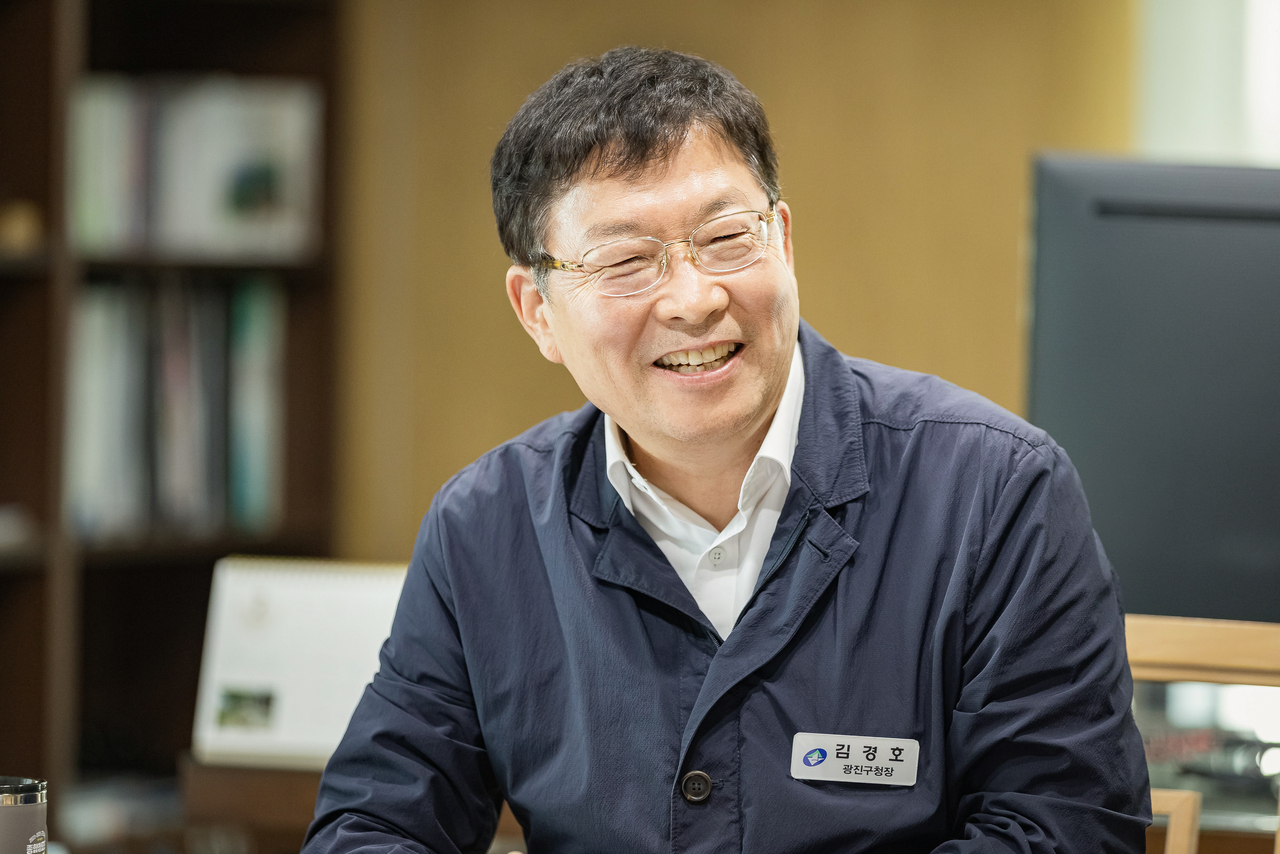
"The fact that tools made by our own employees are drawing media attention and spreading to other local governments means that the people who know the problems on the ground best are the greatest innovators," district mayor Kim Gyeong-ho said. "We will grow these self-developed AI tools into a shared asset used by every employee, and build a Gwangjin-gu that leads the way in how we work."
seouldream01@heraldcorp.com