Eleven students charged with occupying campus buildings and spray-painting slogans in protest against Dongduk Women's University's planned transition to coeducation denied all charges at their first trial. Some acknowledged the spray-painting but argued it did not meet the legal threshold for property damage.
Judge Kim Bo-ra of the Seoul Northern District Court's Criminal Division 13 presided over the opening hearing Wednesday for the 11 defendants — including former student council president Choi — who face charges of obstruction of business, joint refusal to vacate, joint unlawful confinement and property damage.
The defendants organized an emergency general assembly on campus in November 2024 and launched protests against the coeducation plan after rumors spread that the university was moving ahead with the transition without adequately consulting enrolled students.
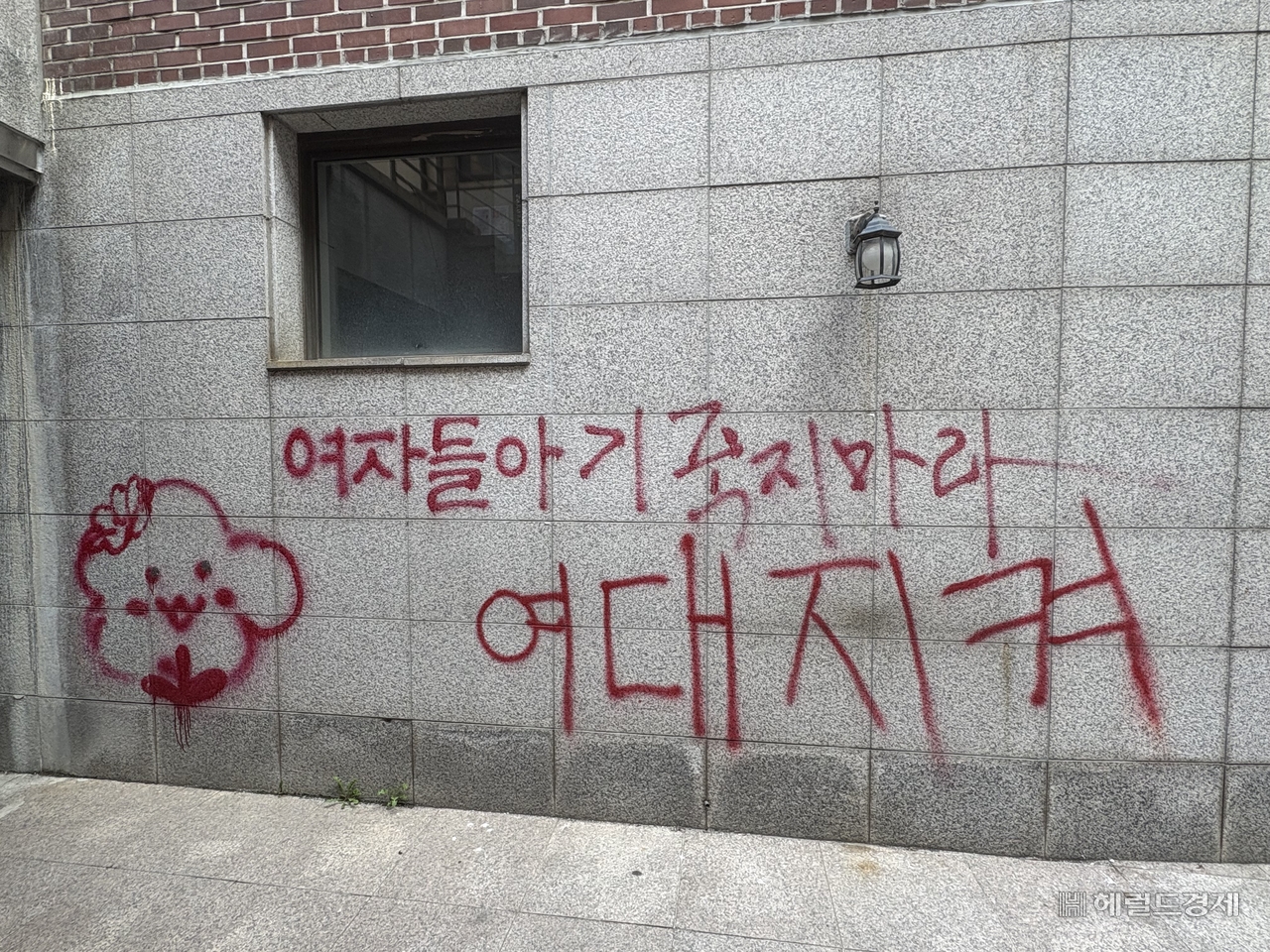
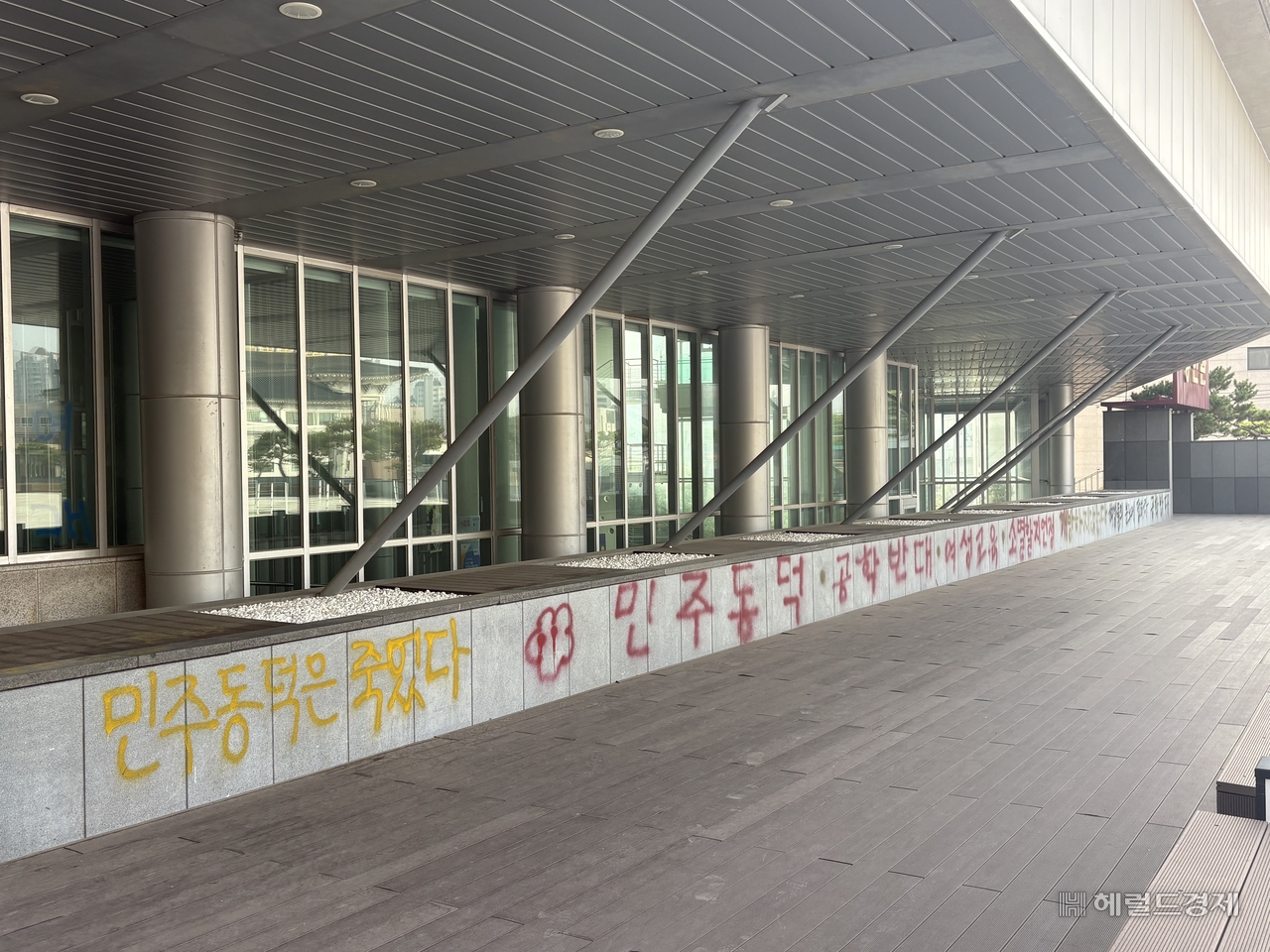
Prosecutors allege the defendants occupied the university's centennial hall and other buildings from Nov. 11 to Nov. 22, 2024, disrupting staff operations and lectures, and then occupied the main building, the president's office and the academic affairs office through Dec. 3, 2024, obstructing the work of 74 people including the university president and faculty. Some defendants also face charges of spray-painting slogans such as "oppose coeducation" on the road in front of the main gate, the lobby walls and pillars of the main building, and the exterior staircase and signboard of the centennial hall.
The defendants also face charges of refusing to leave the buildings despite being ordered to do so by the university. One student is additionally accused of joint unlawful confinement after allegedly blocking a door with other students for about eight minutes to prevent a presidential secretary from leaving.
In a separate case involving spray-painting protests against a coeducation plan at Sungshin Women's University, prosecutors indicted five of the 10 students referred to them on charges of joint property damage, while suspending indictment for the remaining five in consideration of the school's decision not to seek punishment. That outcome contrasts with the Dongduk case, where all 11 students were indicted despite the university also indicating it did not wish to pursue punishment.
The defendants largely denied the charges of obstruction of business and joint refusal to vacate. Attorneys for defendants who had held student council leadership positions said their clients "did not direct or control the students' voluntary occupation and only tried to mediate the conflict," adding that they "did not reside in the buildings or restrict access to them."
Defendants who participated in the protests as ordinary students also pleaded not guilty, saying they "joined temporarily after seeing posts online and did not conspire with other students or occupy the buildings for an extended period."
Some defendants facing property damage charges acknowledged applying the spray paint but argued that "the function or value of the buildings or roads was not impaired to the point of hindering their use, and restoration is possible," and therefore no property damage offense had been committed. They also maintained that the acts constituted lawful expression of opinion and were therefore not unlawful.
The defendant charged with joint unlawful confinement acknowledged being present outside the presidential secretary's office at the time but denied blocking the door by moving flower arrangements or furniture.
The court instructed prosecutors to resubmit a reorganized evidence list, excluding materials unrelated to the charges — including documents on fundraising, the occupation of a music building and a ladder truck. The court said it would "determine the plan for presenting evidence, including witness examinations, after hearing the defendants' views on the reorganized evidence."
The next hearing is scheduled for 4 p.m. on Sept. 16 at the same court.
jookapooka@heraldcorp.com
raining@heraldcorp.com