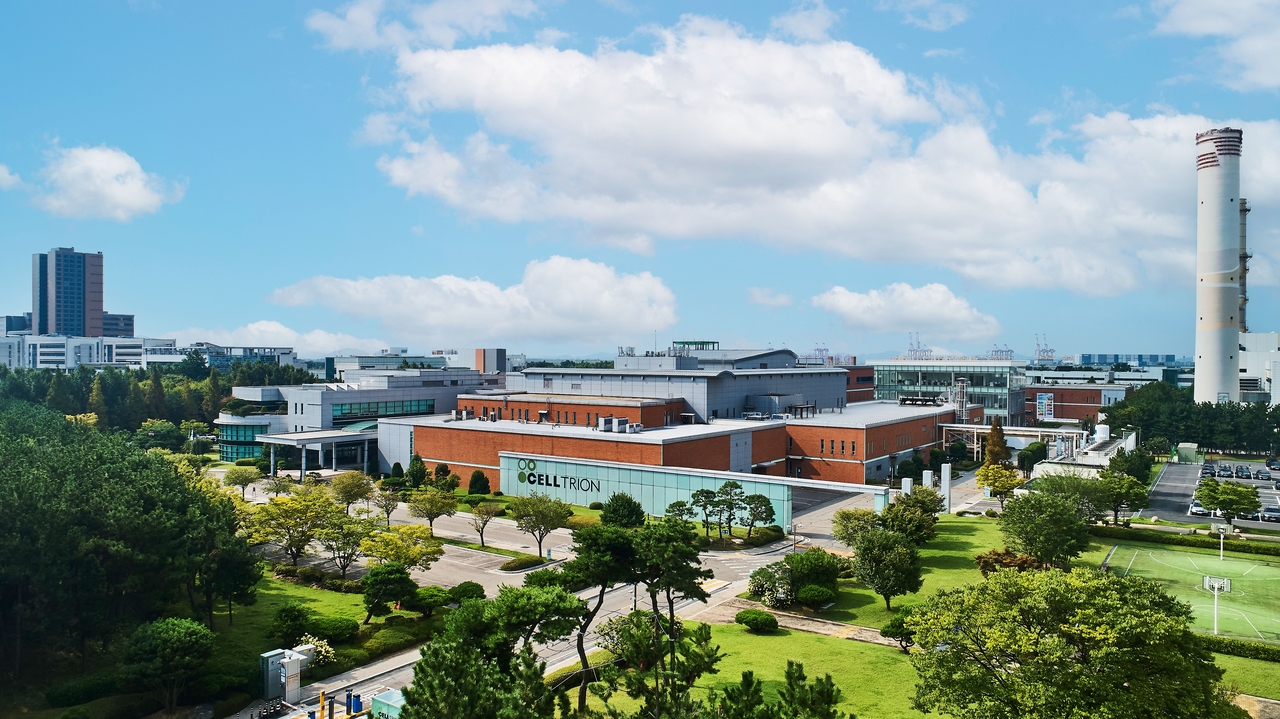
![Headquarters of Korea South Power in Nam-gu, Busan (left), Korea East-West Power in Jung-gu, Ulsan (center), and Korea South-East Power in Jinju, South Gyeongsang Province. [Provided by each company]](https://wimg.heraldcorp.com/news/cms/2026/07/24/news-p.v1.20260724.bf8e2a9d914a4733a924d144f2320657_P1.png)
Competition to host the headquarters of a planned unified state-run power company is intensifying across Busan, Ulsan and South Gyeongsang Province as the government moves to consolidate five Korea Electric Power Corporation subsidiaries into a single entity. The merged company would employ more than 10,000 staff and generate annual sales of 30 trillion won ($20.4 billion), making it a major prize for any region in terms of population inflow, job creation and tax revenue.
The Ministry of Climate, Environment and Energy released a restructuring study on June 18 calling for five state-run power companies — Korea South Power (Nam-gu, Busan), Korea East-West Power (Jung-gu, Ulsan), Korea South-East Power (Jinju, South Gyeongsang Province), Korea Midland Power (Boryeong, South Chungcheong Province) and Korea Western Power (Taean-gun, South Chungcheong Province) — to be merged into one as the country transitions away from coal toward renewable energy.
The five companies were spun off from Korea Electric Power Corporation in 2001 under the government's 1999 power industry restructuring plan. Twenty-five years later, the government is pursuing reintegration to improve operational efficiency.
South Chungcheong Province, home to the headquarters of both Korea Midland Power and Korea Western Power, has been the most aggressive in pursuing the bid, pointing to the fact that 28 of the country's 52 coal-fired power units are located there. Taean-gun, its county assembly and civic groups formed a pan-county committee on July 14 to campaign for the unified headquarters and launched a signature drive. Governor Park Soo-hyun met National Assembly Climate, Environment and Labor Committee Chairman Kim Jeong-ho and ruling party floor leader Lee So-young at the Assembly on Monday to formally request that the headquarters be placed in the province.
The proposed Jeonnam-Gwangju integrated special city and the city of Naju — neither of which currently hosts a power company headquarters — have also entered the race, arguing that Bitgaram Innovation City in Naju, where Korea Electric Power Corporation's head office, the Korea Power Exchange and the Korea Institute of Energy Technology are all clustered, makes it the ideal location.
Busan, Ulsan and South Gyeongsang Province have also joined the competition. Jinju has formed a bid committee and is highlighting that eight of the five companies' 16 thermal power plants are concentrated in the South Gyeongsang and South Jeolla region — including sites in Hadong, Samcheonpo, Goseong, Haman and Yeosu — citing location competitiveness and industrial linkages connecting South Sea offshore wind power and South Jeolla renewable energy development.
Ulsan is emphasizing its concentration of energy-sector public institutions — including the Korea National Oil Corporation, the Korea Energy Agency and the Korea Energy Economics Institute — as well as its large-scale power-consuming industries such as automobiles, shipbuilding, petrochemicals and non-ferrous metals. The city is also pointing to its hydrogen production, storage and transport infrastructure, port and pipeline networks, floating offshore wind capacity and AI data center development as foundations that align with the future business directions of a merged power company.
Busan has also begun preliminary discussions: the city's future economy and industry division met Korea South Power union chairman Hong Seok-won on July 8, and the city's political affairs special adviser Jeong Gyeong-won held a separate meeting with Hong on July 14. Busan is promoting its power consumption base tied to the development of a next-generation smart port — the "physical AI port" — and a marine and clean energy city, alongside what it describes as the best livability conditions in the country.
According to the Ministry of Land, Infrastructure and Transport's 2024 Innovation City Livability Survey, Busan ranked first among the country's 10 innovation cities with a livability satisfaction score of 75.2 points — covering transportation, childcare and education, and convenience and medical services — and the highest family relocation rate in the country at 86 percent (including single and unmarried residents). Ulsan posted a livability score of 71.3 points with a family relocation rate of 73.3 percent, while South Gyeongsang Province scored 72.5 points with a rate of 70.2 percent — both at or above the national average of 71.5 percent.
"There is a real sense of crisis in the region that we could lose the power companies we already have," a local government official from the Busan-Ulsan-South Gyeongsang area said. "We will do our utmost to highlight the strengths of our region so that its foundation for growth can endure."
cityblue@heraldcorp.com