Seocho-gu has entered the 1 trillion won ($682 million) budget era.
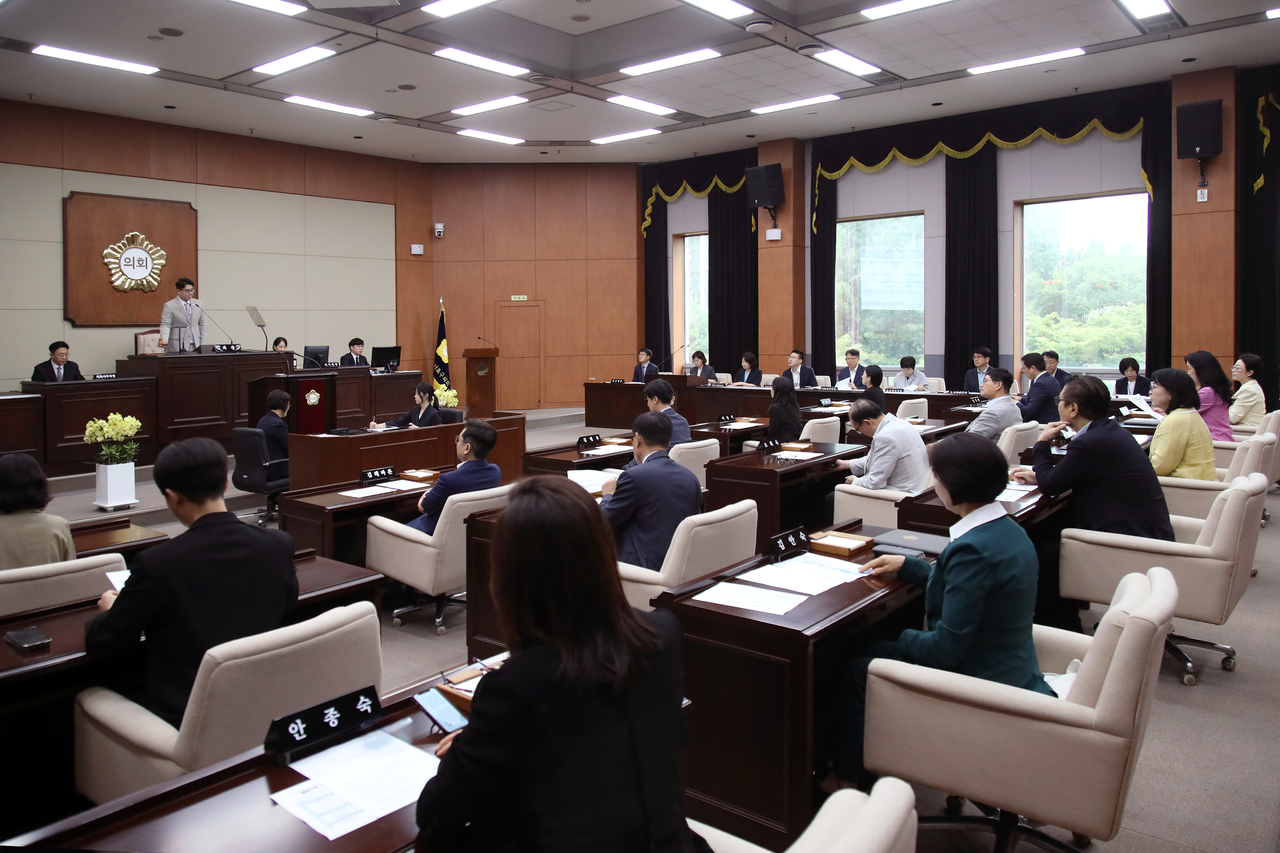
The Seocho-gu Council, led by Speaker Yoo Ji-woong, concluded its 351st extraordinary session on Friday, wrapping up a legislative schedule that ran for 10 days from July 15.
The session — the first since the 10th council was organized at the start of its early term — received major administrative briefings from the executive branch and reviewed the progress of key policies. It also passed the first supplementary budget of 2026, covering both the general and special accounts, setting total expenditures at roughly 1.003 trillion won, a 2.11 percent increase of about 20.8 billion won over the original budget.
In his opening remarks, Speaker Yoo stressed the importance of the 10th council's inaugural session, urging members to carefully examine the direction and plans of major policies through the administrative briefings.
He particularly called on lawmakers to offer policy proposals and constructive advice to ensure that key projects proceed without disruption. On the supplementary budget review, he emphasized that members must scrutinize spending "strictly from the residents' perspective — whether limited resources are going where they are most needed, and whether the budget genuinely supports the lives of Seocho-gu residents."
Given that this was the first supplementary budget since the 10th council convened, members conducted a more thorough review than usual to ensure public funds would not be wasted. The council first formed a budget and accounts special committee at the opening plenary session on July 15, comprising nine lawmakers including Chairperson Ha Seo-young and Vice Chairperson Jeong Min-woo.
Each standing committee then spent three days from July 16 scrutinizing the supplementary budget items under its jurisdiction, and the budget and accounts special committee conducted a final two-day review from Wednesday to assess the validity and urgency of individual projects. Chairperson Ha said the committee "reviewed carefully to ensure that taxpayers' money would not be wasted, while also taking a balanced approach to make sure essential projects can proceed without disruption." The final supplementary budget focused primarily on legally mandated expenses for projects co-funded by the national and Seoul city governments, as well as urgent initiatives to address residents' concerns.
The session also featured two five-minute open-floor speeches. Lawmaker Lee Eun-gyeong said that police substations closed under the Korean National Police Agency's national property rationalization drive had been left idle with no plan for reuse. She cited examples from other local governments that had converted such facilities into libraries or community lounges to improve resident satisfaction, and urged Seocho-gu to review the budget needed — including potential site acquisition costs — to return the vacant facilities to public use. Lawmaker Kim An-suk then said residents had not been adequately consulted during the process of converting an existing walking path into a road as part of a road-opening project at the southern end of Sehwa High School. Kim said administrative transparency must be ensured throughout the project's implementation, and called for public briefings or hearings involving the reconstruction association, residents and school officials so that community concerns could be actively reflected in the project.
A total of seven agenda items were handled during the session, including the first supplementary budget of 2026.
The key items were: the 2026 first supplementary budget covering general and special accounts for Seocho-gu; an ordinance on transportation cost support for senior residents (proposed by lawmaker Park Mi-jeong); a partial amendment to the ordinance on the establishment and operation of a senior cultural and leisure complex facility; a consent motion for private consignment of the management and operation of the Seocho-gu Yangjae Senior Welfare Center; a consent motion for private consignment (re-consignment) of the management and operation of the Seocho 50 Plus Center; a partial amendment to the ordinance on the establishment and operation of various committees in Seocho-gu; and a council opinion request on the designation of a housing reconstruction improvement zone and the determination of an improvement plan for the Hyundai apartment reconstruction project in Seocho-dong.
seouldream01@heraldcorp.com