"You're good, but you're not our style — not Paris Opera Ballet style."
The Paris Opera Ballet is a house of iron tradition, where no dazzling résumé or accolade carries weight. Yoon Seo-hu heard those words more times than she cared to count. She had joined the company as an apprentice at 16 and became its youngest full member at 18 — celebrated in France as a record-breaker and hailed in Korea as a ballet prodigy. Yet the Paris Opera Ballet always loomed before her as an immense, unyielding mountain.
That was seven years ago. Just two years after joining in 2015, she was promoted to full member — an outcome she said she had not even dared to hope for — but a slump and burnout hit her around the same time. "It was the phrase I heard most after I joined," Yoon said, rewinding the clock. Among the world's finest dancers, gathered in the birthplace of ballet, she doubted her own dancing for the first time in her life and gradually lost herself in the process.
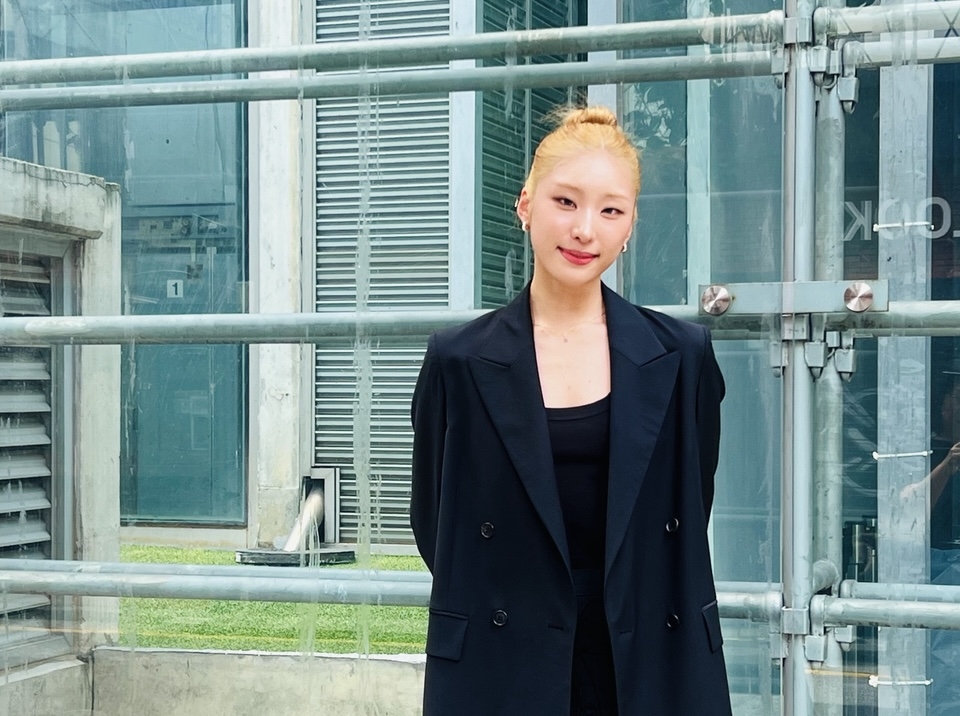
Yoon Seo-hu, 27, was bright-faced when she sat down in Seoul after emerging from that long slump. Meeting Korean audiences for the first time since joining the Paris Opera Ballet (POB), she said she felt both pressure and nerves. "You may be disappointed," she said, "but my goal is to do my best to show what the French style looks like."
She will perform pas de deux from Rudolf Nureyev's "Raymonda" and "Swan Lake" alongside POB colleague Max Darlington at the 23rd Korean Overseas Dance Stars Invitational — on Wednesday in Eumseong, North Chungcheong Province, at the Eumseong Culture and Arts Center, and Saturday and Sunday at Naru Art Center in Seoul. "The 'Raymonda' pas de deux is the longest piece I'll be performing — about 14 minutes," she said. "Normally it includes a corps de ballet, so doing it as a duo is physically demanding, but I've been taking boxing lessons lately and I'm confident in my stamina." She laughed.
Youngest full member at 18 — but the walls of ballet's ancestral home stood tall
It was 2017, and Yoon had just completed two years as an apprentice without incident. These days, she noted, apprentices at the POB typically spend seven to ten years before becoming full members — far longer than in her time. Back then, she felt she had done enough to earn the next step.
She had stunned Korea when she entered the Paris Opera Ballet on her 16th birthday in 2015. Having withdrawn from Yewon School to pursue homeschooling, she had already claimed first place in the junior division at the Youth America Grand Prix in 2011 and at the Varna International Ballet Competition in 2014, earning the label "ballet prodigy" that followed her name.
She left for Paris alone, at an age when most children still live within the shelter of parents and teachers. The apprentice program accepted applicants between 16 and 26. "I thought that even just going there — a company with no junior ballet division — would be an invaluable experience," Yoon recalled.
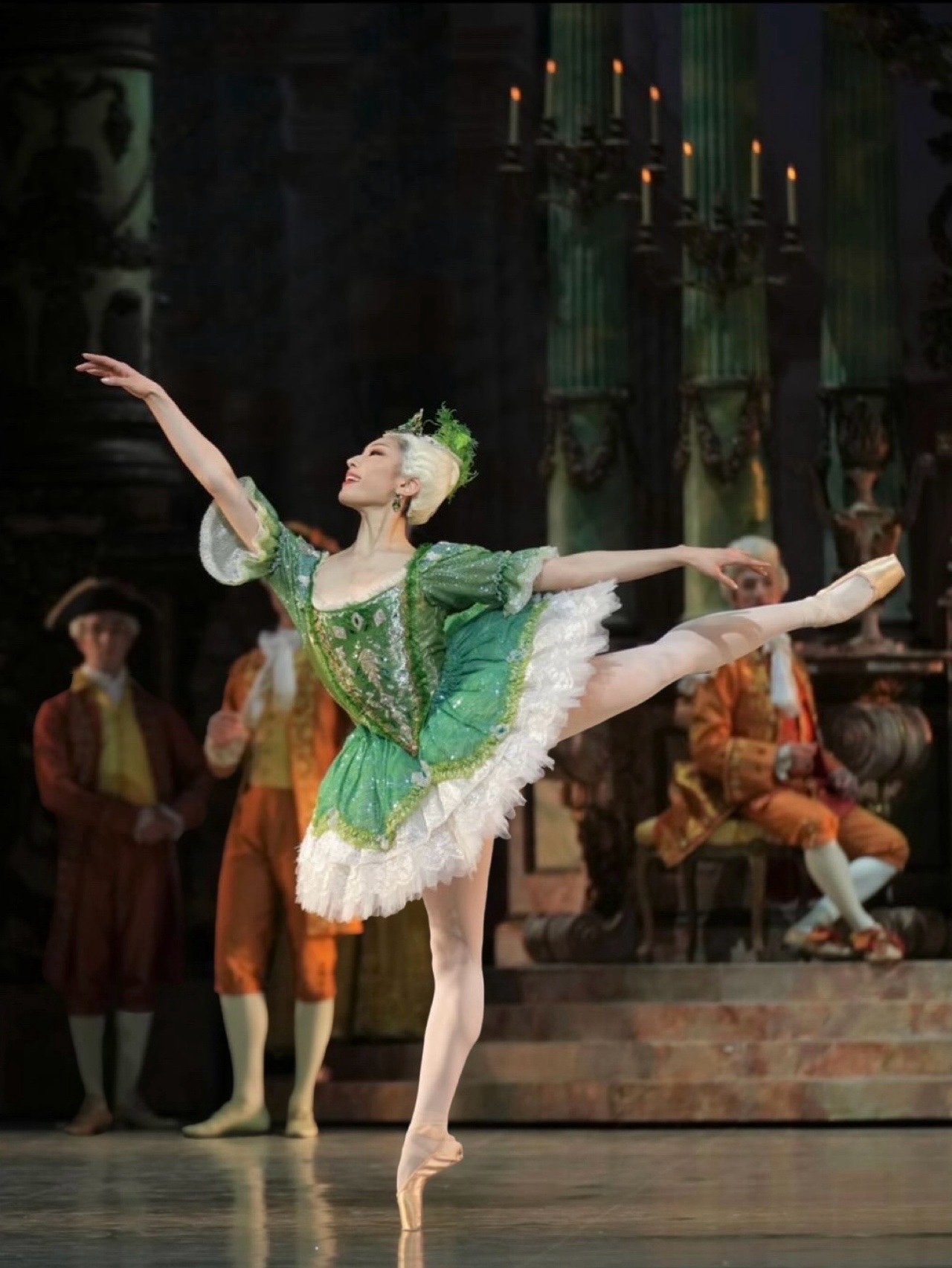
When her video audition was accepted, she found herself standing before the Palais Garnier, the iconic home of the Paris Opera Ballet. For a young dancer who had wanted to build professional experience as quickly as possible, the birthplace of ballet had long been a dream. The years after she passed the apprentice audition were years of climbing toward full membership.
"I wasn't expecting it at all. I had turned off my phone and gone to sleep after the audition, and I woke up to a message from my senior Park Se-eun. She told me, 'Seo-hu, you came in first!' I hung up the phone, sat down right there, and cried for an hour."
On her 18th birthday, she became the youngest full member in the history of the Paris Opera Ballet. Having gone into the audition thinking it would be her last attempt, she passed — and joined Park Se-eun (étoile) and Kang Ho-hyeong as the third Korean full member of the POB.
The path had been far from easy. Having trained in Korea, Yoon's body was steeped in the intense, flamboyant technique of the Russian Vaganova method, which clashed with the POB's own aesthetic. The apprentice cohort was dominated by graduates of the company's in-house French school, making her way of moving stand out all the more.
"When I walked into class, the style and atmosphere were so different that I sometimes walked out in the middle. Everything was completely unlike what I had been doing."
Yoon spent a long time wrestling with how to define what makes the Paris Opera Ballet's style its own. "The essence of the POB style is a dignity and refined aura you can feel even when a dancer is simply standing still," she said. "At first I didn't understand that elegance — I remember thinking, 'Why are they dancing so plainly?'"
The Russian Vaganova style she had learned in Korea emphasizes a rock-solid upper body, whereas the POB prizes the line from the knee down to the tip of the foot, and footwork that is delicate and swift. Navigating an unfamiliar ballet grammar, Yoon said she received endless corrections about her feet.
Within the vast world of ballet, many distinct styles coexist like separate planets. Yoon stepped entirely out of the ballet universe she had known and returned to the studio each day with a beginner's mind. "It was a process of completely rebuilding my body," she recalled. Rebuilding the body meant relearning the language it spoke.
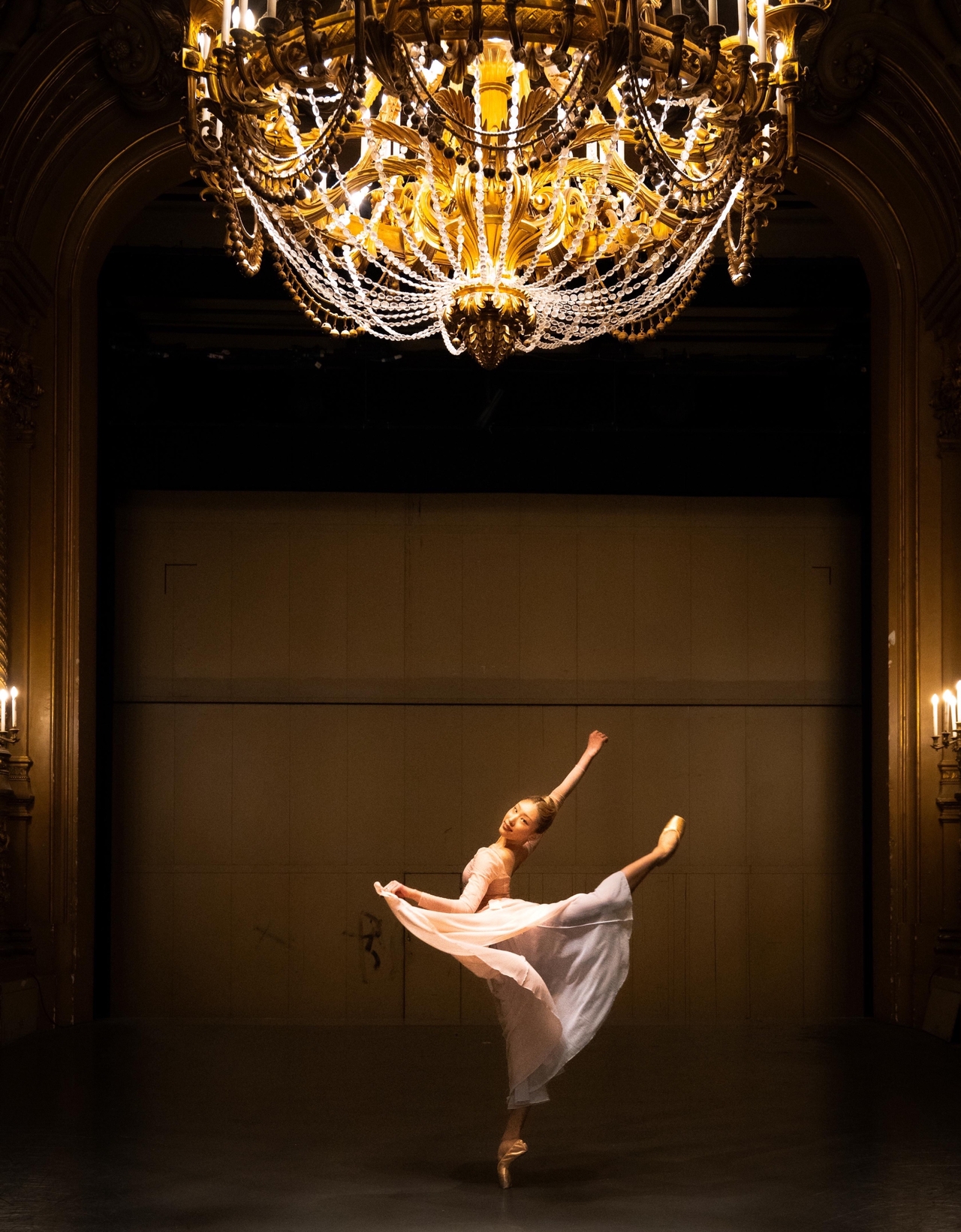
A long slump and burnout — questions asked at the edge
The joy of becoming a full member was short-lived. Yoon kept falling short in auditions for coryphée — the corps leader rank — and a seemingly endless slump closed in around her. It was the winter of 2019, roughly two years after she had made full member. Her mind gave out before her body did, despite all the relentless training.
"At first I didn't even know why I was struggling. There was no reason I could point to." Tracing her memories slowly, she added: "Maybe everything was the reason." Homeschooling, an early move abroad, the absence of friends she could confide in — every hardship crashed over her like waves, all at once, onto someone for whom ballet had been the whole of life.
"It must have started in the winter of 2019. The disappointment I felt in myself was so overwhelming that I couldn't talk to my parents or my fellow company members. I cut off contact with everyone at the ballet and spent my days alone in a small Paris studio. I started asking myself questions I had never asked before — 'Why am I doing ballet?' Then, 'What do I even enjoy?' And eventually, 'Why am I alive?'"
Existential questions began to crowd in on someone who had always defined herself simply as a ballerina. "Even on the clearest days, everything looked gray," she said. Finding a reason to keep dancing was not easy. In truth, those days were ones in which, for Yoon, surviving was a bigger problem than ballet.
As Yoon's own clock stopped — her pointe shoes set aside — the entire global ballet world stopped too. The COVID-19 pandemic arrived, with an irony she still notes. "The performance world shut down, so at least the guilt eased a little," she said. When stages reopened after the pandemic, she was able to return naturally.
It was not easy, of course. She told herself: "Just try one more time. If it still doesn't work, hand in your resignation without regret." After several months away, she returned to the company in August 2020. Just as she was steadying herself, her body rebelled. In May the following year she underwent surgery to remove a bone in her ankle and was forced into a mandatory rest.

Through those days, Yoon's dancing changed. She had once been a perfectionist who tolerated not a single mistake, aiming always for precise technique and exact execution. "It didn't happen overnight, but gradually both my dancing and my mindset shifted," she said. "At some point I noticed that a sunny day actually made me feel good." When she took off the mask — the performance of being strong, being fine, being flawless — she began to dance the way she wanted to. That feeling has stayed with her. "Rather than perfect dancing, I want to dance in a way that reaches the audience's heart — even if I stumble and fall," she said.
Having passed through a decade of rites of passage, the DNA of the Paris Opera Ballet is now layered deep in her body. She was promoted to coryphée in 2023 and then to sujet — soloist level — in 2025. Today she studies the "Gaga" method of contemporary choreographer Ohad Naharin, moving between ballet and contemporary dance in a way that is rare within the POB.
"I'm just getting started, and I'm still growing," Yoon says. She carries a dream role in her heart: "The Lady of the Camellias" by John Neumeier — a work she believes only someone who has experienced both the joy and the sorrow of life can truly perform.
"Because I went through a hard time and came back to ballet, I'm genuinely grateful and happy every single day just to be able to dance. Everyone goes through something like this. Those days were growing pains I could not have avoided — time that was necessary to make me the artist I am. Only now do I feel I've finally finished preparing to begin as a dancer."
shee@heraldcorp.com