The government will begin managing locations where suicides occur repeatedly through a data-driven system, deploying tailored safety infrastructure and detection technology to improve both prevention and emergency response.
The Ministry of Land, Infrastructure and Transport presented the related ministries' joint "Suicide Prevention Location Management Plan" at a Cabinet meeting Tuesday. The plan is part of a broader suicide-prevention package discussed at the 20th Cabinet meeting on May 6.
The government noted that suicides occur across a wide range of public and private spaces — buildings account for 74.7 percent of cases, suburban areas such as mountains and rivers for 22.6 percent, and bridges and railways for 1.1 percent.
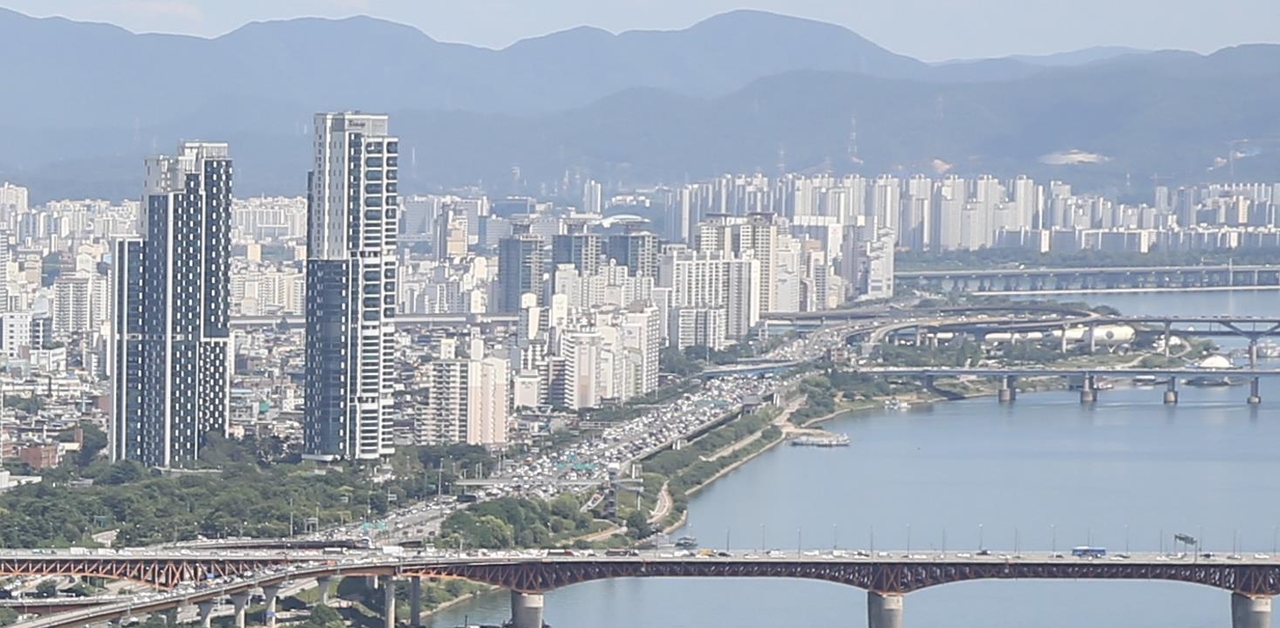
Certain locations tend to see repeated incidents due to their accessibility or symbolic significance. Of 24 bridges identified as high-frequency suicide sites between 2022 and 2024, just five accounted for 41.3 percent of all suicide deaths at such locations.
The government acknowledged that managing and controlling every location is not feasible, and that existing prevention facilities such as safety fences and CCTV cameras have been installed in a piecemeal, fragmented manner by individual site managers, making systematic effectiveness analysis and follow-up difficult. It said it would identify locations requiring urgent attention and introduce tailored facilities and management approaches for buildings, bridges, railways, mountains and rivers.
In addition, the government plans to build a data-driven pan-government location management framework that links statistical production, information sharing, facility installation, effectiveness analysis and follow-up management.
As a priority, the plan focuses on rooftops of high-rise buildings and medical facilities, where access by those at risk is relatively easy and where public-sector management and physical improvements are feasible.
Automatic door-opening devices — currently used for fire prevention — will be more widely installed on the rooftops of high-risk buildings, including high-rise apartments. The devices keep rooftop access doors closed under normal conditions but open them automatically during a fire to serve as evacuation routes. Already mandatory in new buildings, the devices will be assessed for installation at 939 buildings where rooftop jumps occurred over the past three years, based on a risk review.
At medical facilities, safety improvements will focus on spaces with a higher risk of suicide incidents, such as inpatient rooms and restrooms. Measures include restricting how far windows can open, raising railing heights and modifying restroom fixtures.
For bridges and railways, the plan calls for expanding physical fall-prevention barriers such as safety fences while also installing detection equipment including CCTV cameras to enable rapid identification of and response to dangerous situations.
Of the 24 high-frequency suicide bridges, 15 that lack adequate safety infrastructure will receive expedited installation of safety fences and CCTV cameras.
Two expressway bridges where CCTV installation has already been completed will receive safety fences, and 13 local road bridges will be fitted with both CCTV cameras and safety fences.
The government will also develop bridge management guidelines to ensure that suicide-prevention facilities are suited to each bridge's structure and usage conditions, and will expand the rollout of AI-based CCTV cameras capable of detecting dangerous behavior early.
In the railway sector, the installation of platform screen doors and intelligent CCTV cameras will be extended to prevent people from falling onto tracks.
Platform screen doors have until now been installed mainly at high-platform stations. Going forward, they will be rolled out in stages to 239 low-platform stations on general railway lines. Stations where screen door installation is not feasible will receive intelligent CCTV cameras instead.
Mountains and rivers present a particular challenge because their wide spatial extent makes it difficult to physically block or monitor every section. Nevertheless, the government will prioritize reinforcing safety infrastructure, including CCTV cameras, and expanding patrols at high-frequency suicide spots across 21 identified mountains — six managed by the central government and 15 by local governments.
AI-based CCTV systems will be used to automatically detect dangerous situations, and the monitoring framework will be upgraded accordingly. The government will also inspect the installation and condition of rescue and safety equipment along rivers, such as life rings and safety fences, and expand on-site patrols.
In addition, the government will establish a pan-government governance structure to systematically manage data on high-frequency suicide locations and facility installation projects. The Ministry of Health and Welfare will produce and analyze suicide statistics and share them with related ministries and local governments. Each facility manager will use that data to install necessary equipment, then analyze prevention effectiveness and conduct follow-up management.
The integrated information system will include not only data on high-frequency suicide locations and related statistics, but also information on projects such as the installation of suicide-prevention facilities.
"Suicide prevention encompasses not only counseling and treatment but also making the spaces where people spend their lives safer at moments of crisis," Land Minister Kim Yun-deok said. "This plan focuses on using data to identify locations where suicides recur and combining physical infrastructure, monitoring and patrols in ways suited to the characteristics of each site."
If you or someone you know is struggling with thoughts of self-harm or suicide, contact the Ministry of Health and Welfare's helpline at 1393, available 24 hours a day, seven days a week. Please request a translator for English-language services.
smh@heraldcorp.com