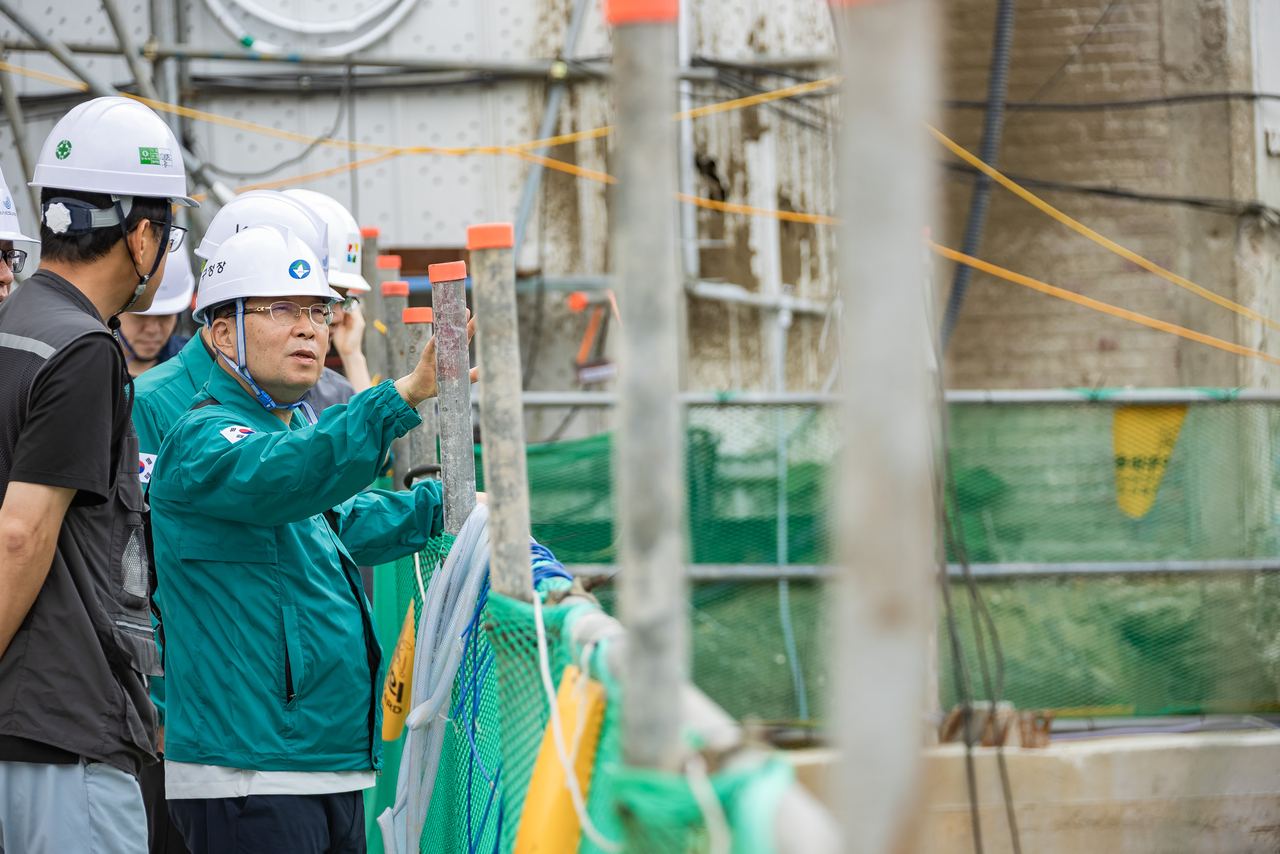
Gwangjin-gu District Mayor Kim Kyung-ho has launched a hands-on field inspection campaign, personally visiting key sites across the district to assess safety conditions and protect residents from summer disasters.
Kim visited seven locations over two days, Monday and Tuesday — including major construction sites, flood-control facilities, streams, hiking trails and residential areas — to inspect safety management conditions ahead of typhoons and localized heavy rain and to identify potential hazards on the ground.
The inspection was organized to verify safety conditions at construction sites and flood-control facilities ahead of typhoons and localized downpours that could continue even after the monsoon season, and to proactively identify risks in residential areas. Any issues found on site were immediately discussed with the relevant departments to devise improvement and response measures, with particular emphasis on field-centered safety management.
On the first day, Kim visited a large new construction site, the Junggok Stormwater Pumping Station, Jungnangcheon Sports Park and its embankment path, and the alleyways around Junggok Station. At the construction site, he checked for potential soil erosion and ground subsidence in excavated sections, as well as the condition of drainage facilities, and urged strict compliance with safety rules to prevent heat-related illness among construction workers.
At the Junggok Stormwater Pumping Station, he reviewed operational readiness and equipment management. At Jungnangcheon Sports Park, he checked post-heavy-rain recovery progress and the safety of sports facilities. He also inspected the hygiene conditions of smart rest shelters and drinking fountains along the embankment path, calling for thorough upkeep to minimize inconvenience for residents seeking relief from the heat.
Kim also greeted residents at the sites and listened directly to their concerns.
Along the back streets of Neungdong-ro 53-gil near Junggok Station, he examined cleanliness and the status of security lighting, directing officials to find ways to brighten and widen the alleyways so residents would notice a clear improvement. He also closely inspected facilities tied to residents' daily lives, including storm drains, flood-prevention installations for below-ground housing units and heat-reduction facilities.
On the second day, Kim visited the construction site for a new community sports facility in Gwangjang-dong, the erosion-control dam and Donghang Forest Trail on Achasan, and the construction site for a protective structure over the Hongnyeonbong fortress ruins. He checked retaining wall and soil management conditions at the rainy-season construction sites, verified that the erosion-control dam was functioning properly, and reviewed hiking trail safety facilities and drainage systems to assess field readiness for typhoons and heavy rain.
"The answers are in the field," Kim said. "When it comes to summer disasters — typhoons, heavy rain and heat waves — advance inspection and prevention are paramount. We will leave no hazard unchecked, from construction sites and flood-control facilities to the everyday spaces residents use, and we will protect the lives and safety of our residents."
Gwangjin-gu continues to conduct on-site inspections of construction sites and flood-control facilities ahead of summer typhoons and heavy rain, maintaining a rapid response system when weather alerts are issued. The district is also running smart rest shelters and heat-relief centers, and operating shade structures, cooling fog systems and water-spraying vehicles as part of its heat wave countermeasures, concentrating its administrative resources on protecting residents from the compound disasters of summer.
seouldream01@heraldcorp.com