![An aircraft. [Getty Images Bank]](https://wimg.heraldcorp.com/news/cms/2026/07/28/news-p.v1.20260728.6f1934680f3d4524a0b1437ee467dab7_P1.jpg)
South Korea plans to invest 30.3 billion won ($20.7 million) over five years to develop recyclable aviation materials and secure a foothold in the next-generation aircraft supply chain.
The Korea AeroSpace Administration (KASA) said it is kicking off the "Core Technology Development for Sustainable Thermoplastic Aircraft Components" project with a launch meeting held Tuesday and Wednesday at KB Jaenium in Sacheon.
The project aims to secure flame-retardant, recyclable thermoplastic composite materials and the manufacturing technologies needed to produce aircraft components from them. It targets full life-cycle technology coverage across four areas: next-generation thermoplastic composite development, high-speed automated manufacturing process technology, a testing and performance verification framework for aircraft application, and recyclability technology development.
At the launch meeting, 18 participating research and development institutions will present their research goals and implementation plans, with expert advisory panels reviewing the direction of technology development and cooperation frameworks. KASA plans to operate an advisory committee of domestic and international aircraft manufacturing specialists, continuously incorporating their input to achieve the project's goal of entering the finished-aircraft supply chain.
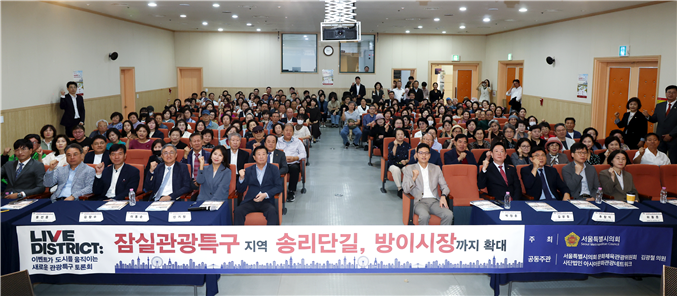
![Participants pose for a photo at the launch meeting for the "Core Technology Development for Sustainable Thermoplastic Aircraft Components" project, held Tuesday at KB Jaenium in Sacheon. [Korea AeroSpace Administration]](https://wimg.heraldcorp.com/news/cms/2026/07/28/news-p.v1.20260728.5adeddae1e704858aaace60d4970c4bc_P1.jpg)
Thermoplastic composites are a key material for next-generation aircraft competitiveness, with major players including Europe and the United States pursuing national-level development and demonstration programs. In Europe, Airbus participated through Clean Sky 2, an EU public-private joint program, to develop a large-scale thermoplastic composite fuselage demonstrator structure, and is now working on high-speed, high-volume production technology capable of turning out 60 to 100 next-generation single-aisle aircraft per month.
The United States is also advancing composite aircraft production rate improvement technologies through the HiCAM project led by NASA, in collaboration with a public-private consortium that includes Boeing.
South Korea, by contrast, lacks the design, manufacturing, testing and performance verification capabilities for aviation-grade thermoplastic composites, as well as a stable supply base — making it necessary to secure core technologies and build an industrial ecosystem.
"The reason the United States and Europe are developing thermoplastic composite technology at a national level is that this technology will determine the winners and losers of next-generation aircraft," KASA Administrator Oh Tae-seok said. "With a full life-cycle technology independence strategy — from materials to recycling — we will actively support Korean companies in securing a definitive role in the international supply chain."
nbgkoo@heraldcorp.com