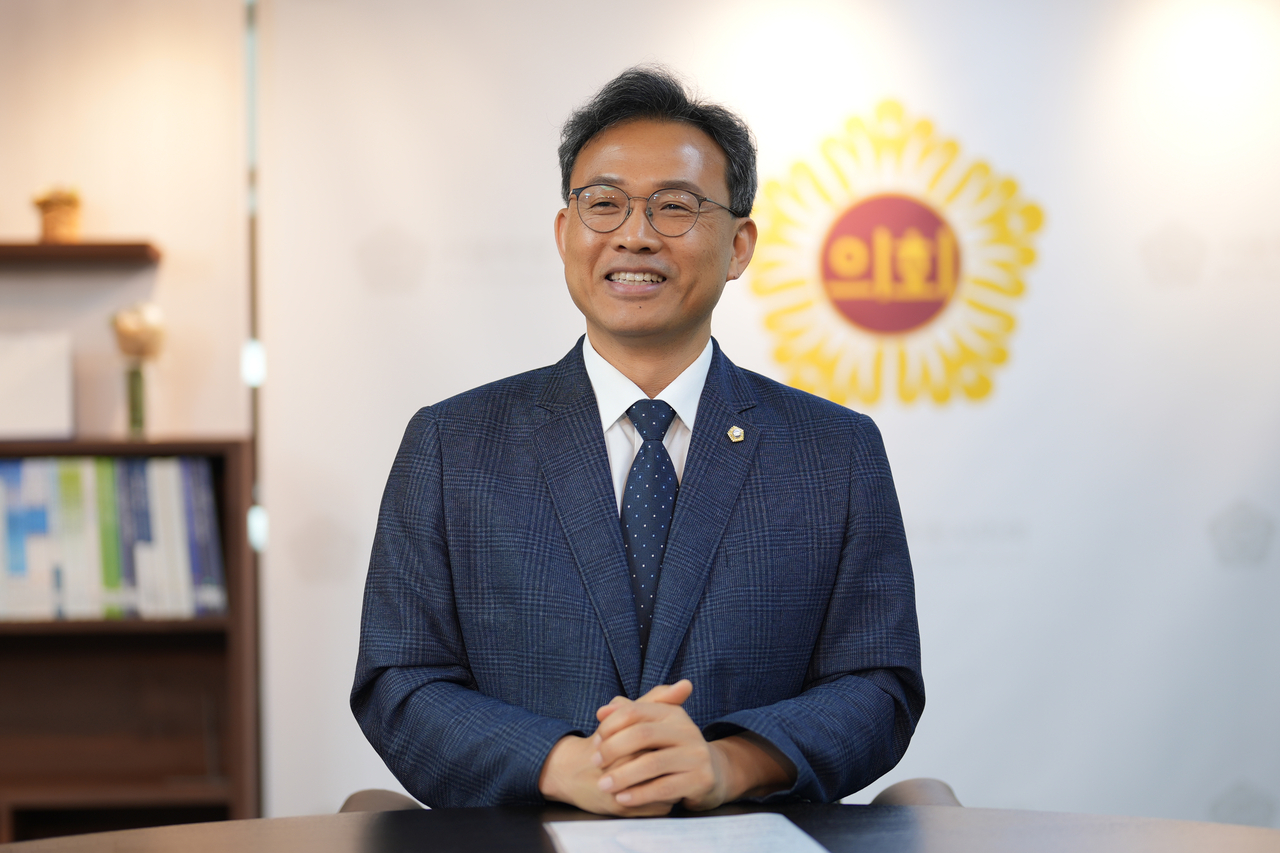
Lee Sang-hoon, floor leader of the Democratic Party of Korea caucus at the Seoul Metropolitan Council (Gangbuk District 2), said the quality of policy determines public trust, and identified proactive investment in aging urban infrastructure and reform of the council's policy support system as his top priorities.
As the guiding principle for leading the majority caucus, Lee has put forward what he calls "competent checks and cooperative partnership." His legislative philosophy holds that the council must not reflexively oppose city hall, but instead conduct rigorous policy reviews, offer realistic alternatives and deliver results that citizens can actually feel.
"When policy quality falls short, it becomes very hard to earn public trust," Lee said in an interview Wednesday. "It is the council's role to closely examine foreseeable safety risks and practical obstacles in any project, and to present solutions alongside that scrutiny."
He said major Seoul city projects must be evaluated for safety, feasibility and sustainability before speed of execution. Even when the intent behind a project is sound, pushing ahead without adequately examining potential problems can erode public confidence in policy as a whole, he said.
"Opposition for its own sake does nothing for citizens," Lee said. "Listening carefully to the other side, correcting what is wrong, and actively cooperating on policies that citizens need — that is what it means to be a responsible majority party."
Teamwork key to raising policy capacity
Each lawmaker needs dedicated policy support staff
Lee said raising the Democratic Party of Korea caucus's policy capacity requires not only the efforts of individual lawmakers but also systematic collaboration at the floor group level.
He said a system that allows lawmakers to share policy information and develop joint response strategies is essential to meeting the increasingly complex demands of city governance and the diverse needs of citizens.
"There are limits to what a single lawmaker can handle on every issue," he said. "Setting policy direction together as a party and connecting each member's expertise and experience through teamwork is what leads to legislative work that citizens can trust."
Lee said institutional reform to underpin local assemblies' policy capacity is also urgently needed. He said the current policy adviser system is structurally insufficient to support the varied interests and legislative activities of individual members. Policy advisers hold fixed-term civil servant status and face inherent limitations when it comes to supporting political and administrative work, he said.
He said each metropolitan assembly member needs at least one dedicated policy support staffer. Only by establishing a member-dedicated policy support system — one capable of covering legislation, policy, local issues and the full range of legislative activities — can local assemblies raise their expertise and competitiveness, he said.
To that end, Lee proposed enacting a local assembly act and amending the Local Autonomy Act to build the necessary institutional foundation. Laws and systems must be redesigned so that local assemblies can move beyond a supplementary role to executive bodies and secure the autonomy and policy capacity befitting an era of decentralized governance, he said.
"The roles and responsibilities of local assemblies keep expanding, but the institutions to support them are still lacking," Lee said. "We need institutional reform that allows each local assembly to independently build a policy support system suited to its own regional conditions."
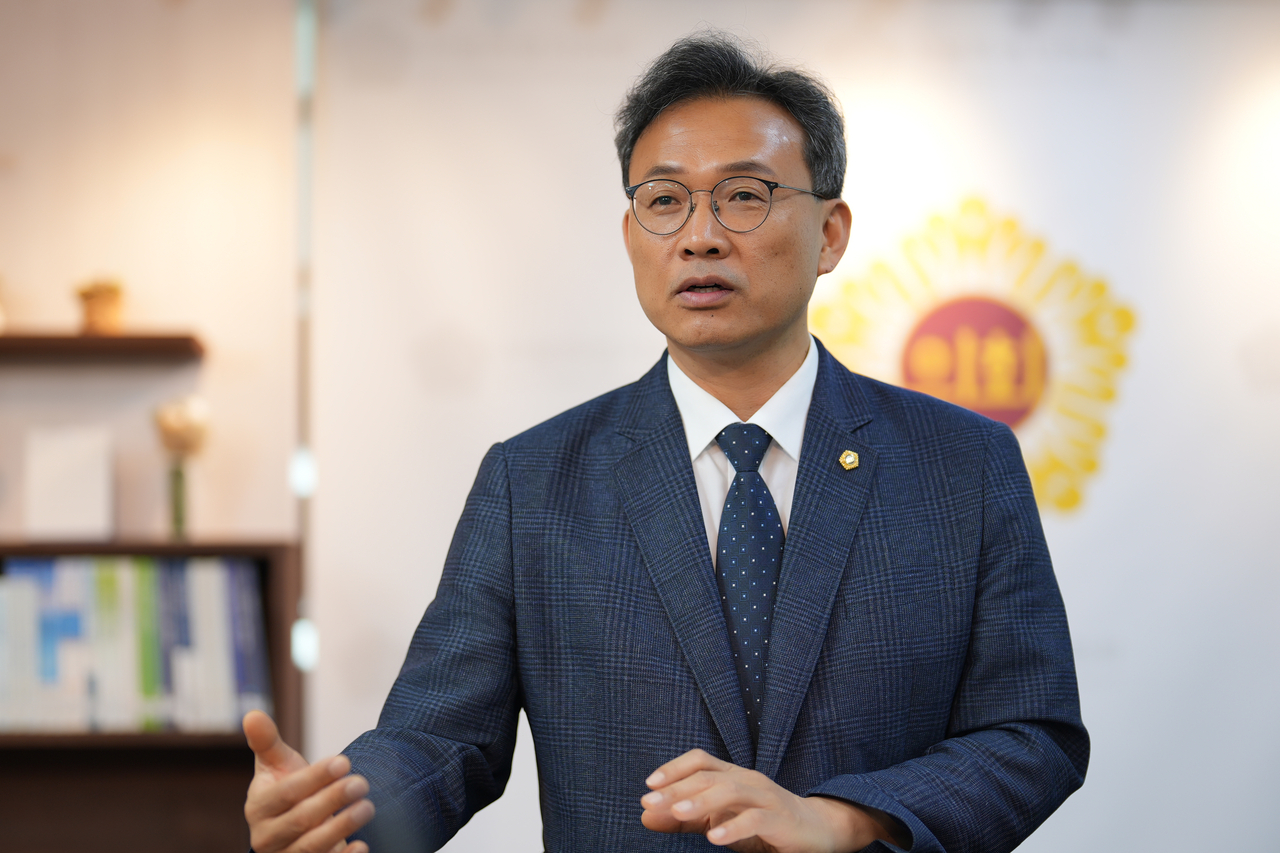
Aging infrastructure investment must drive a virtuous cycle for the local economy
Ruling and opposition parties must work together to deliver results citizens can feel
Lee also outlined plans to make expanded safety investment in aging urban infrastructure his top priority in reviewing the supplementary budget and next year's Seoul city budget.
He said key infrastructure built during Seoul's rapid growth — including water and sewage systems, railways and schools — has entered a stage of deterioration, and that policy must shift from reactive responses after accidents to prevention-focused investment.
"Budgets should be allocated first to the basic infrastructure that sustains citizens' daily lives, not to high-visibility development projects," he said. "Scaling back low-priority or unnecessary development and securing funding for safety and maintenance is what responsible fiscal management looks like."
On revitalizing neighborhood economies, Lee proposed building a structure in which public funds circulate within the local economy, rather than simply expanding subsidies.
Citing Seoul's fashion and garment industry as an example, he said policy should be designed so that public institutions' clothing and procurement budgets flow directly to local manufacturers and small business owners.
"What matters more than the size of public spending is how that money circulates within the local economy," he said. "The policy effects of Seoul city and public institution expenditures on the sales of local small and medium-sized enterprises, neighborhood businesses and job creation must be continuously monitored."
On the normalization of TBS, Lee said necessary procedures — including the formation of an executive recommendation committee and board of directors, budget planning and labor-management normalization — must proceed without disruption. He said both the Seoul Metropolitan Government and the Seoul Metropolitan Council must share responsibility for establishing a sound corporate governance structure, beyond political conflict.
On relations between the ruling and opposition parties within the council, Lee said checks and cooperation must go hand in hand. To avoid repeating the lack of communication and insularity that characterized past single-party-dominated operations, the majority must maintain open dialogue and productive discussion with the minority opposition, he said.
"Ruling and opposition lawmakers are political partners who hold each other in check while sharing responsibility for Seoul's governance," Lee said. "On the foundation of competent checks and cooperative partnership, we will deliver policy results that citizens can feel and build greater public trust in the Seoul Metropolitan Council."
7toy7@heraldcorp.com