![A pile of letters. [Image created using ChatGPT]](https://wimg.heraldcorp.com/news/cms/2026/08/03/news-p.v1.20260803.27d24fc9d3c3484cb199dae6f7a04307_P1.png)
"I had a baby this year. I cannot let my children live on a planet that is falling apart."
"I am a 19-year-old high school student. I am not even sure I can survive, let alone find a job, get married or raise children."
"I work as a welder. It gets hotter every year, and now I am afraid to go to work."
"I feel like I will burn to death in 30 years. Please let us live."
These are not exaggerations — they are among the most desperate lines from letters citizens have sent to the National Assembly in recent weeks.
More than 20,000 messages arrived over two weeks, all calling on lawmakers to take more aggressive action on climate change. What stands out is that most frame the issue not as an environmental concern but as a threat to survival.
For decades, messages about eco-friendly practices and climate action tended to look toward the future — protecting the planet for the next generation, or the one after that.
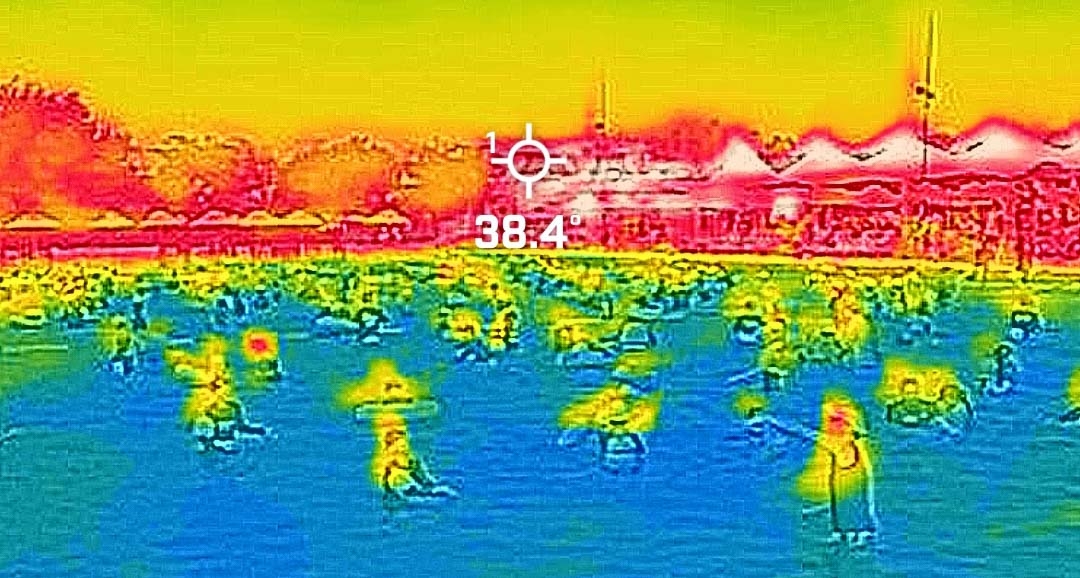
In recent years, however, the tone of climate demands has shifted sharply. The damage once dismissed as a distant future threat has arrived far sooner than expected.
In the scorching heat of midsummer, citizens are no longer pleading on behalf of future generations. They are speaking up for their own survival, here in Korea, right now.
What they are asking for is straightforward: that lawmakers stop pushing the urgent task of cutting carbon emissions into the future, acknowledge the climate crisis as a present-day disaster, and act to protect the lives of people living today.
![An audition-style performance takes place in front of the National Assembly building in Yeouido, Seoul, on Monday, with participants staging a mock talent show to select lawmakers on the National Assembly's special climate committee who support early emissions reductions. [Provided by Kpop4Planet]](https://wimg.heraldcorp.com/news/cms/2026/08/03/news-p.v1.20260803.af2b2749314a4ec2a4307db3e0fc84aa_P1.jpg)
Angry K-pop fans mobilize — 20,000 in an instant
According to Kpop4Planet, a climate action platform rooted in K-pop fandom, an online campaign launched July 22 collected more than 20,000 citizen messages to lawmakers in roughly two weeks.
The campaign invites participants to send messages directly to National Assembly members — specifically the 20 lawmakers on the Assembly's Special Committee on the Climate Crisis — urging them to push for legislation on carbon emissions reductions.

The campaign's name and format were drawn directly from K-pop culture — specifically the fan voting system of the idol talent show "Produce 101." Citizens are cast as "national producers" evaluating candidates, while the climate committee lawmakers play the role of "climate trainees" awaiting the public's verdict.
The flood of messages was not spontaneous. It was triggered by an ongoing revision of the Framework Act on Carbon Neutrality.
The current law sets a target of reducing greenhouse gas emissions by a certain level by 2030 and achieving carbon neutrality by 2050, but it does not specify how much must be cut each year. In 2024, the Constitutional Court ruled that the law failed to adequately protect the fundamental rights of future generations.
![An audition-style performance takes place in front of the National Assembly building in Yeouido, Seoul, on Monday, with participants staging a mock talent show to select lawmakers on the National Assembly's special climate committee who support early emissions reductions. [Provided by Kpop4Planet]](https://wimg.heraldcorp.com/news/cms/2026/08/03/news-p.v1.20260803.ca82ead45861498e880beeaae04b099d_P1.jpg)
The Constitutional Court subsequently ordered the National Assembly to enshrine interim emissions reduction targets in law by February 2026. When that deadline passed, the Assembly voted on an amendment on July 22. The specifics proved contentious: the version adopted allows for smaller cuts now and steeper reductions later.
Even if the end goal — net-zero emissions by 2050 — remains the same, front-loading versus back-loading the cuts makes a significant difference. Delaying reductions means more greenhouse gases accumulate in the atmosphere in the interim, leaving future generations to make far deeper cuts in a much shorter time.
The 20,000 letter-writers share a common demand: that the law explicitly enshrine "early reduction" — a principle requiring emissions to be cut rapidly in the near term — rather than allowing reductions to be deferred.
Nor is this a fringe view. Before the amendment was voted on, 77.9 percent of a citizen deliberation panel had already chosen an early-reduction pathway. That preference was not reflected in the bill that cleared the subcommittee, and critics say the National Assembly must incorporate the outcome of that public deliberation into the final legislation.

Early reductions a matter of survival
For those sending these messages, the push for early reductions is not simply about protecting future generations. Participants say it is equally urgent for the survival of people living through the climate crisis today.
A review of the citizen messages shows that most participants did not reach for policy language — they reached for the word "survival." Phrases like "I want to live," "I am scared," "I feel like I will burn to death" and "please save us" appeared throughout.
For young Koreans in particular, the climate crisis is no longer an abstraction about polar bears or melting glaciers. It is a concrete condition shaping whether they can find work, whether they should get married and have children, and whether they can simply live out the next few decades in safety.
One participant who identified as being in their early 20s wrote: "I will probably have to live another 60 years. I want to spend them on a planet that is still worth living on. I know about AI, money and the convenience that comes from consuming vast resources — but I also know that convenience could ultimately make everyone's lives more miserable."
A parent who said they had a child this year kept their message short and heavy: "I cannot let my children live on a planet that is falling apart."
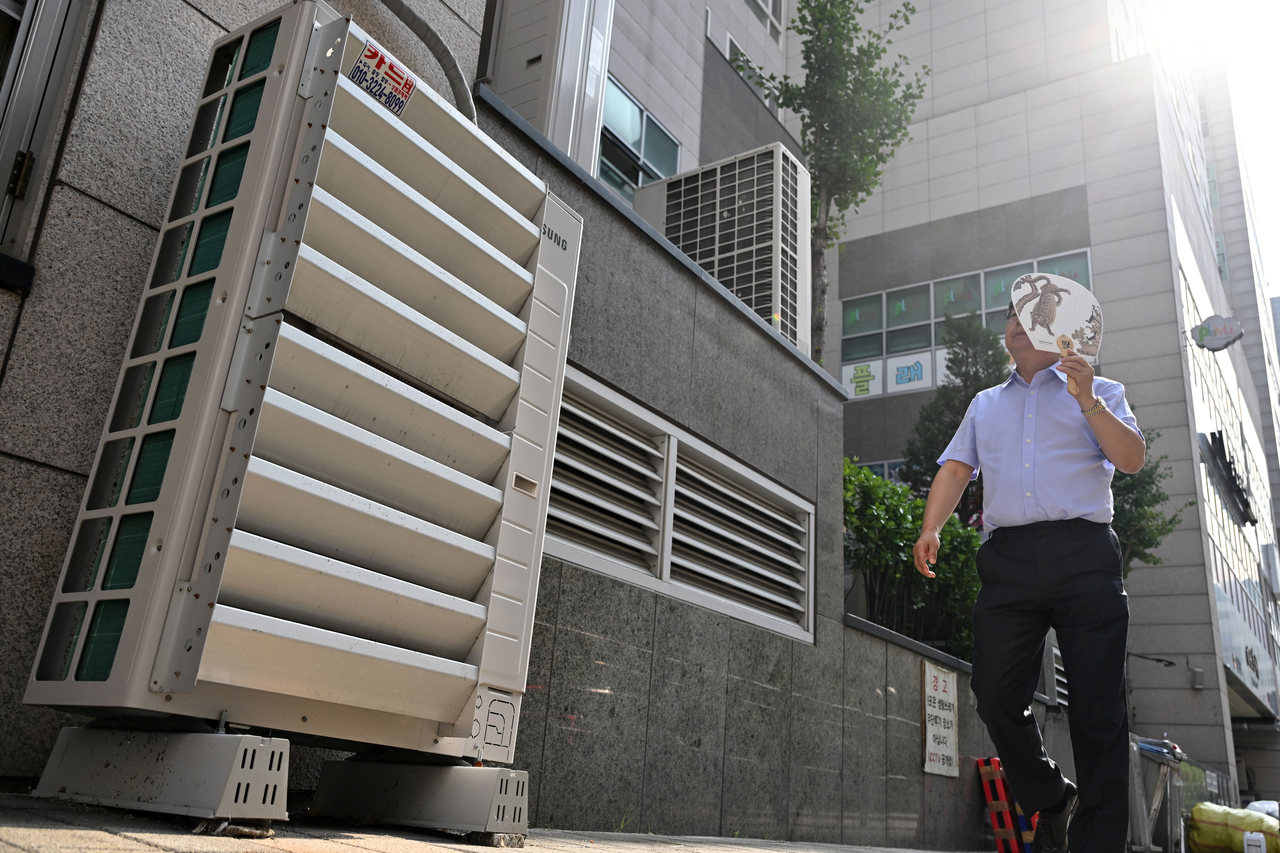
Others described the climate crisis in physical terms. A resident of Jeju Island wrote that it had not rained a single drop in three weeks, that walking outside for even five minutes without a parasol was nearly impossible, and that temperatures this year had not dropped below 30 degrees Celsius even at 9 p.m.

A young welder wrote that while he understood his job was inherently hotter than most, the heat had grown so severe year after year that he was now frightened. He called for changes in law and policy and repeatedly urged lawmakers to "listen to the voices of Korean citizens."
Frustration with climate responses that place the burden on individuals also surfaced. One participant wrote: "At school we learn about the severity of the crisis and what we can do, but it always ends up feeling like it is entirely our personal responsibility. A global problem requires governments and citizens to act together."
These appeals have grown more urgent against the backdrop of record-breaking heat. In Yangsan, South Gyeongsang Province, temperatures exceeded 40 degrees Celsius for five consecutive days — part of what meteorologists describe as the most extreme heat wave since records began. Many forecasters warn that this summer may turn out to be the coolest one left in our lifetimes.
![An audition-style performance takes place in front of the National Assembly building in Yeouido, Seoul, on Monday, with participants staging a mock talent show to select lawmakers on the National Assembly's special climate committee who support early emissions reductions. [Provided by Kpop4Planet]](https://wimg.heraldcorp.com/news/cms/2026/08/03/news-p.v1.20260803.fac400ba8cb84a7e9edcf3cb6b2bdc42_P1.jpg)
Kim Na-yeon, a campaigner at Kpop4Planet, said the fact that 10,000 messages arrived within just three days, and 17,000 within six, reflected citizens' desire to protect what they love for as long as possible. "We hope the National Assembly will answer this call by amending the Framework Act on Carbon Neutrality in a way that serves future generations," she said.
Meanwhile, Kpop4Planet staged an audition-style performance in front of the National Assembly building in Yeouido on Monday, framing it as a mock talent show to select lawmakers who support early emissions reductions. The group then visited the offices of climate committee members and delivered the more than 20,000 messages collected through the campaign.
Founded in 2021, Kpop4Planet is a global climate action platform led by K-pop fans who want to protect both the artists they love and the planet. The group said it would continue monitoring the National Assembly until the Framework Act on Carbon Neutrality is finalized with an explicit early-reduction principle.

woo@heraldcorp.com