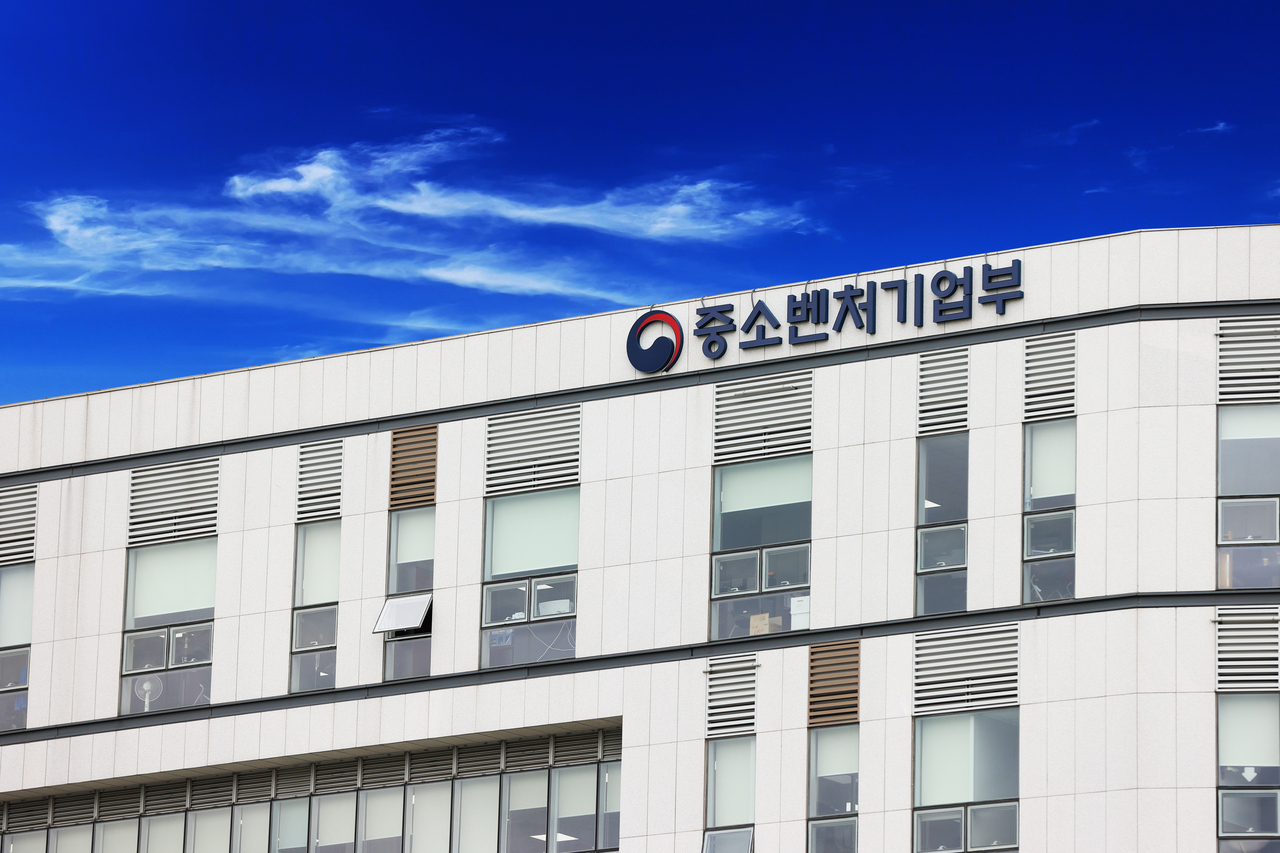
![The Korea Institute of Ocean Science and Technology's main campus in Busan. [KIOST]](https://wimg.heraldcorp.com/news/cms/2026/08/10/news-p.v1.20260810.4e68e1d4171749f9b8b7fd13fdda9d62_P1.jpg)
A new research base has been established to take a scientific look at the damage to tidal flat and coastal ecosystems caused by the construction of the Geum River estuary dam.
The Korea Institute of Ocean Science and Technology (KIOST) held a launch ceremony for its West Sea Research Institute pilot unit and an inaugural policy forum Monday at the biotech-specialized knowledge industry center in Seocheon-gun, South Chungcheong Province. The pilot unit was established to extend KIOST's research presence — long concentrated in the southern and eastern coasts around Busan, Uljin and Geoje — to the West Sea region.
The unit will conduct research based on local needs and propose science-backed solutions to regional issues, laying the groundwork for the eventual establishment of a full West Sea Research Institute.
The Geum River estuary is the first research site. Since the estuary dam was completed in 1990, environmental problems including deteriorating water quality and declining migratory fish populations have fueled calls to restore the estuary ecosystem. However, the Geum River supplies 600 million tons of water annually to surrounding areas, making it a top priority to find an approach that can simultaneously restore the estuary environment and ensure a stable water supply.
Over 30 months, the unit will study the effects of seawater circulation through the Geum River estuary dam on the coastal environment across four broad areas. Researchers will monitor sediment accumulation and topographical changes along the Geum River estuary and the West Sea coast, and analyze shifts in current speed and flow volume. They will also investigate ecosystem changes driven by shifts in the sediment environment, and identify the causes of declining productivity and quality at nearby laver farms, with the aim of proposing countermeasures.
KIOST President Lee Hee-seung said structural strategies and scientific research are needed to address sediment accumulation and the recovery of water self-purification capacity through the opening of the Geum River estuary dam's floodgates. "The research findings from the Geum River estuary can be applied to other estuaries and coastal areas along the West Sea facing similar challenges, and will serve as a key to understanding the West Sea as a whole," he said.
nbgkoo@heraldcorp.com