Consumer complaints filed against South Korean carriers over the past three years have exceeded 2,800 cases, according to data submitted to the National Assembly.
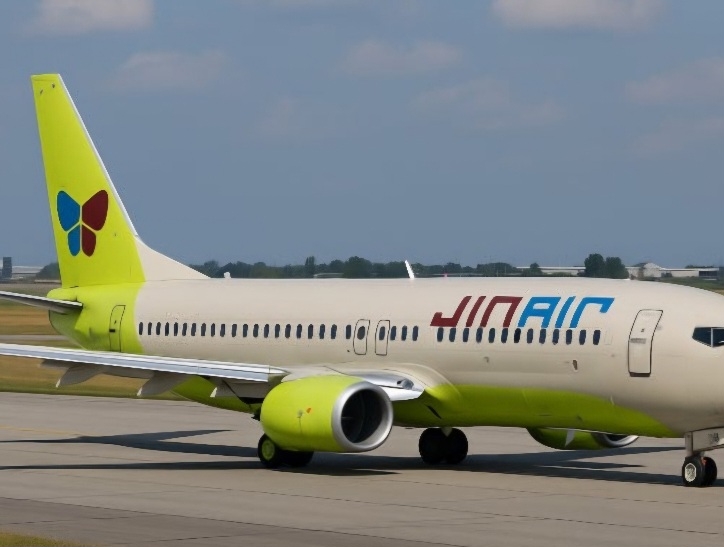
More than 70 percent of all complaints stemmed from flight cancellations and delays, with Jin Air drawing a disproportionately large share of the grievances.
Rep. Jung Il-young of the Democratic Party of Korea, a member of the Assembly's Land, Infrastructure and Transport Committee, said Tuesday that an analysis of carrier-by-carrier complaint data obtained from the Ministry of Land, Infrastructure and Transport showed 2,881 consumer relief applications were filed against domestic carriers between 2023 and 2025.
Of those, 2,027 cases — 70.4 percent of the total — involved flight cancellations or delays classified as "failure to operate or delayed transport."
The figures indicate that a substantial portion of aviation consumer harm stems not from ticketing or baggage issues but from flights failing to operate as scheduled.
Complaints related to cancellations and delays jumped from 397 in 2023 to 826 in 2024, and remained elevated at 804 last year — marking two consecutive years above the 800 mark.
The share of cancellation- and delay-related complaints within the overall total has also risen sharply. The proportion stood at 54.6 percent in 2023, climbed to 74.0 percent in 2024 and soared to 77.5 percent last year.
That means roughly eight out of every 10 consumer complaints filed against domestic carriers last year involved a cancellation or delay.
Breaking down the figures by carrier, Jin Air recorded the highest number of complaints at 698, followed by Air Premia with 247, Asiana Airlines with 240, Eastar Jet with 233 and Korean Air with 197.
Jin Air's cancellation- and delay-related complaints exceeded 200 every year — 243 in 2023, 221 in 2024 and 234 in 2025. Its three-year cumulative total of 698 cases represents 34.4 percent of all cancellation- and delay-related complaints across domestic carriers.
That is about 2.8 times the figure for Air Premia, about 2.9 times that of Asiana Airlines and more than three times the 197 complaints logged against Korean Air.
Eastar Jet and Air Premia, which ranked second and third behind Jin Air, showed the sharpest recent increases. Eastar Jet's cancellation- and delay-related complaints jumped from 2 in 2023 to 150 last year, while Air Premia's rose from 21 to 149 over the same period.
Together, the top three carriers — Jin Air, Air Premia and Eastar Jet — accounted for 1,178 cancellation- and delay-related complaints, or 58.1 percent of the total 2,027 such cases.
The figures come as air travel demand and flight capacity continue to expand. International passenger traffic reached 68.319 million in 2023 and grew to 94.548 million in 2025, a 38.4 percent increase over two years.
While the aviation industry has recovered rapidly from the COVID-19 pandemic — with both international supply and passenger numbers rising — consumer harm from cancellations and delays remains persistently high.
Cancellations and prolonged delays can trigger a cascade of secondary costs, including unplanned accommodation and transportation expenses, disrupted travel itineraries and missed connections, making a proactive response from carriers all the more necessary, observers say.
"Airlines must strengthen operational stability and consumer protection alongside expanding their flight offerings," Jung said.
He went on to say that as aviation demand grows rapidly, ensuring stable operations and protecting passengers is just as important as expanding the industry's scale. "For carriers where complaints are recurring or increasing, the underlying causes need to be carefully examined," he said. "When a cancellation or delay occurs, passengers must be promptly informed, and practical protective measures — including alternative flights and compensation — must follow. The true competitiveness of an airline should be measured not just by how many flights it adds, but by how confidently the public can use them."
gilbert@heraldcorp.com