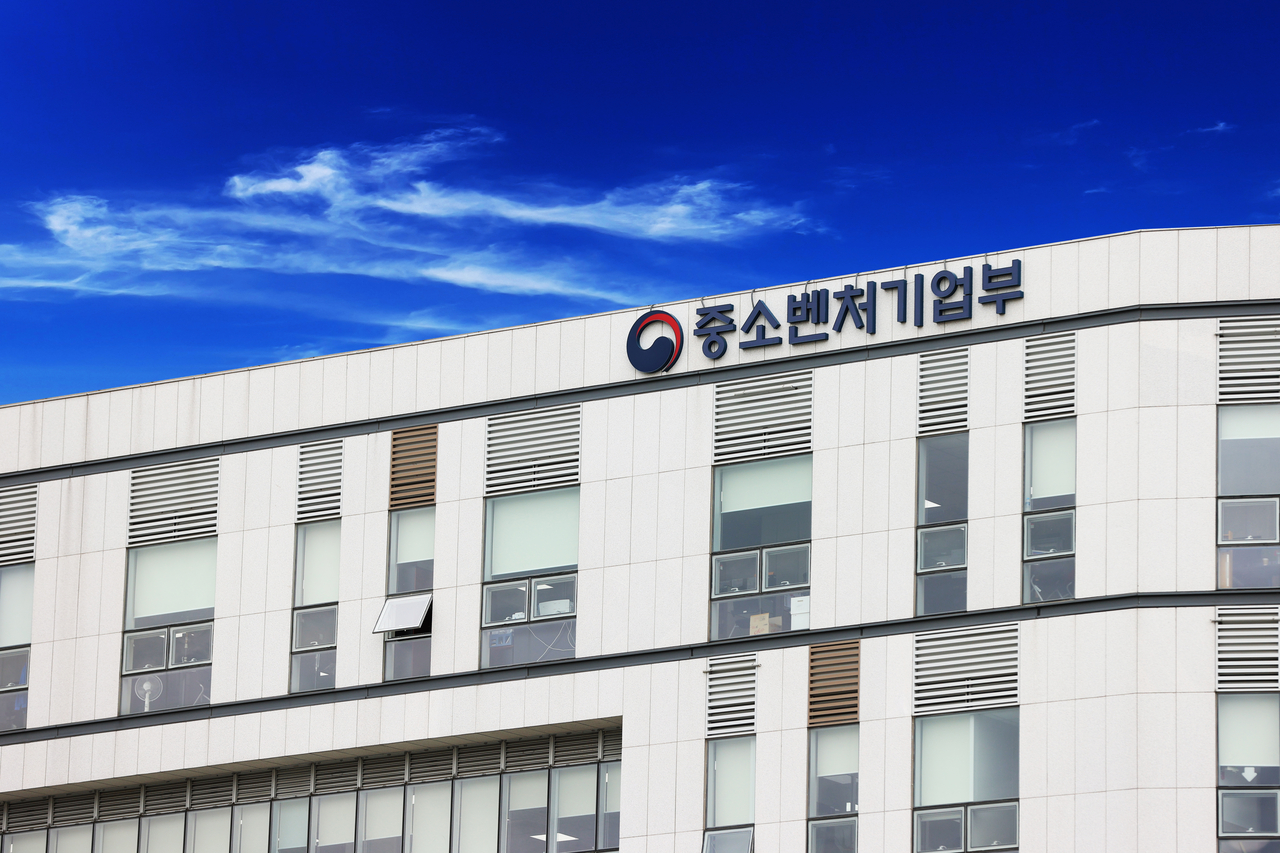
The Ministry of SMEs and Startups and the Korea Technology and Information Promotion Agency for SMEs (TIPA) announced Tuesday that they have selected 175 companies to receive support under the 2026 Small and Medium-sized Enterprise Smart Service program.
The program helps small and medium-sized enterprises in the service sector develop new business models and improve service quality in areas such as logistics, supply chain management and marketing by leveraging AI and digital technology.
Of the 175 selected companies, 150 will build new smart service solutions and 25 will upgrade existing ones. New entrants will receive up to 50 million won ($35,300) each, while companies in the upgrade track will receive up to 100 million won.
After the program was announced in March, applications were collected over two months, drawing 545 companies — a competition ratio of roughly 3-to-1. The ministry evaluated applicants through written and on-site assessments, weighing the need for support, the soundness of implementation plans, the feasibility of building the proposed solution and expected outcomes.
By sector, retail companies accounted for the largest share of selected firms at 50, or 29 percent of the total. Information and communications companies came second at 39 (22 percent), followed by science and technology services at 34 (19 percent). Startups made up 83 of the selected companies (47 percent), while 92 (53 percent) were growth-stage firms with more than seven years of operating history.
The ministry's push to accelerate AI adoption in the service sector aims to boost productivity among small service-sector companies that have been slow to embrace digital transformation. The goal goes beyond simply computerizing existing workflows — it centers on using AI and data to deliver personalized customer services, optimize supply chains covering purchasing, ordering and inventory, and create new revenue streams. This year's selected companies span a wide range of industries, including retail, information and communications, and science and technology services.
C-Life Science Lab, founded in 2019, will develop a solution that draws on global seafood distribution and supply chain data, along with market price information, to forecast import unit costs for individual customers and recommend the best alternative species and sourcing regions.
C-Plus, which operates Care Plus — a platform connecting caregivers with patients — will integrate an AI-powered voice automated response system into its existing service. The system will use voice recognition to support caregiver registration and care-log entry, while also strengthening operational management functions.
Jeongpyeong E&C, a fire-safety systems design, inspection and management firm, will develop an AI-based fire prediction platform using multi-sensor arrays and composite data including temperature and smoke readings. The platform will detect early warning signs of fire and enable round-the-clock, unmanned integrated monitoring of multiple facilities, building a prevention- and prediction-focused fire safety management system.
The selected companies will sign agreements with TIPA and then spend approximately six months building their smart service solutions.
Hwang Young-ho, the ministry's director general for technology innovation policy, said the program "will give service-sector small and medium-sized enterprises the opportunity to add AI, create new business models, and raise their productivity and competitiveness." He added that the ministry "will continue providing policy support to drive innovation in small and medium-sized enterprises based on AI and digital technology."
boo@heraldcorp.com