As transnational crime grows more sophisticated and incidents involving South Korean nationals abroad continue to rise, a new study finds that a significant share of the country's overseas police attachés are working alone at their posts — with no backup.
Of the 31 countries where South Korea has deployed police attachés, 24 have only a single officer assigned, the research found, creating structural limits on the ability to respond quickly when kidnappings, terrorist attacks or other serious crimes occur.
Calls are expected to grow louder for a fundamental review of a deployment system that in effect demands around-the-clock availability from officers stationed at the front lines of South Korea's overseas security diplomacy.
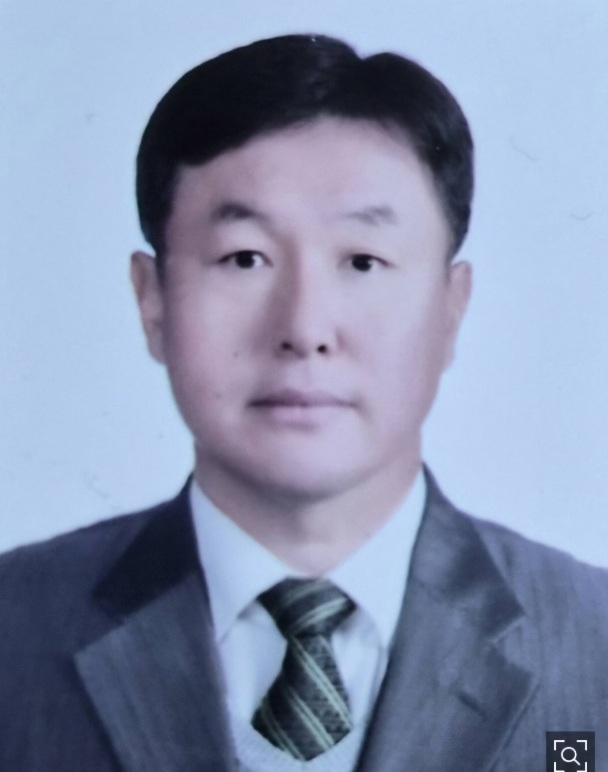
Yoon Sang-gu, Incheon bureau chief at Money Today, received a doctorate in police administration from the graduate school of Dongguk University at a degree ceremony held Thursday at Namsan Hall on the university's Seoul campus.
His doctoral dissertation, written under the supervision of professor Choi Eung-ryeol, is titled "A Study on the Determinants of Job Satisfaction Among South Korea's Overseas Police Attachés."
The study is notable for empirically analyzing the working conditions and job satisfaction of overseas police attachés and proposing institutional reforms to strengthen international law-enforcement cooperation.
The paper's central concern is the structure of how attachés are deployed.
South Korea currently has 58 police attachés posted across 49 missions in 31 countries. Of those countries, 24 have just one attaché.
Overseas police attachés handle a wide range of duties: coordinating investigations with local police and judicial authorities, securing the extradition of fugitives, gathering intelligence on international crime, liaising with Interpol, and responding to crimes targeting South Korean nationals abroad.
In effect, they serve as the on-the-ground operators of South Korea's overseas security diplomacy.
The problem becomes acute when incidents occur. In countries with only one attaché, a nighttime or holiday emergency requires that single officer to simultaneously manage the scene, coordinate with local authorities, and file reports back home.
When a high-urgency incident such as a kidnapping or terrorist attack strikes, the structural limitation — one person expected to do everything — becomes unavoidable.
Yoon recommended expanding the deployment of multiple attachés with specialized functions, prioritizing countries with large Korean communities or those that serve as major havens for fugitives from South Korea.
The study found that what most influenced attachés' job satisfaction was not the intensity of their workload but the level of institutional support from the Korean National Police Agency — including budget and operational funding, performance evaluations, and post-assignment career management.
The finding on what drives job satisfaction among overseas attachés drew particular attention.
Yoon conducted a survey last September with the cooperation of the Korean National Police Agency's international cooperation office, polling 100 current and former overseas attachés and Korean desk officers.
The survey found that the single biggest factor in job satisfaction was organizational support from the agency — encompassing budget and activity funding, personnel evaluations, and post-return assignment management.
The standardized coefficient for organizational characteristics was 0.307, the highest among all factors examined. Individual characteristics — including local-language proficiency, cultural adaptability, and the ability to build relationships with local agencies — came second at 0.284.
By contrast, factors such as workload intensity and irregular hours, as well as the leadership of the local mission chief, showed no statistically significant effect on satisfaction.
The finding suggests that attachés' satisfaction does not erode simply because the work is hard, but rather hinges on whether the agency adequately recognizes that hard work through support, evaluation, and career management after they return home.
In fact, 91 percent of survey respondents said they work more than 40 hours a week.
Among them, 39 percent reported working 41 to 50 hours, 33 percent worked 51 to 60 hours, and 19 percent worked more than 61 hours — meaning more than half of all respondents exceeded 50 hours a week.
Despite those hours, respondents rated their sense of purpose, professional engagement, and overall job satisfaction at an average of more than 4 out of 5, a relatively high score.
Officers expressed strong pride in representing South Korea in security diplomacy and recognized the importance of their work. At the same time, they voiced concern that an overseas posting could put them at a disadvantage in promotion and competition for key assignments upon their return.
The dissertation recommended building a management system that connects every stage of an attaché's career — selection, deployment, active service, and post-return placement — rather than simply increasing headcount.
As a first step, the paper called for deploying multiple attachés in countries with large Korean communities or a high risk of international crime and fugitive activity, and for adjusting financial support — including living allowances, other stipends, and children's education costs — to reflect local costs of living and security conditions.
It also recommended that achievements such as extraditions, international investigative cooperation, and security intelligence gathering be meaningfully reflected in the agency's personnel evaluations and promotion decisions, and that returning attachés be assigned to positions where their international and foreign-affairs expertise can continue to be used.
The selection and training process also needs reform, the paper said. Information on language requirements, the security environment of posting countries, and interview preparation currently tends to circulate through informal networks of senior and junior officers rather than through official channels, and the agency should establish systematic training and a formal mentoring program.
The study's message is clear: overseas police attachés are not simply officers posted abroad.
They are the operational hubs of South Korea's security diplomacy — responsible for protecting Korean nationals, countering international crime, securing extraditions, and coordinating with foreign law-enforcement agencies.
Yet under the current single-attaché system, as caseloads grow and international crime becomes more complex, responsibility inevitably concentrates on one individual.
Particularly since the enforcement of the Consular Assistance Act for the Protection of Overseas Koreans, which has heightened the state's obligation to respond actively to incidents abroad, the study warned that the law's intent could be undermined if frontline staffing and support systems fail to keep pace.
"Overseas police attachés serve as the forward base of security diplomacy, protecting the lives and safety of citizens against borderless crime, yet the research and policy attention devoted to them has been insufficient," Yoon said, expressing hope that the study would serve as a foundation for strengthening security cooperation networks and improving the attaché system.
Ultimately, the study argues, the central challenge for the overseas attaché program cannot stop at the question of how many more officers to send.
The real starting point for meaningful reform, some analysts say, is building a system that properly supports every officer deployed, stations two or more in places where the need is clear, and ensures that results achieved abroad translate into career advancement at home.
The study is expected to amplify calls for a comprehensive overhaul of the overseas attaché program — addressing not only the structural problem of solo postings but also compensation, personnel management, training, and deployment policy.
gilbert@heraldcorp.com