Ruling party, government revisit property tax plan for non-resident single-home owners
One owner pulls listing after cutting asking price to 3.1 billion won
'Long-term capital gains deduction is everything in Gangnam'
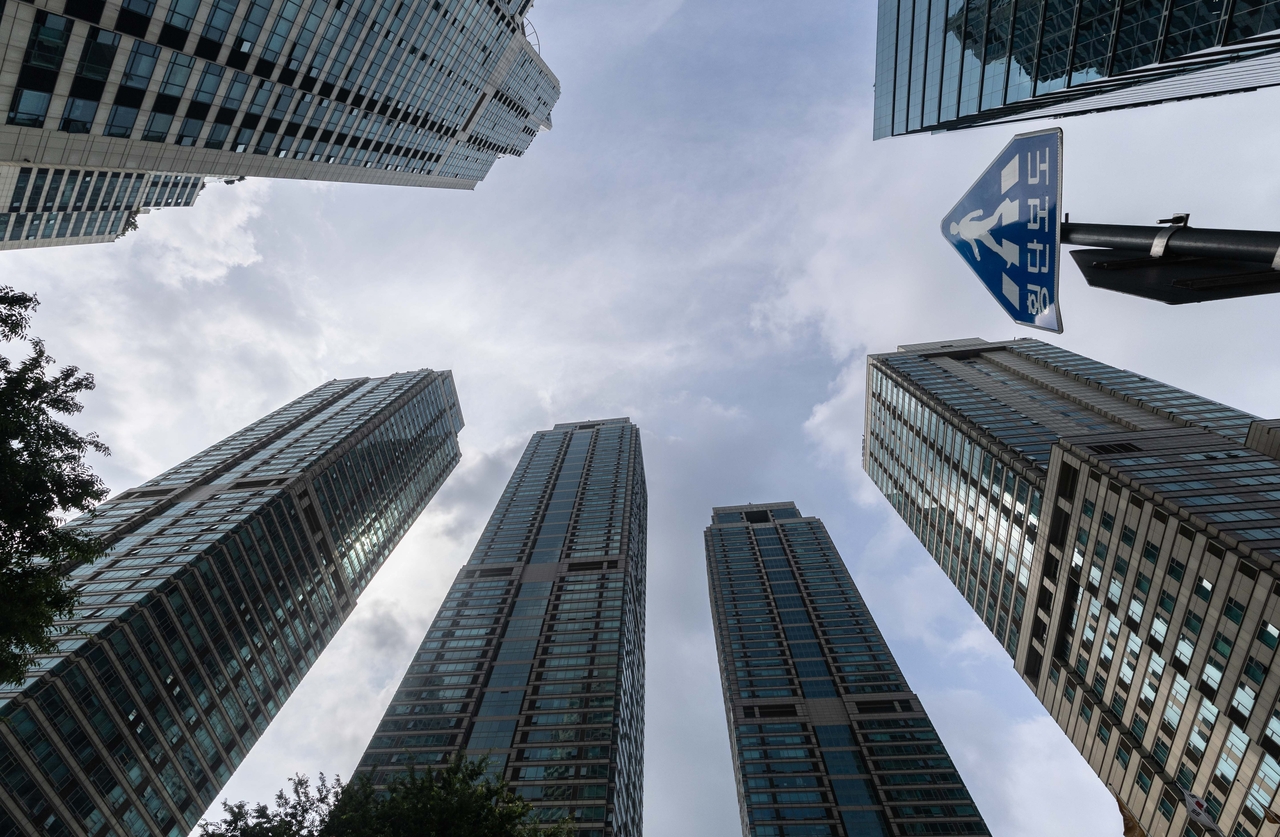
"Even the owners who listed their homes are constantly going back and forth on whether to sell."
— Head of real estate agency A in Daechi-dong, Gangnam-gu, Seoul
The calculus for owners of high-priced homes in the Gangnam area has grown more complicated after the ruling party-government consultative council raised the need to revisit a proposed real estate tax overhaul targeting non-resident single-home owners. In some cases, owners who had already listed their properties at sharply reduced prices have pulled those listings back off the market.
Asking prices had dropped from 3.44 billion to 3.1 billion won — now owners say: 'We're pulling the listing'
Industry sources said Monday that inquiries flooded into agencies in the Gangnam area, with owners asking what would happen to the non-resident single-home owner tax policy. While a revision to the tax rules is unlikely to dramatically reverse the recent surge in listings in the area, agents said the pace of activity — owners withdrawing distressed listings and booking tax consultations — has quickened noticeably.
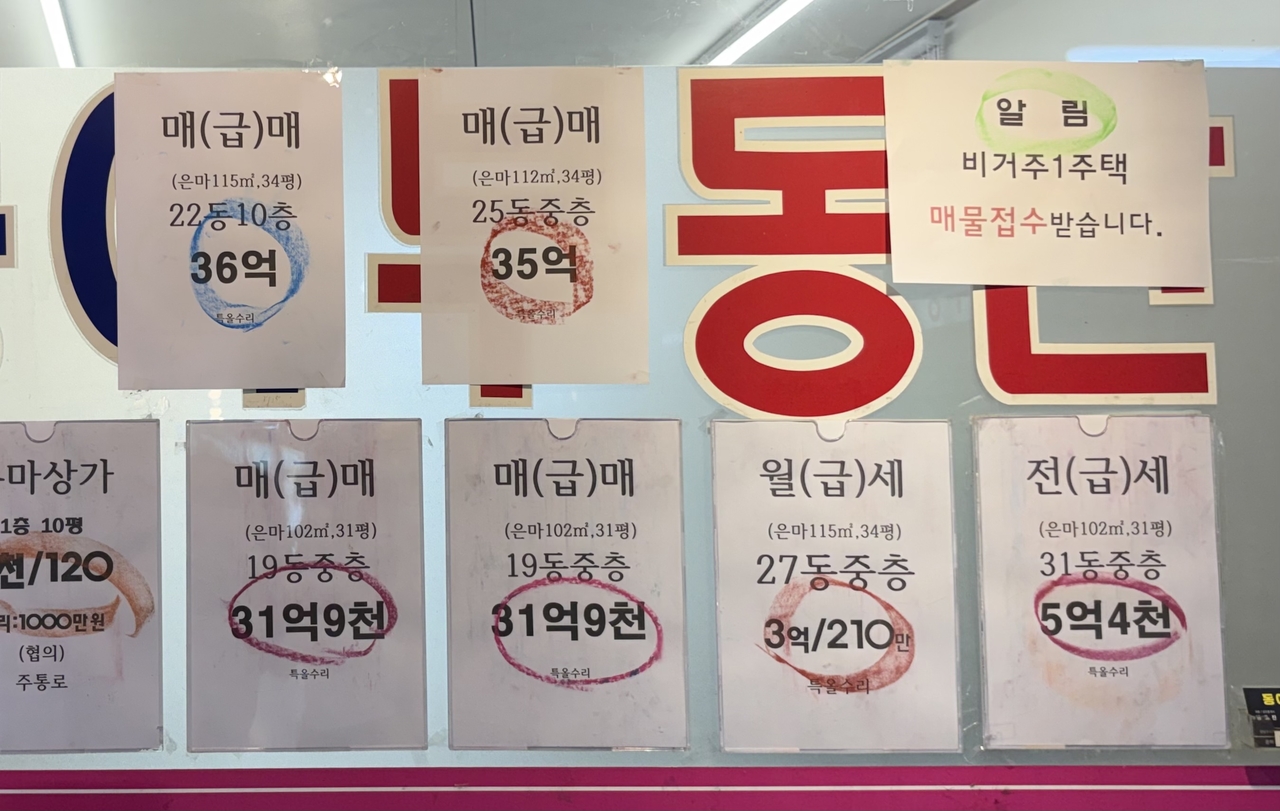
The head of real estate agency A in Daechi-dong, Gangnam-gu, said one owner who had listed a 76-square-meter unit — with a recent actual transaction price of 3.44 billion won ($2.49 million) — at the distressed price of 3.1 billion won pulled the listing, saying the government "probably won't be able to touch the tax rules after all."
The head of another agency, K, in the same neighborhood said owners in their 70s to 90s who first bought their homes 30 to 40 years ago have little financial cushion. "If the comprehensive real estate tax rises that much, they cannot hold on and would have to leave — so they listed their homes, but now the mood is shifting toward pulling those listings back," the agent said.
The Ministry of Economy and Finance's "2026 Tax Reform Plan" had proposed applying a comprehensive real estate tax basic deduction of 1.4 billion won for owner-occupant single-home owners and 900 million won for non-resident single-home owners. The plan also included a gradual phase-out of the long-term holding special deduction on capital gains tax.
The proposal triggered a sharp increase in listings across the three Gangnam districts — Gangnam-gu, Seocho-gu and Songpa-gu. As of Tuesday, apartment listings in Gangnam-gu stood at 10,608, up 8.6 percent from 9,766 on July 25. Over the same period, listings in Seocho-gu rose more than 12 percent from 7,614 to 8,531, and in Songpa-gu from 5,080 to 5,726, also a gain of more than 12 percent.
The flood of distressed listings weighed on apartment prices. In the third week of August — based on figures through Aug. 17 — Gangnam-gu (minus 0.05 percent) and Seocho-gu (minus 0.09 percent) were the only two of Seoul's 25 autonomous districts to post declines for a second consecutive week. Songpa-gu's price gain was limited to 0.10 percent.
The situation reversed Sunday, however, when the Democratic Party of Korea pushed hard at a high-level ruling party-government consultative meeting for a higher comprehensive real estate tax deduction for non-resident single-home owners. Tax authorities immediately began reviewing an upward revision to the deduction for non-resident owners. Options currently under discussion include raising the deduction to 1.4 billion won — matching the level for owner-occupants — or lifting it only to 1.2 billion won, the current standard for single-household homeowners.
In Apgujeong and Banpo, where elderly owners are concentrated, the mood is still to sell — or hold on
With policy direction shifting so abruptly, there are signs that some owners who had listed at prices hundreds of millions of won below market are now considering raising their asking prices again. An agent at another agency in Daechi-dong said current asking prices have fallen back to levels seen before the May 9 real estate measures. "There are a lot of elderly owners, and the reasons to sell have not gone away — so rather than pulling listings, some may raise asking prices by 100 million to 200 million won," the agent said.
In Apgujeong and Banpo, where elderly homeowners make up a large share of the market, the prevailing mood remains one of selling rather than withdrawing listings. The head of a real estate agency in Apgujeong-dong, Gangnam-gu, said prices could rebound if new details emerge on the long-term capital gains tax deduction, "but for now there is not much reaction." The agent added that while there were about 30 listings before the government's announcement, there are now more than 100 on the market.
The head of real estate agency C in Banpo-dong, Seocho-gu, said no owners had yet pulled their listings. "Most of the owners are elderly, so only a small number would pull back," the agent said. A nearby agent added that elderly single-home owners who had weathered previous policy changes are finding this round particularly difficult and want to sell quickly. "They are unlikely to make any hasty moves until a clear plan is announced," the agent said.
Some owners have entered a holding pattern, consulting tax accountants almost routinely as they wait out the uncertainty. Another agent in Banpo-dong, Seocho-gu, said listings would likely dip slightly if the single-home owner tax rules revert to their previous form, as announced by the ruling party and government. "Everyone knows Banpo is an ultra-high-priced riverside complex, and with relocation demand from the Apgujeong reconstruction project on top of that, it is an asset that will ultimately rise in value — so a significant share of owners are saying, 'Don't sell, just hold on,'" the agent added.
Experts warn that inconsistent tax policy could itself sow confusion in the real estate market. Seo Jeong-ryeol, a real estate professor at Youngsan University, said the direction of the brakes is right, but repeated reversals will erode trust in policy. "It can create the wrong lesson — that if you hold out, the government will back down again," he said. "If the government hands decision-making back to the market and compounds the confusion, it will never be able to beat the market," he added.
shy@heraldcorp.com
hss@heraldcorp.com