Elected on third attempt after primary loss and two general-election defeats
'I will be a district mayor who delivers, not one who is still learning'
Cheongnyangni Station a key transit hub rivaling Seoul Station
Master plan for Cheongnyangni-Jeonnong development due next year
Seoul's largest public library to break ground next year in the district
Traditional market design overhaul already spurring a nighttime economy
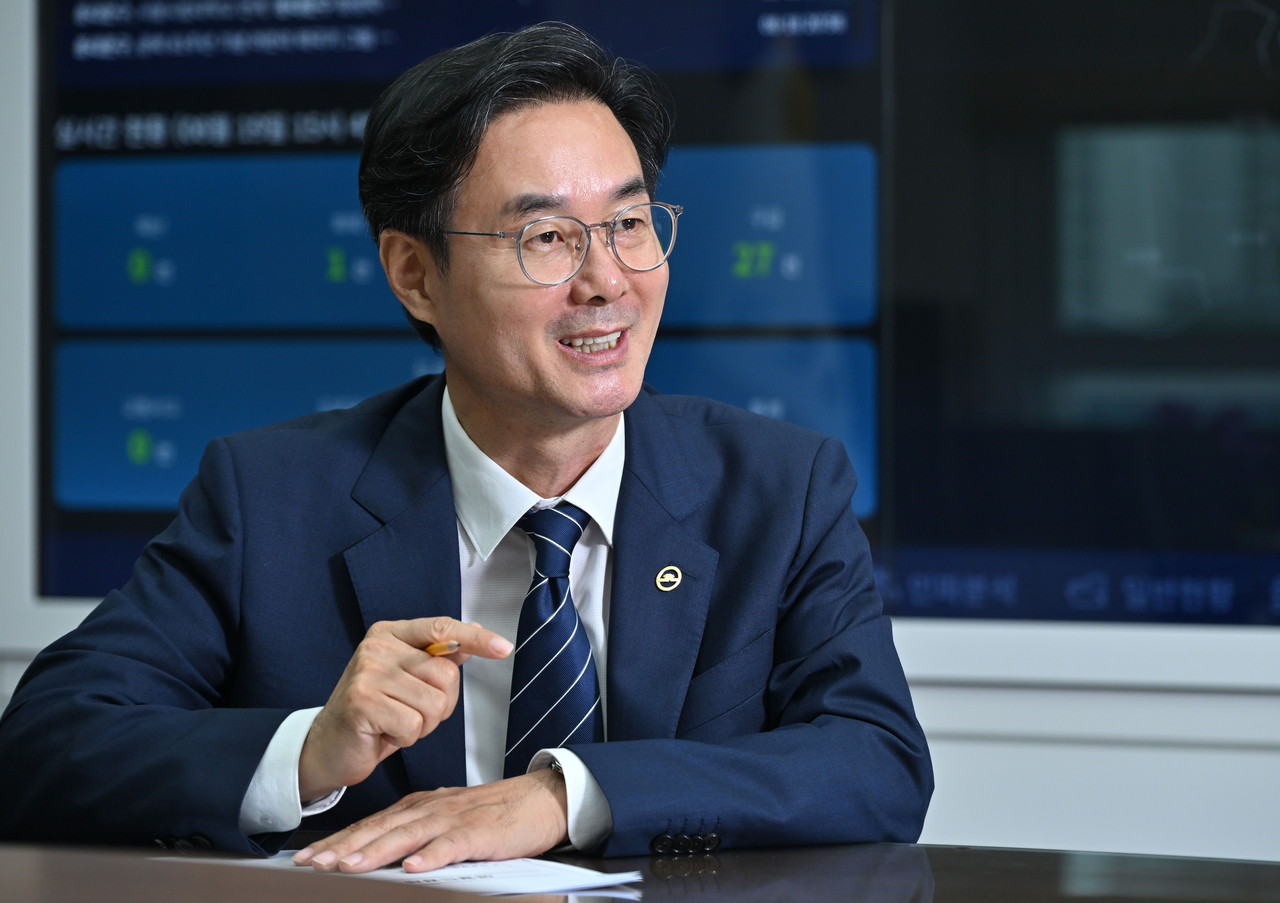
A major construction project is underway on the site of the Homeplus Dongdaemun store, right next to the Dongdaemun-gu district office. As part of a transit-oriented development project centered on Yongdu Station, the site is set to become a mixed-use complex by 2031, featuring a residential tower with six below-ground and 49 above-ground floors, along with a performance venue and other facilities. A 500-seat performance hall is planned as a public contribution — a long-awaited boost for a district that has lacked cultural infrastructure. Meanwhile, the Seoul Metropolitan Library Dongdaemun, slated to break ground next year, will span 25,410 square meters, making it the largest public library in Seoul. After years of sluggish development, Dongdaemun-gu is beginning to change. The following is an edited transcript of an interview with District Mayor Choi Dong-min.
**You were elected district mayor on your third attempt. What are your thoughts, and how do you approach leading the district in the ninth term of local government?**
I try to approach this with the spirit of "ilsin-u-ilsin" — renewing oneself day by day. Because I tried three times, I prepared that much harder. I intend to make this a position where things get done, not a place to practice. I will bring change: more businesses and jobs, easier commutes, more people in the markets and alleyways, and a better quality of life for residents. As I promised during the campaign, I will be a district mayor who delivers, not one who is still learning. I want to be judged not by what I say I will do, but by what I actually change.
**What do you see as the growth potential of Dongdaemun-gu's economy?**
Cheongnyangni Station, served by 11 rail lines, is a critical transit hub for the northeastern metropolitan area, rivaling Seoul Station. It draws heavy foot traffic and is surrounded by major markets such as Cheongnyangni Market and Gyeongdong Market — an area with strong potential. Hongneung is home to universities, hospitals, research institutes and the Seoul Bio Hub. The district also has the University of Seoul, Kyung Hee University and Hankuk University of Foreign Studies, giving it a large pool of young talent. Yet transportation, research, universities and markets have each operated in isolation. The economic policy of this ninth term starts by breaking down those silos. I want to create a chain reaction: research leads to business, business creates jobs, jobs drive consumption, and consumption boosts sales at traditional markets and in neighborhood commercial districts. I will develop Cheongnyangni and Jeonnong into an economic hub where companies and office functions concentrate, and add AI and IT capabilities to Hongneung's existing strengths in biotech and medical research. I also want to expand opportunities so that young people who study here do not leave after graduation but instead find jobs and start businesses in Dongdaemun-gu. Ultimately, the overarching goal of this term's economic policy is to transform the district into a city where businesses invest, good jobs are created, and people work, spend and stay.
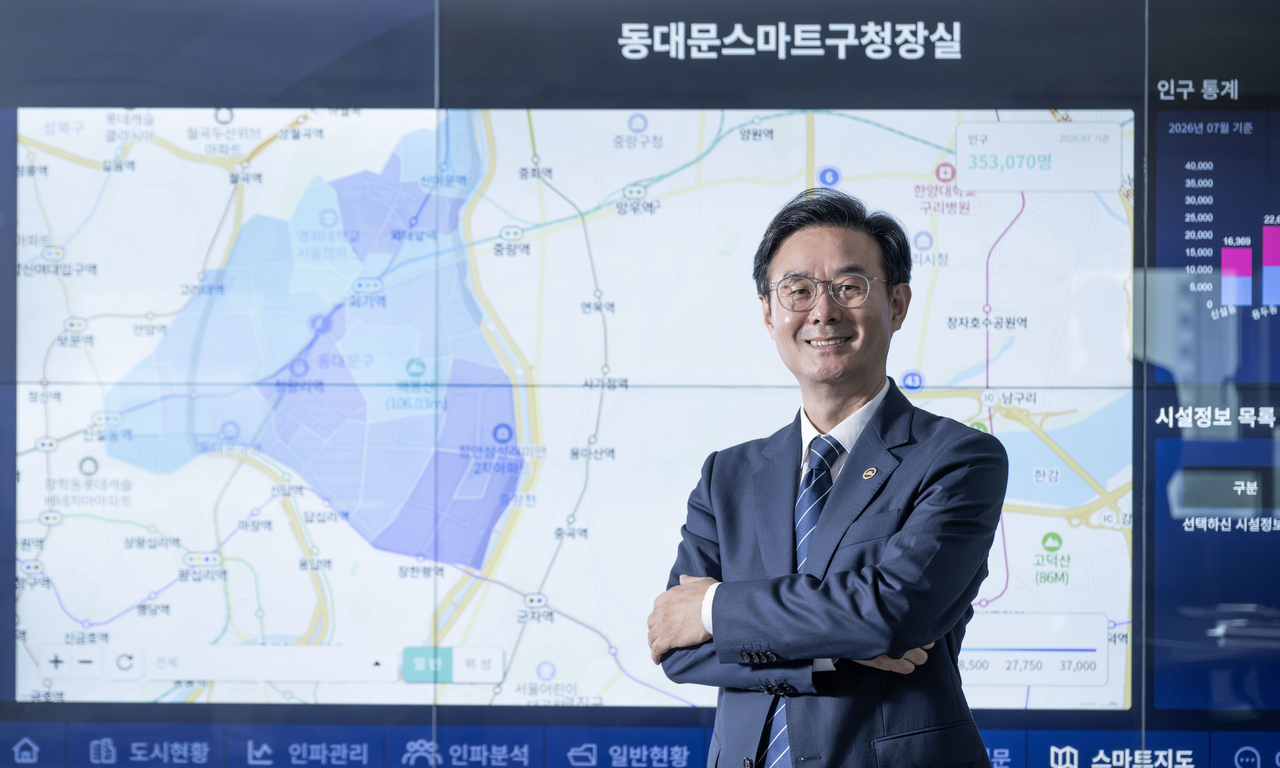
**You have identified a high-density business district in Jeonnong and Cheongnyangni as the top priority for this term. What is the concrete strategy for attracting businesses and private investment?**
The key to developing Cheongnyangni and Jeonnong is to avoid a model that simply adds more apartments and residential units. The area can only grow into an economic center for northeastern Seoul if businesses, jobs, commerce and culture come alongside housing. I will have a master plan ready by next year covering the scope of development, target industries, office space, development density, transportation measures and financing. At the same time, I will form a public-private investment attraction team to meet directly with companies and investors. The target sectors are clear: biotech, healthcare, AI and IT — fields that can leverage Hongneung's strengths. I want to create a virtuous cycle in which technology from Hongneung leads to startups, and those companies, once they grow, set up in Cheongnyangni and Jeonnong and generate new jobs. Private investment does not come from slogans alone. We need to build transportation and infrastructure, work quickly with the Seoul Metropolitan Government on the necessary urban planning procedures, and give businesses and investors confidence that they can grow here over the long term. I will not build the space first and then wait for companies to arrive — I will go out and find the businesses and investors this district needs.
**Nurturing existing industries — traditional markets, fashion and the garment sector — also seems important.**
Revitalizing existing industries is just as important as developing new ones. Dongdaemun-gu has valuable assets: the Seoul Yangnyeongsi herbal medicine market, the cluster of traditional markets around Cheongnyangni, and a fashion and garment industry that has built up its craft over many years. Beyond the neighborhood markets, the district has a concentration of market space equivalent to 70 soccer fields in a single location. I will draw on the food, history and culture unique to each market, and combine them with youth-driven content from the university district and the area's tourism resources. That is why a design innovation project is already under way. The Starbucks that opened on the site of the old Gyeongdong Theater and the rooftop at Gyeongdong Market are already drawing large crowds. Dongdaemun-gu is a place where a nighttime economy has already taken hold. When people linger longer, they spend more, and that effect can ripple out to nearby restaurants, shops and neighborhood commercial streets. I will also explore ways to bring together Hongneung's biotech and medical research capabilities with the traditional Korean medicine industry at Seoul Yangnyeongsi to create new products and business opportunities. I will not leave traditional industries confined to old methods — I will widen their chances to meet new technologies and markets. Attracting a handful of large corporations alone will not revive the local economy. Real local economic growth means new investment and increased consumption flow all the way through to traditional markets, neighborhood commercial districts and small business owners.
ikson@heraldcorp.com