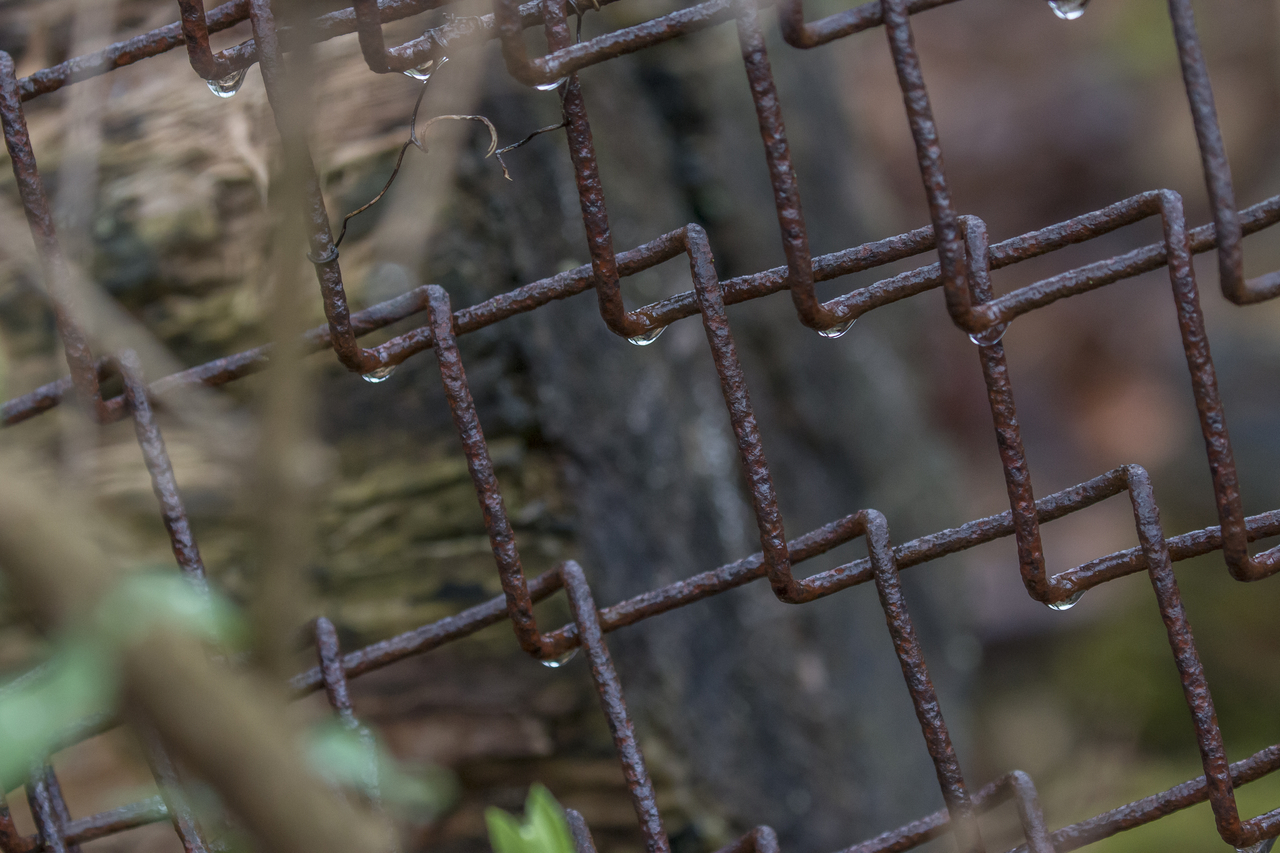
Rain has long been thought to corrode metal primarily because of water itself. But new research suggests another culprit: static electricity that raindrops accumulate as they slide down leaves or windowpanes can also cause metal to corrode. Until now, physical impact and acidic content were the only recognized ways rainwater damages metal.
According to a study recently published in the journal Nature, water droplets that spontaneously acquire an electric charge can electrically break down the protective coating on metal, triggering corrosion.
The finding came from a research team led by Rüdiger Berger and Hans-Jürgen Butt at the Max Planck Institute for Polymer Research in Germany, who compared the effects of charged and uncharged water droplets on identical metal samples.
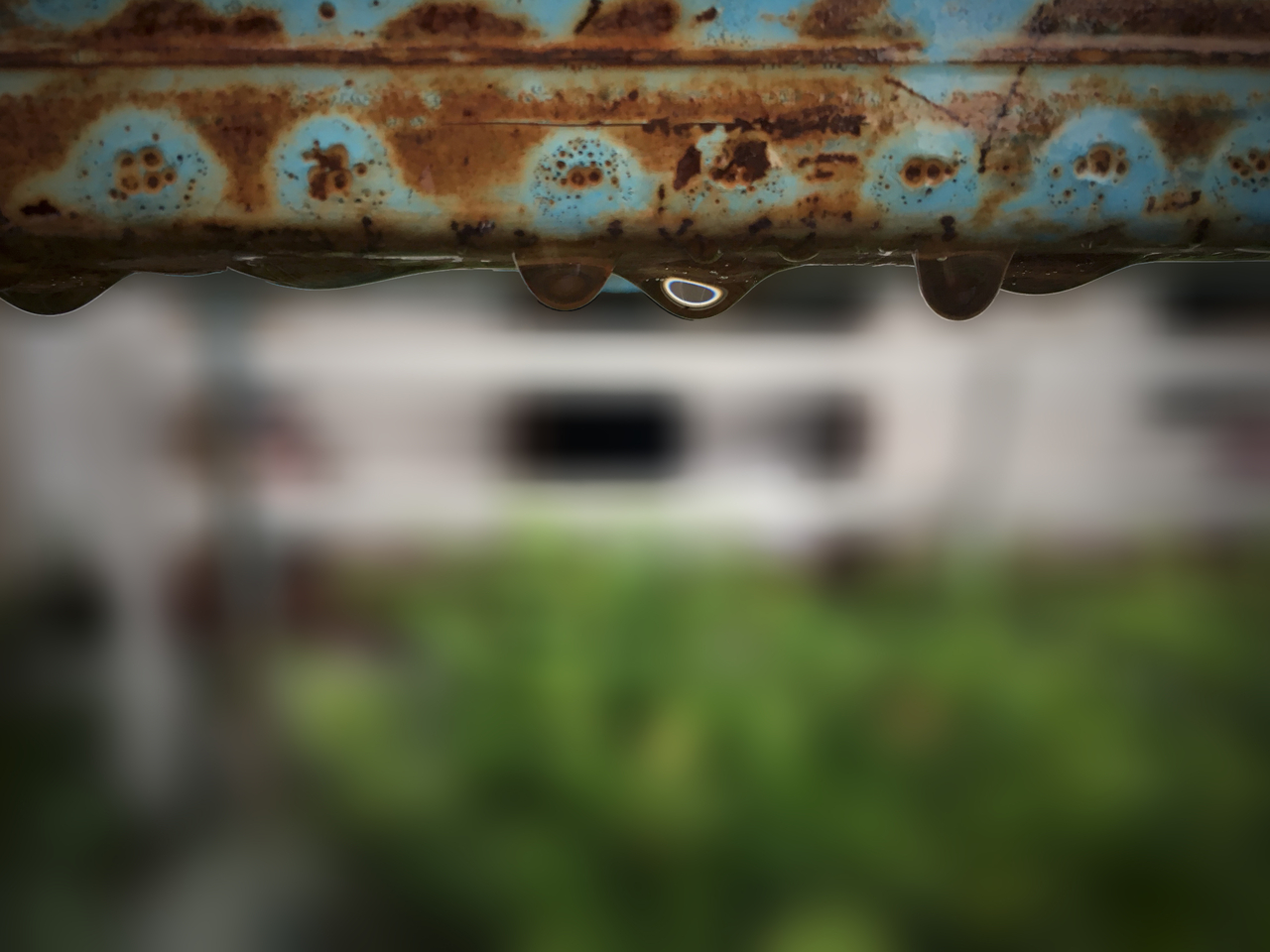
Charged droplets corroded metal on contact
The research team first dropped 3,000 uncharged water droplets directly from a syringe onto thinly coated copper samples. The surface showed no change from before the experiment.
Next, the team let droplets slide 4 centimeters down a surface tilted at 50 degrees before landing on the copper samples. The surfaces used included a leaf taken from an office plant, a PVC board commonly used as a building material, a plastic sheet used for windows, and glass coated with a water-repellent finish.
As the droplets slid down each surface, they picked up an electric charge — and when they struck the copper samples, corrosion appeared. The corrosion penetrated through the thin coating and into the copper itself.
When the team tracked where the electric charge in each droplet went, they found that if a droplet carried a charge of 100 just after sliding down, 90 of that charge transferred to the copper on impact. Less than 1 remained in the rebounding droplet.
Even insulators have a limit to the electrical charge they can withstand. When the incoming charge exceeds that threshold, it can punch through the insulating layer. The sudden surge of electricity pierced the coating and reached the copper beneath.
The thickness that static electricity from a water droplet can penetrate was calculated at 10 to 50 micrometers — thinner than a human hair — depending on the type of coating. However, when tens or hundreds of droplets fell, corrosion became visible to the naked eye.

Worse than soaking in saltwater
One might object that metal corrodes simply from prolonged contact with water, meaning the electric charge in the droplets may not be the real cause. The research team addressed this directly.
They compared two conditions: one side of a sample received charged water droplets, while the other was submerged in saltwater of the same concentration for four hours.
Measuring how much of the thin coating remained afterward, the side struck by charged droplets showed more severe corrosion than the side soaked in saltwater. In cases where droplets fell for several hours, corrosion exceeded 1 millimeter in depth.
To rule out the physical impact of falling droplets as a factor, the team also tried flowing charged water across the surface rather than dropping it.
After 3,000 passes, groove-like pits formed on the surface where the water had flowed. Corrosion occurs, the results showed, even when water merely runs across a surface without striking it.
However, the research team said the experiments were conducted on laboratory-prepared samples and that they had not confirmed how much of this type of corrosion occurs in real-world settings such as buildings, ships or vehicles.
They also noted a limitation: coatings that are thick enough may not be penetrated by this mechanism.
Meanwhile, electrically charged water droplets occur naturally in clouds, lightning storms, ocean waves, fountains and waterfalls. They also arise in industrial settings where liquids are sprayed, such as in chemical and pharmaceutical manufacturing.
Reference
DOI: 10.1038/s41586-026-10941-6
Ni, Z., Li, X., Ratschow, A.D. et al. Spontaneously charged water drops induce corrosion. Nature (2026).
dbsdn1110@heraldcorp.com