
30 years of K-ballet's rise to global dominance
First Seoul Global Ballet Forum brings together heads of six companies
Artistic directors lavish praise on Korean dancers and training
"What on earth is happening in Korea right now?"
For the artistic directors of the world's top ballet companies, Korea is no longer a peripheral player. From Italy to France, through Russia and the United States, the masters agree: the gravitational center of ballet is now shifting to Korea. Their verdict rests on the growing ranks of Korean dancers commanding stages at the world's most prestigious companies.
Kim Ki-min, the Mariinsky Ballet's first Asian principal, and soloist Jeon Min-cheol; American Ballet Theatre principals Seo Hee and Park Sun-mi, and soloist Han Seong-u; Paris Opera Ballet étoile Park Se-eun; and Dutch National Ballet principal Choi Young-gyu — Koreans have taken up positions on the world's most important stages. It is the harvest of barely three decades of compressed growth in Korean ballet.
Sascha Radetsky, artistic director of ABT Studio Company, told Korean journalists that the center of ballet had historically migrated from Italy and France through many countries. "Right now, without a doubt, that center is Korea," he said. "I'm thrilled to witness the wonderful things happening here." Ingrid Lorentzen, artistic director of the Norwegian National Ballet, said Korea had produced "the most beautiful dancers in the world over the past few years." "I want to find the source of that and experience and share what is happening here," she said.
According to K Global Ballet Won, 23 Korean dancers are active across the six companies that sent representatives to the forum — the Mariinsky (2), ABT (7), the Dutch National Dance Theatre (3), Boston Ballet (7) and ABT Studio Company (2). The companies' artistic directors were unstinting in their praise for the Korean dancers' attitude and artistry.
From the margins to the center: K-ballet's rise on the world stage
Twenty-three Korean dancers are active across the Mariinsky Ballet (2), ABT (7), Boston Ballet (7), the Dutch National Ballet — home to choreographic legend Hans van Manen (3) — and ABT Studio Company (2). The heads of those companies offered effusive praise for the Korean dancers' skill and professionalism.
Ted Brandsen, former artistic director of the Dutch National Ballet, said Korean dancers were "technically and artistically very well prepared, versatile and highly disciplined." "They have exceptional focus and a clear sense of what they want, which makes it relatively easy for them to adapt to different styles and companies," he said.
Brandsen, who led the company for 23 years, has watched Choi Young-gyu closely since he joined the Dutch National Ballet in 2008. "Choi Young-gyu has been with NDT for 18 years and became a principal through unwavering dedication and diligence — he is a role model for the rest of the company," Brandsen said. "He always approaches class seriously, gets everything done and is kind to everyone. That is exactly the level of work ethic and attitude we aspire to."
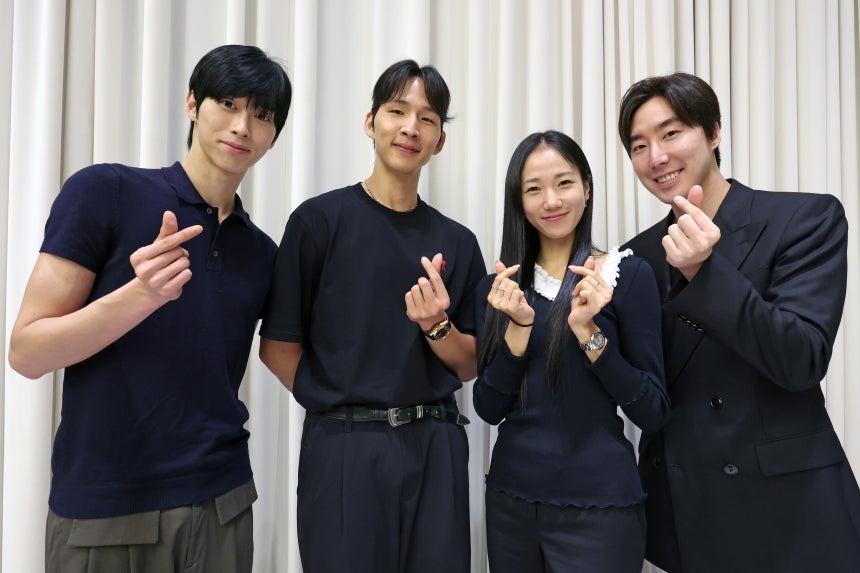
![Heads of six ballet companies and Korean dancers attend the first Seoul Global Ballet Forum. [Provided by K Global Ballet Won]](https://wimg.heraldcorp.com/news/cms/2026/08/28/news-p.v1.20260828.9c27b105d0614ef2ae123bc1b401ac68_P1.jpg)
Susan Jaffe, artistic director of ABT — where principal dancer Seo Hee performs — said versatility was one of the defining traits she noticed in Korean dancers. She also praised soloist Han Seong-u and Park Sun-mi, who was recently promoted to principal. "Han Seong-u is not only a superb classical dancer but also excels in character roles — he is delightful and can handle almost any part to perfection," Jaffe said. Of Park, she said: "She has the ability to fully embody a character."
The courtesy and mutual respect ingrained in Korean culture drew particular admiration from the visiting artistic directors. "Korean dancers, men and women alike, all show respect to their seniors," Jaffe said. "They bow whenever they come and go — in rehearsal, at any time — and the American dancers who see it have started doing the same, greeting me every time I walk in and out." She added that it was vital for younger generations to respect those who came before them and the history they carry. "In America that is not easy — young people tend to think they know better than their elders," she said. "Having Korean dancers in the company has created a culture of respect and courtesy, and that has had a genuinely positive effect."
Yuri Fateyev, a master at the Mariinsky Ballet who was listening nearby, nodded in agreement. He led the Mariinsky for 16 years from 2008 and is the mentor who discovered both Kim Ki-min and Jeon Min-cheol. Fateyev said the attitude was "part of the educational approach at Korea's Korea National University of Arts and a quality particular to East Asian culture." "There is a good relationship between teacher and dancer, so instead of forcing good results, both are looking in the same direction — and good results follow naturally," he said.
The most prominent current product of Fateyev's eye for talent is Jeon Min-cheol, who joined the Mariinsky last year and has just completed his first season. "I learned an enormous amount from Master Fateyev at the Mariinsky — above all, how to speak through the body," Jeon said. "I grew by learning how each role should change depending on the work and the version." He also repeatedly expressed gratitude to Korea National University of Arts professor Kim Sun-hee and Universal Ballet artistic director Moon Hoon-sook, demonstrating the respect for teachers that has become a hallmark of Korean dancers abroad.
In the eyes of leading companies, Korean dancers arrive close to a finished product. Mikko Nissinen, artistic director of Boston Ballet, said Korean dancers' exposure to a wide range of genres — including contemporary dance — during their school years meant they adapted to company life and new styles with remarkable flexibility. "They come as a complete package, incomparably superior to dancers from other countries," he said. "So the enjoyable challenge for us as a company is figuring out what artistic color to add and how best to develop each individual's technique."
Jaffe agreed. "Korean dancers walk into the studio with flawless technique and deep artistry," she said. "From the moment they graduate from school, they already perfectly meet the starting line for the world stage."
Dancers who trained in Korea and now perform at companies around the world also cited fundamentals as the great strength of their schooling, including at the Korea National University of Arts. "If Korea National University of Arts gave me my foundation, now I feel like I'm using that foundation to build my own appeal and keep growing," Jeon said. Park Sun-mi agreed: "Korean students are technically exceptional."
'Why do the talents leave Korea?' — planning for the next 100 years
Korean ballet has reshaped the global landscape, yet the domestic soil remains thin. Gifted dancers have spread across the world and flourished, but the absence of specialist ballet schools, an education system driven by competitions and entrance exams, a weak production infrastructure and a fragile artistic ecosystem are challenges Korean ballet has yet to overcome.
Nissinen said the strength of Korean dancers' fundamentals stemmed directly from the training methods and educational systems of their institutions, and that this was what drove their rapid development. "Korea produces these extraordinary talents — we have to ask why they don't stay in Korea," he said.
![First Seoul Global Ballet Forum [Provided by K Global Ballet Won]](https://wimg.heraldcorp.com/news/cms/2026/08/28/news-p.v1.20260828.596feeae8f0443058a66db66b89d6d63_P1.jpg)
Nissinen went on to say that Korea also needed to ask "how it must change and adapt to accommodate and retain these exceptional talents at home."
In practice, Korean ballet has achieved rapid quantitative and technical growth in a short time, but the underlying strength of its ecosystem remains insufficient. The number of creative choreographers is far too small, and companies depend on star dancers active at overseas companies to draw audiences.
Jaffe acknowledged that finding great choreographers was "a common challenge for ballet companies worldwide," but said it was important to create an environment where younger generations could develop creativity by encountering diverse global choreography that blends classical and contemporary ballet.
Christopher Hampson, artistic director of Scottish Ballet, added that nurturing creative talent "is not a short-term achievement — it comes through long-term cultural investment by the state and the community."
Building a foundation that allows dancers to grow as complete artists — not just technically — is equally important. Radetsky said the most dedicated and focused dancers were often the most prone to a harsh perfectionism turned inward. "Leaders must treat them as individual human beings, not robots, and support them so they can take risks and grow," he said.
Korean ballet is now looking beyond its 30-year foundation toward a plan for the next century. Brandsen said Korea's growth over recent decades had been remarkable. "I hope Korea will continue deep discussions not only about training but also about the value of choreography and art and their social significance, and — with support from both government and the private sector — will establish itself ever more firmly as a center of ballet," he said.
Kim Sun-hee, honorary professor at the Korea National University of Arts and artistic director of K Global Ballet Won, who led the forum, said she hoped the dancers who had established themselves on the world stage would return to Korea. "Our goal is for Korean ballet to become a great ballet powerhouse with more than 100 years of history, and to serve as a global platform that leads the future of ballet worldwide," she said.
shee@heraldcorp.com





