The only Seoul district to offer item-specific recycling bags, driving proper waste sorting and resource circulation
Sustained resource-circulation policy lifts recycling sorting rate to 68.7%
Gwanak-gu will continue distributing dedicated recycling bags this year to promote proper waste-sorting habits, building on a program it launched in 2021 that has raised the district's recycling sorting rate by more than 10 percentage points.
The initiative — the only one of its kind among Seoul's 25 autonomous districts — provides item-specific bags to help residents sort and dispose of recyclables more easily and accurately, with the aim of spreading a culture of proper waste separation and encouraging resident-led resource circulation.
The district is pushing the program to improve recycling conditions in single-family and multi-household homes, which tend to have weaker waste-sorting infrastructure, and to build a community-driven resource-circulation culture.
This year's distribution targets 62,180 households in single-family and multi-household homes built before 2010, with each household receiving 30 bags. The bags break down by item: eight for clear PET bottles, eight for plastic film, and 14 for cans, glass bottles, hard plastics, paper and similar materials. Distribution will proceed in phases — the Bongcheon and Namhyeon areas from Sept. 7 through Sept. 16, and the Sillim area from Oct. 1 through Oct. 14.
Households in studio apartments, multi-unit residential buildings and other properties not covered by the bag distribution can apply through their local community center for two- to four-compartment recycling collection stands suited to their building's needs.
Through residents' active participation in waste sorting and the district's sustained resource-circulation policies, Gwanak-gu has lifted its recycling sorting rate from 57.4 percent to 68.7 percent. The district said it will continue working to spread proper waste-sorting habits and build a resource-circulation city in keeping with the era of carbon neutrality.
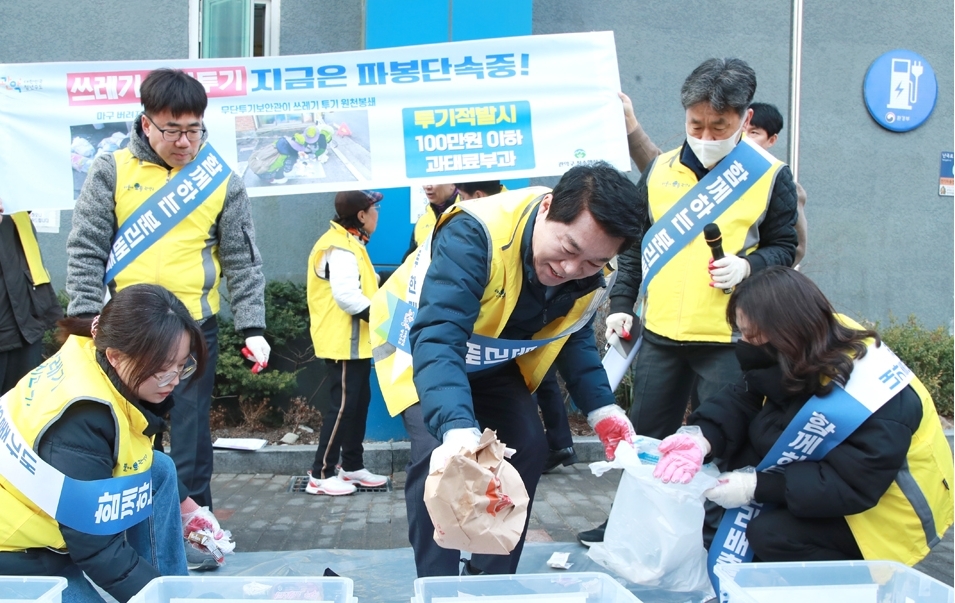
The district is also running resident-led cleanup drives and a "resource-circulation bag-inspection campaign" to deepen a community culture of proper waste separation.
Alongside this, the district is pursuing a range of everyday resource-circulation policies, including installing dedicated plastic-film collection compartments in public buildings and requiring five-category recycling bins at district-organized events.
The district is also advancing multiple lifestyle-oriented resource-circulation initiatives — recycling used coffee grounds and paper cartons, supporting small-scale food-waste reduction appliances, running a paper-carton-for-tissue exchange program, and providing reusable container support. These efforts have earned Gwanak-gu recognition as an outstanding district in Seoul's urban cleanliness assessment and recycling performance evaluation for two consecutive years.
"Resource circulation starts with the small act of sorting waste correctly at home," Gwanak-gu District Mayor Park Jun-hee said. "I hope the distribution of dedicated recycling bags gives residents an easy and natural way to take part in proper waste sorting."
seouldream01@heraldcorp.com