New zones cover Daechi-dong hagwon district, Yeonsinnae Rodeo Street and Wirye Transit Mall walkway
95% of surveyed residents in new zones backed the expansion
Two pilot zones converted to permanent operation; all five take effect Sept. 30
Violators face a 30,000 won ($22) fine and 15 demerit points
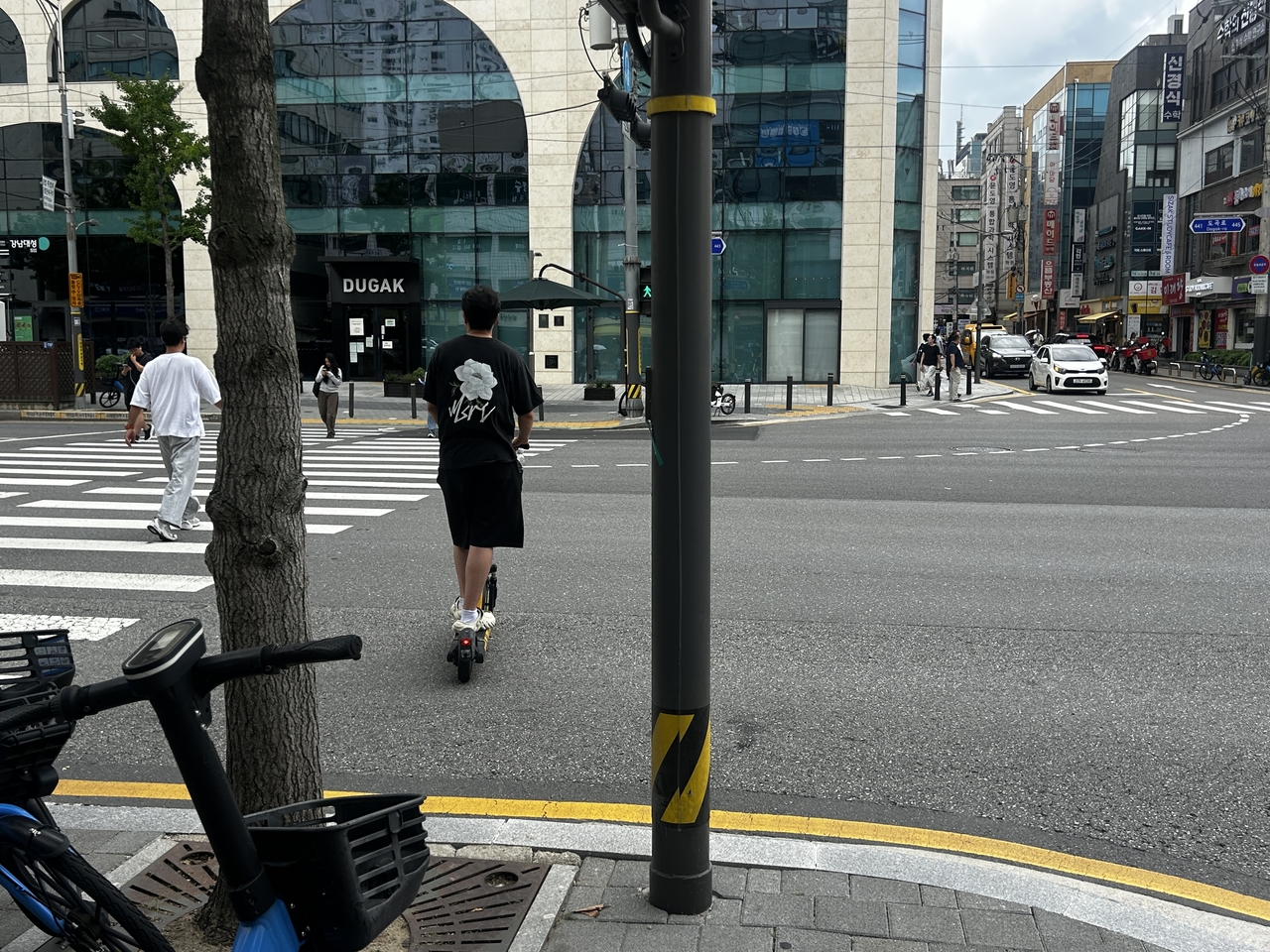
The Seoul Metropolitan Government is expanding its network of "kick-scooter-free zones."
Three new zones will be added: the hagwon district of Daechi-dong in Gangnam-gu (1,630 meters), the pedestrian walkway of Wirye Transit Mall in Songpa-gu (800 meters), and Yeonsinnae Rodeo Street in Eunpyeong-gu (200 meters). Two existing pilot zones will also be converted to permanent operation, bringing the total to five kick-scooter-free zones starting Sept. 30.
The city selected the new sites through a comprehensive analysis of data covering pedestrian-scooter accident rates, resident complaints and illegal parking reports, shared scooter usage patterns, and pedestrian congestion levels.
Some 95 percent of the 281 residents surveyed in the new zones — 267 people — supported the expansion, expressing agreement on the need to strengthen pedestrian safety. The city said it decided to expand the program after weighing resident support, the results of the existing pilot operations, and pedestrian conditions and safety levels in each area.
The city has completed consultations with relevant agencies and a traffic safety review by the Seoul Metropolitan Police Agency for the three new zones. The Hongdae Red Road in Mapo-gu and the Banpo hagwon district in Seocho-gu, which have been in pilot operation since May last year, will be converted to permanent zones based on operational results and joint police field inspections. All five zones — three newly designated and two converted from pilot status — will be in full operation from Sept. 30.
Operating hours are staggered by zone to reflect local pedestrian conditions without imposing excessive restrictions. The Daechi-dong hagwon district in Gangnam-gu will be restricted from noon to 11 p.m., timed around school and hagwon hours. Yeonsinnae Rodeo Street in Eunpyeong-gu will be restricted from 10 a.m. to 10 p.m., based on big data on foot traffic. The Wirye Transit Mall walkway in Songpa-gu, a vehicle-free pedestrian space, will be restricted around the clock. The two existing zones — Hongdae Red Road in Mapo-gu and the Banpo hagwon district in Seocho-gu — will remain off-limits to scooters from noon to 11 p.m.
Riders caught violating the ban on general roads face a fine of 30,000 won ($22) and 15 demerit points under the Road Traffic Act. In school zones, the penalties double to a 60,000 won fine and 30 demerit points. Officers on the scene retain discretion to issue a formal citation or a warning.
To ensure a smooth rollout and minimize public confusion, the city will conduct intensive on-site outreach for three weeks before and after the launch. No-entry traffic signs showing the restricted zones and hours will be installed, and banners on lampposts and other fixtures will alert the public to the restrictions.
The city will also conduct regular patrols of the kick-scooter-free zones and surrounding areas, and will tow illegally parked electric scooters immediately to prevent them from entering or being abandoned within the designated areas.
"Through the pilot operation, we confirmed tangible improvements in the pedestrian environment — including a reduction in illegally abandoned scooters and a lower risk of collisions," said Yeo Jang-gwon, head of the Seoul Metropolitan Government's transportation bureau. "We will continue to closely examine pedestrian conditions and resident feedback in each area to make Seoul a city where people can walk with confidence."
Meanwhile, a survey of 500 residents conducted last year to assess the pilot program's impact found broadly positive results: 80.4 percent said the number of abandoned scooters had decreased, 77.2 percent reported a lower risk of collisions, and 69.2 percent said the pedestrian environment had improved. The Seoul Metropolitan Government subsequently named the kick-scooter-free zone initiative the top outstanding administrative achievement of the first half of this year.
ikson@heraldcorp.com