'Tech education must translate into higher sales and a more vibrant local economy'
Songpa-gu Small Business Federation to hold eight AI and digital skills sessions
Program targets marketing, customer management and business analysis
Small business owners in Songpa-gu are turning to AI and digital technology to adapt to a shifting consumer market and find new avenues for growth. The effort goes beyond simply learning how to use new tools — it aims to translate training directly into better store operations and higher sales.
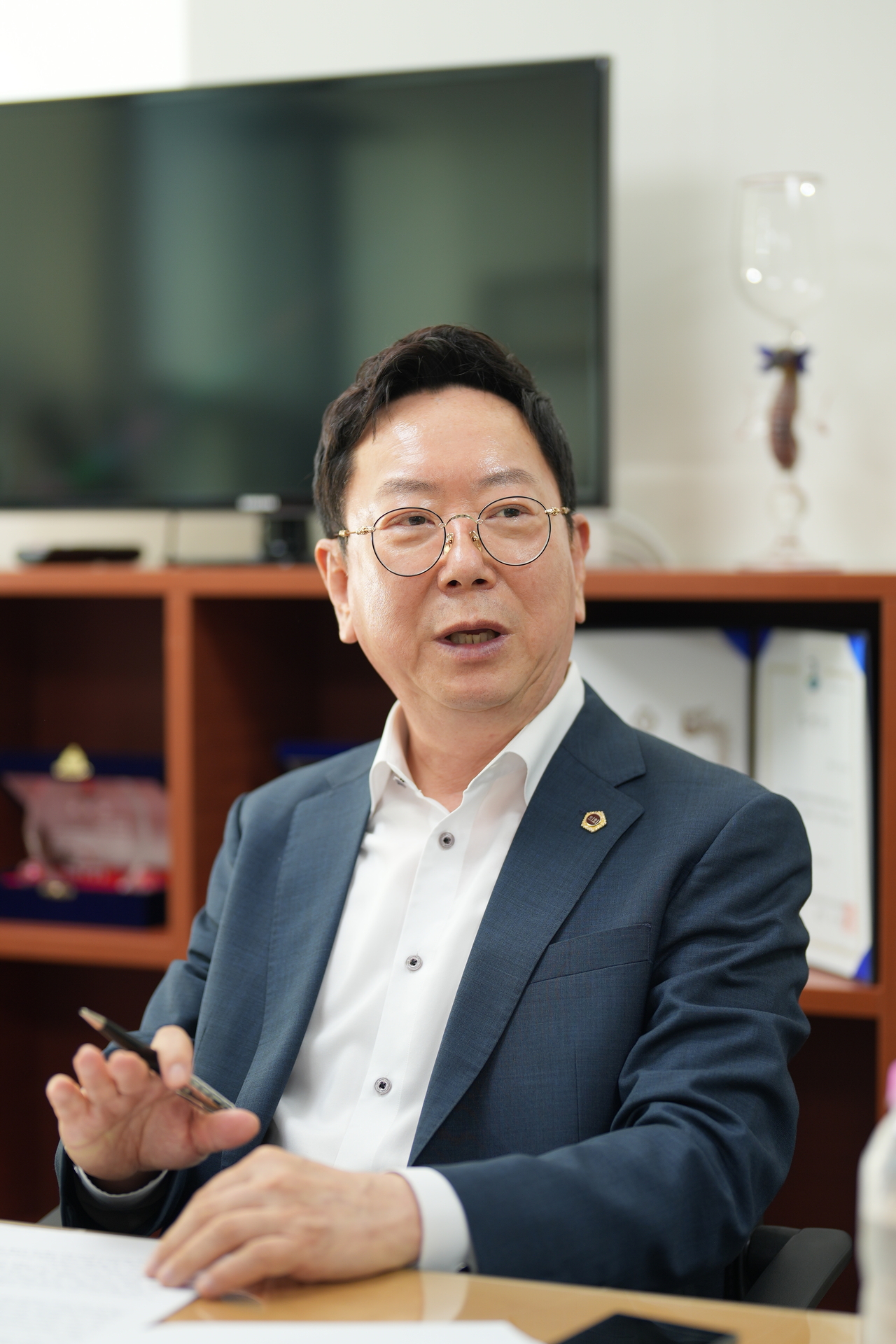
Seoul Metropolitan Council member Kim Gwang-cheol of the People Power Party, representing Songpa District 2, attended the opening ceremony of the Songpa-gu Small Business AI and Digital Competency Training program Monday, encouraging participants in their new endeavor and pledging continued policy support.
The eight-session program, organized by the Songpa-gu Small Business Federation, is designed to help local business owners understand AI and a range of online tools and apply them directly to their own operations amid a rapidly changing retail and consumer environment.
Kim said the ways businesses promote their products and storefronts have quickly expanded beyond offline methods such as banners and flyers to encompass online search, SNS and video content. Digital technology, he added, is also playing a growing role in how businesses communicate with customers and gauge market response.
"For small businesses with limited staff and capital, picking up new technology and putting it to work is not easy," Kim said. "There is concern that as digital proficiency increasingly determines the effectiveness of marketing and customer reach, the digital divide could translate into a competitiveness gap between stores."

Kim said the program is meaningful because it lowers that barrier and helps small business owners treat AI not as an unfamiliar high-tech concept but as an everyday management tool. He expressed hope it would help owners introduce their products and services more effectively, broaden their customer touchpoints and cut repetitive tasks to run their businesses more efficiently.
Kim said AI and digital technology are no longer the exclusive domain of large corporations or specialized workers, and that small business owners can apply them across a wide range of areas — from product promotion and content creation to customer management and sales analysis. He added that because the right approach varies by business type, scale and operating style, hands-on training that can be put to immediate use is essential. Building up the experience of learning and trying things firsthand, he said, is what ultimately reduces the anxiety around new technology.
Kim also called for a support structure to follow the training. He said that to help participants work through difficulties when applying what they learned to their actual businesses, individual consultations, tailored consulting, assistance opening online sales channels and digital marketing support all need to be linked in a coherent system.
He also suggested that rather than focusing solely on short-term training outcomes, organizers should examine what real changes participants experience in their day-to-day operations. Tracking shifts in marketing effectiveness, customer response and sales before and after the program — and using those findings to refine the curriculum — is what will allow it to take root as a sustainable initiative, he said.
"Technology training must not end as a one-off event staged for appearances," Kim said. "The effect of policy can only be felt when small business owners put what they have learned to use in actual operations and see the results show up as improvements in their business."
Kim also stressed the importance of neighborhood commercial districts to the local economy. He said that as individual stores become more competitive, foot traffic and consumer spending rise, creating a virtuous cycle that boosts local employment and community vitality.
"I will closely monitor what small businesses on the ground actually need so that they are not left behind in the digital transition," Kim said. "I will carefully examine, at the Seoul Metropolitan Council level, the policies and budgets that can lead to genuine increases in sales and greater business stability."
"The very act of learning new technology and trying to apply it to your business is the starting point for change in our neighborhood commercial districts," he added. "I hope the knowledge and experience gained through this program become a driver of growth for each business and breathe new energy into Songpa-gu's commercial areas as a whole."
7toy7@heraldcorp.com