Mortgage loans jump from W3.6tr to W4.3tr as group lending expands
Other loans fall W1.7tr; credit loans down W500b
Regulators watch for mortgage growth risk ahead of fall moving season
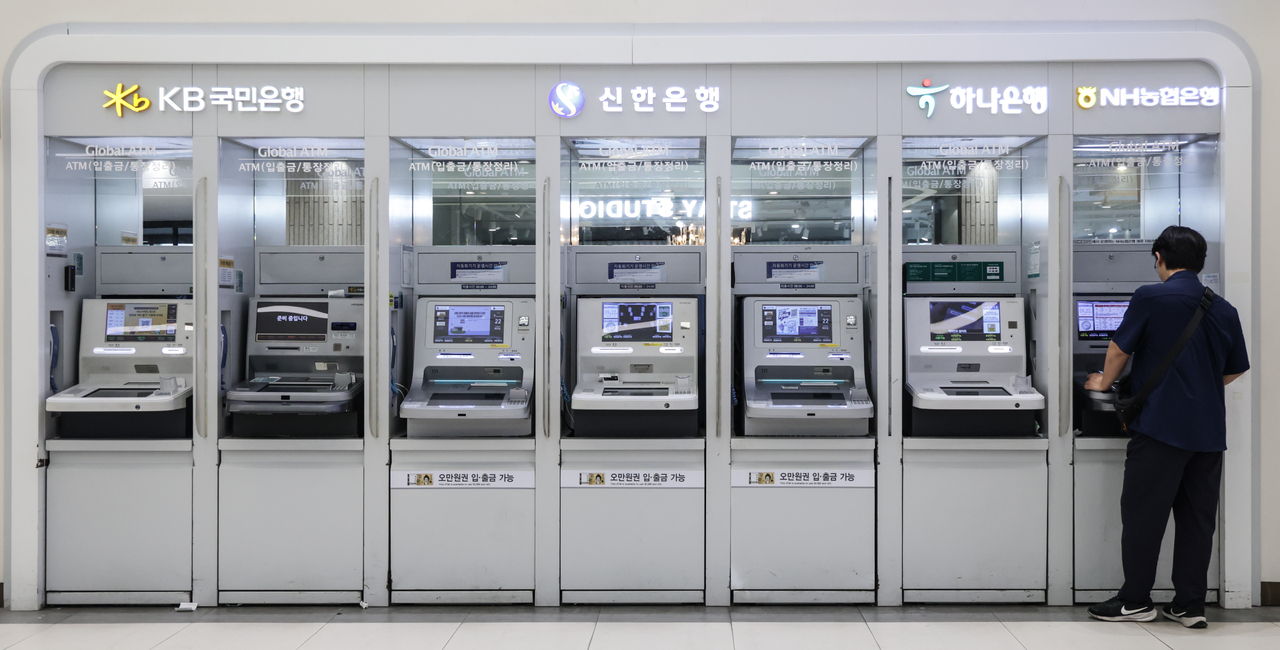
![An automated teller machine of a major bank is seen in Seoul. [Newsis]](https://wimg.heraldcorp.com/news/cms/2026/09/09/9/news-p.v1.20260527.f57229ad77cf4b69bf1b26ee437ddb88_P1.jpg)
Household loans across all financial sectors grew by 2.6 trillion won ($1.94 billion) last month, less than half the previous month's increase. Mortgage loan growth expanded, but other loans, including credit loans, turned negative.
The Financial Services Commission (FSC) and the Financial Supervisory Service said Wednesday that household loans across all financial sectors rose 2.6 trillion won in August from the previous month. That is lower than the 6.4 trillion won increase in July and the 4.8 trillion won increase in August last year.
Household loan growth this year rose sharply from 2.9 trillion won in February to 3.5 trillion won each in March and April, then to 9.3 trillion won in May. It then eased to 8.3 trillion won in June, 6.4 trillion won in July and 2.6 trillion won in August.
By loan type, mortgage loans and other loans moved in opposite directions. Mortgage loans grew 4.3 trillion won in August, up from 3.6 trillion won the previous month. Bank mortgage loans expanded from 3.5 trillion won to 4 trillion won, while non-bank mortgage loans grew from 100 billion won to 300 billion won.
Other loans, however, swung from a 2.8 trillion won increase in July to a 1.7 trillion won decrease in August. Credit loan balances also fell 500 billion won last month, reversing a 2.1 trillion won increase in July.
"Mortgage loans rose in August from the previous month due to an increase in housing transactions ahead of the expiration of a suspension on heavier capital gains taxes, along with expanded balance loans tied to a rise in move-in volume in July and August," said Shin Jin-chang, secretary-general of the FSC. "Other loans turned negative for the first time in four months due to voluntary management measures by financial institutions, which reduced the overall growth in household loans."
![Customers conduct transactions at a bank branch in Seoul. [Newsis]](https://wimg.heraldcorp.com/news/cms/2026/09/09/news-p.v1.20260203.8eef3efc4286460385450a9ff2a77ef1_P1.jpg)
Bank sector household loans rose 3.4 trillion won last month, a smaller increase than the 5.5 trillion won gain in July. Banks' own mortgage loans grew from 2.5 trillion won to 2.9 trillion won, and policy-backed loans expanded from 1 trillion won to 1.1 trillion won. Other loans swung from a 2 trillion won increase to a 600 billion won decrease.
Among banks' own mortgage loans, general mortgage loans edged down slightly from 2.1 trillion won to 2 trillion won, while group loans rose from 900 billion won to 1.2 trillion won. "Jeonse" loans, a long-term deposit-based lease arrangement, fell 400 billion won.
Household loans at non-bank financial institutions fell 800 billion won, reversing a 900 billion won increase in July. Mutual finance loans dropped 500 billion won, while both insurers and specialized credit finance companies fell 300 billion won each. Savings banks posted a 300 billion won increase, down from 500 billion won growth in July.
The FSC said mortgage loan growth could continue amid seasonal demand tied to the fall moving season and the effects of group loans managed separately under the Aug. 13 real estate financial measures. Over the past five years, the average monthly increase in mortgage loans has been 1.9 trillion won, but the average was 2.9 trillion won in September and 2.2 trillion won in October.
Financial authorities held a household debt review meeting Wednesday to check on the implementation of follow-up measures under the Aug. 13 real estate financial policy. Among them, measures to rationalize the loan-to-value ratio calculation method for relocation loans, adjust first-time homebuyer requirements, and expand application of future income criteria under the debt service ratio have been in effect since Aug. 31.
![A customer receives consultation at a commercial bank branch in Seoul. [Newsis]](https://wimg.heraldcorp.com/news/cms/2026/09/09/news-p.v1.20260107.6b09b0519ff3466596472ab6ad60ab2a_P1.jpg)
Shin urged financial institutions to thoroughly prepare their computer systems, train staff and inform customers to prevent inconvenience at branch counters. He also called for special attention to operating loan review committees that consider exceptions such as first-time homebuyer status.
Financial authorities plan to continue supporting housing supply, youth residential stability and financing for genuine end users without disruption. They will also maintain each financial institution's compliance with overall household loan volume management targets.
In addition, they plan to review the status of fixed-rate mortgage loans, taking into account borrowers' repayment burdens amid rising benchmark and market interest rates. They will also encourage the launch of long-term fixed-rate mortgage products.

rim@heraldcorp.com