- KRICT builds joint-use platform for secondary battery material analysis and demonstration
- One-stop support spans material analysis, electrode manufacturing and coating, and performance and safety evaluation
A new national joint-use platform will allow companies and researchers to analyze secondary battery materials, manufacture electrodes and evaluate performance and safety all in one place. They will no longer need to secure advanced analytical equipment worth hundreds of millions of won on their own.
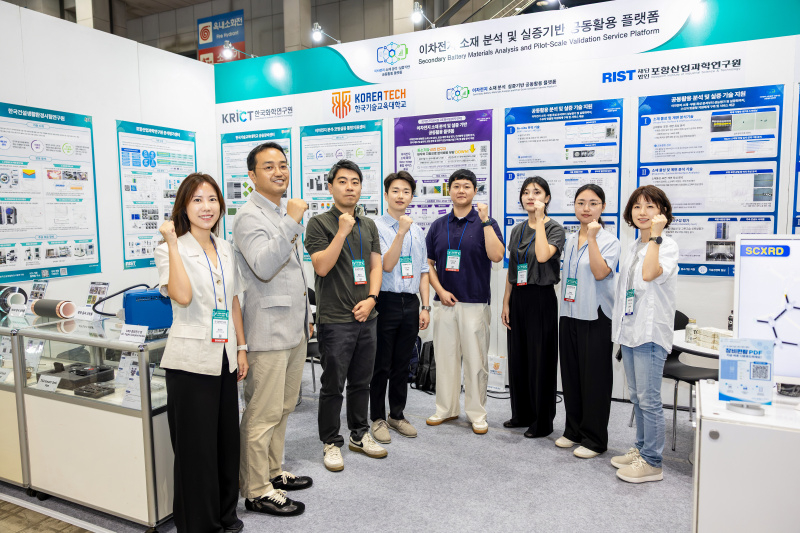
The Korea Research Institute of Chemical Technology said Thursday it will unveil its "Joint-Use Platform for Secondary Battery Material Analysis and Demonstration" at K-Battery Show 2026, running from Wednesday to Friday at Kintex's second exhibition hall in Goyang, Gyeonggi Province.
The platform's core function is to link high-priced research equipment and specialized personnel that are currently scattered across different institutions. It offers one-stop support covering the entire process, from elemental and structural analysis of battery materials to electrode manufacturing and coating, and accelerated degradation and reliability testing.
Secondary batteries combine a range of materials, including cathodes, anodes, separators and electrolytes. The microstructure and chemical properties of these materials, along with the characteristics of the resulting electrodes and cells, directly affect performance and safety. That is why developing a new material requires comprehensive verification, from analysis and evaluation to electrode manufacturing, charge-discharge testing, and degradation and reliability assessment.
Small and medium-sized enterprises and individual researchers, however, have struggled to secure all the expensive equipment and expert personnel this process demands. They also faced heavy costs in time and money from having to track down and individually request access from institutions that held the necessary equipment and expertise.
The institute will draw on research infrastructure centered in Daejeon, comprising about 225 pieces of advanced analytical and pilot-scale coating equipment worth some 56 billion won ($41.9 million). Forty-six experts from its chemical analysis center, reliability evaluation center and coating-based solutions center will provide support ranging from material analysis and evaluation to process demonstration and technical consulting.
Regional specialized research institutions are also being linked into the network. The Korea University of Technology and Education in Cheonan will support material analysis and prototype production. The Research Institute of Industrial Science and Technology in Pohang will handle "operando" analysis, which examines material changes while a battery is actually operating, along with cell evaluation and air-isolated analysis. The Korea Conformity Laboratories in Suwon will oversee performance evaluation — including charge-discharge, safety and long-life testing — from the material level up to modules and packs.
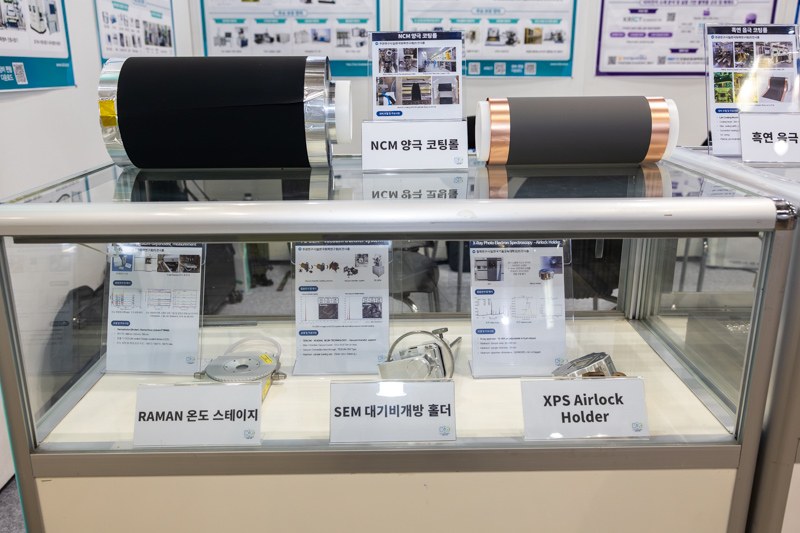
Companies and researchers will be able to access the equipment and specialized services they need through the joint-use system, instead of having to search separately at each institution.
The platform will run a one-stop service window based on ZEUS, the national reservation system for shared research facilities and equipment. Small and medium-sized enterprises in the secondary battery sector will also receive vouchers to ease the cost of using research facilities and equipment. The project also includes training for hands-on specialists who can operate the equipment on-site.
The project is part of the "National Research Support Facility Advancement Project" run by the Ministry of Science and ICT and the National Facilities and Equipment Center. Groundwork began last year, with the upgrade of hub and partner research facilities and the establishment of a cooperative system planned for 2026-2028, and operations set to continue through 2034.
"We will connect the equipment and expertise held by our institute and partner institutions into a single network, so that companies and researchers can more easily and quickly receive the research support they need," said Shin Seok-min, president of the Korea Research Institute of Chemical Technology.
nbgkoo@heraldcorp.com