- Four InnoCORE research organizations officially launched
- Postdoctoral researchers to lead fusion research on future strategic technologies
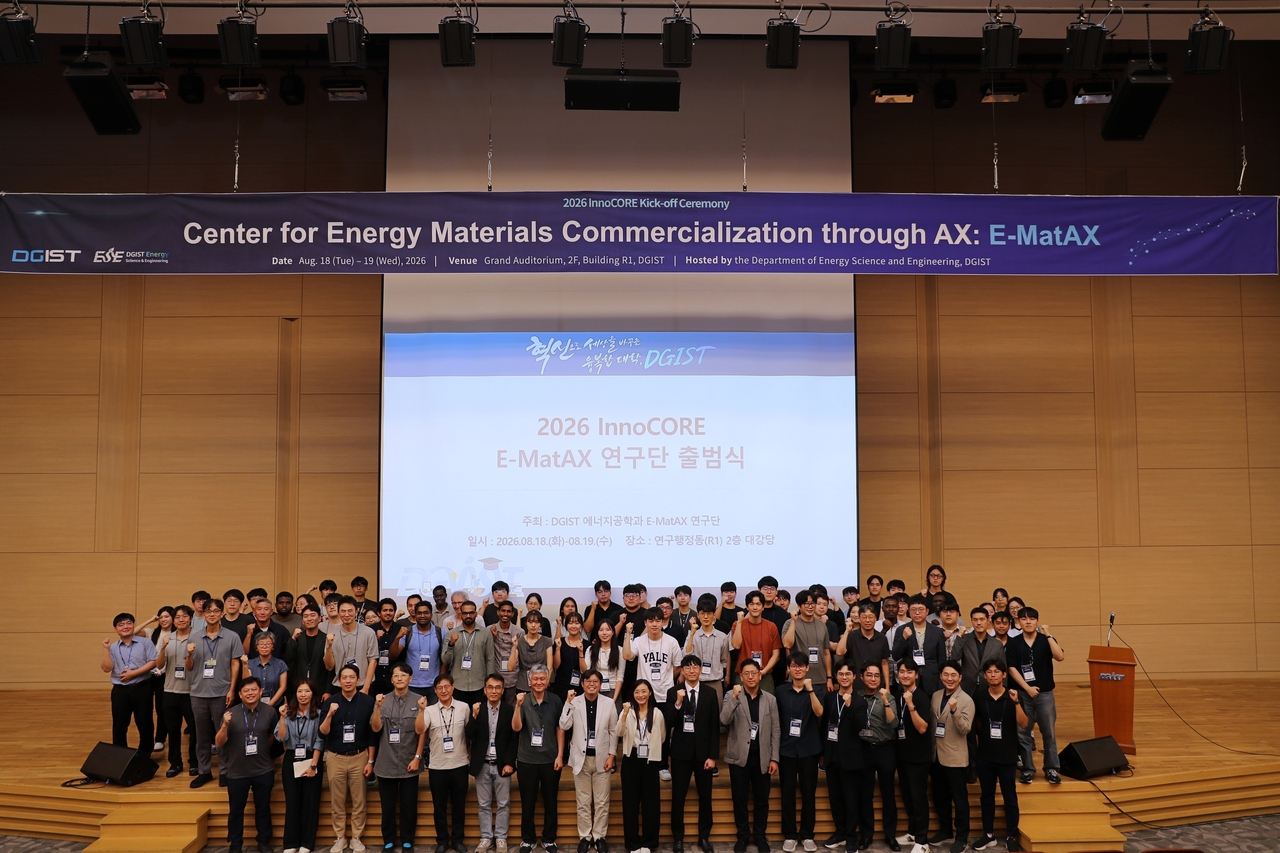
DGIST (Daegu Gyeongbuk Institute of Science and Technology) has begun training a new generation of researchers to lead future strategic technologies, spanning AI-driven energy materials, brain digital twins and physical AI.
DGIST said Thursday that it has launched its 2026 InnoCORE project in earnest, holding a series of launch ceremonies for new research organizations under the initiative from Aug. 18 to Sept. 8.
InnoCORE supports outstanding postdoctoral researchers, called "InnoCORE Fellows," in leading fusion research across future strategic technology fields. A core aim of the project is to build a cooperative framework between universities and government-funded research institutes.
DGIST launched four innovative research organizations in total: two "institute-led" research groups carrying out large-scale fusion research, and two "institute-linked" research groups conducting strategic joint research with government-funded institutes.
The institute-led groups are focused on advanced energy materials research and biotech and brain science research.
The E-MatAX Research Group for Energy Materials Commercialization is building an integrated platform that uses AI to overhaul every stage of energy material development, from design to demonstration. The Multiscale Brain Digital Twin Fusion Research Group, launched Sept. 3, is developing technology to precisely model brain diseases by recreating the actual human brain in virtual space.
The institute-linked research groups are focused on joint research that breaks down barriers between institutions. At the first launch ceremony, the heads of five core research projects and their fellows shared their research plans. At the second, participants discussed detailed implementation plans for each linked project and ways to strengthen the joint research framework.
DGIST also plans to expand "institute-fusion" research carried out in cooperation with other science and technology institutes. The Bio-Embodied Physical AI Research Group, launched last year, plans to hold a joint workshop this year and move forward in earnest with fusion research on AI technology that interacts directly with the real world.
DGIST also runs multi-mentoring programs and customized career development tracks tailored to academia, industry and entrepreneurship. The institute said it aims to give young researchers a high degree of research autonomy, help them grow into independent researchers, and cultivate them into key talent capable of leading future strategic technology fields.
"We will establish an open fusion research platform where capable young researchers can freely collaborate beyond the boundaries of their institutions and fields," said Koo Jae-hyung, head of DGIST's InnoCORE project. "We will provide full support so that they can produce world-class research results."
nbgkoo@heraldcorp.com