Ordinance requiring chief of staff, senior political aides to appear before council passes
Bill to tighten oversight of political appointees withdrawn as council approves city's reorganization plan as is
'Cooperation under divided government will be key to resolving Busan's major issues'
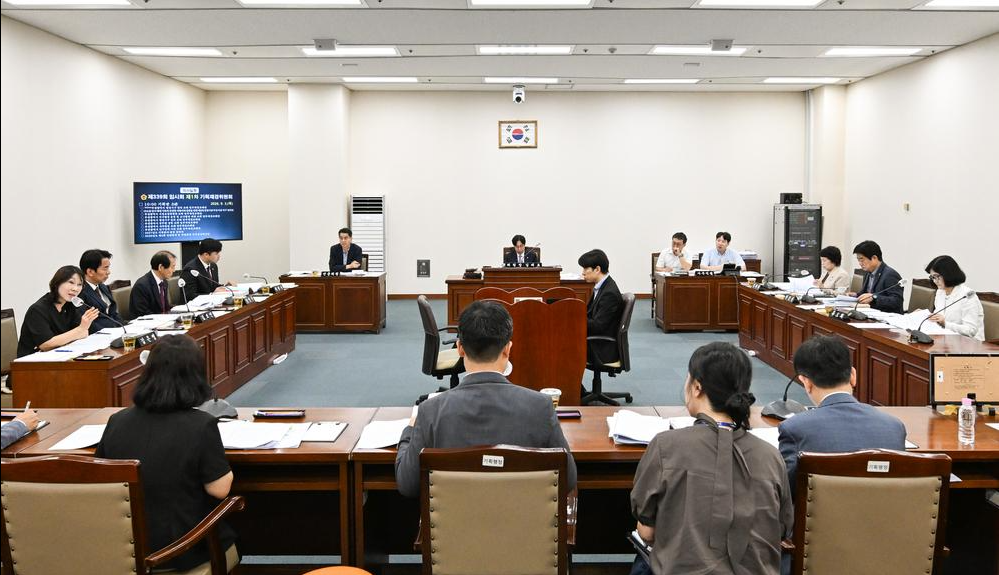
Busan city and the Busan City Council, locked in an escalating standoff over the city's reorganization plan and oversight of the mayor's political appointees, have reached a dramatic compromise.
The Busan City Council will hold a steering committee meeting Friday. It plans to pass an amendment to the "Ordinance on the Scope of Officials Required to Appear Before the Busan Metropolitan Council to Answer Questions." The revision requires the chief of staff to the Busan mayor and to the Busan superintendent of education, as well as senior political appointees equivalent to first-grade civil servants, to appear before the council. The council reached the agreement with the city Wednesday evening.
Kim Tae-hyo, a People Power Party council member representing Haeundae-gu District 3 and chair of the council's Planning and Finance Committee, who sponsored the ordinance, said in a phone interview Thursday, "With authorization from the steering committee chair and our floor leader, we reached an agreement with the city around 7 p.m. Wednesday. The ordinance requiring the mayor's chief of staff and two senior political appointees to appear before the council will pass Friday."
In exchange, the Planning and Finance Committee withdrew a separate bill, also sponsored by Kim. The bill would have specified the duties and functions of the mayor's chief of staff and political aides, strengthening oversight of them. Separately, the committee voted Thursday to approve, as originally submitted, the sweeping reorganization plan Mayor Jeon Jae-soo, Busan's ninth popularly elected mayor, put forward after taking office. Both measures are set to be finalized at a plenary session Friday.
The council, where the People Power Party holds an overwhelming majority of 37 of 48 seats, had insisted that establishing checks on political appointees take priority. That, it argued, should come before the reorganization pushed by Mayor Jeon of the Democratic Party of Korea. The city, for its part, argued that it would be unlawful for the council to force changes to the administrative structure. It warned that if the ordinance passed, it would seek reconsideration and, should the council reaffirm it, pursue an injunction and a lawsuit at the Supreme Court.
While the confrontation between the ruling and opposition camps over oversight of the mayor's political staff has cleared a major hurdle, another front remains active: budget review. The council plans to significantly revise the third supplementary budget that the city put together to help revive the local economy.
The city allocated 92.7 billion won ($69.3 million) in national and city funds to maintain a 10 percent cashback rate for Dongbaekjeon, Busan's local digital currency. The rate is set to hold through the end of the year. It also set aside 36.3 billion won to temporarily raise the cashback rate to 15 percent for 100 days. The council, however, is considering cutting the entire 36.3 billion won, arguing the temporary cashback expansion would have little practical effect. Council members have also largely agreed to eliminate in full the 30 billion won in municipal bond funding the city set aside for construction of the Busan Opera House. They said the city's finances could cover the project if wasteful spending were trimmed elsewhere.
The power struggle between Busan city and the council over oversight of political appointees has been patched up for now. The budget for Mayor Jeon's signature "100-day emergency measures for people's livelihoods" and funding for the opera house are both facing cuts. The conflict appears to be shifting to the budget review process.
"The People Power Party-led council pressured Mayor Jeon from the start of its term by threatening to force his political aides to appear before it, but it only partially achieved its goal. The city, meanwhile, secured passage of its reorganization plan as originally proposed, but now faces the burden of cuts to its major project budgets," a Busan political source said. "Under this divided-government structure, the ability of the city and council to cooperate will be key to resolving major issues facing Busan, including the second phase of relocating public institutions and the redevelopment of the North Port."
kaf2002@heraldcorp.com