Experiential environmental education highlighted as climate response
800 toddlers, parents and teachers join event at Peace Park
Play-based biodiversity lessons explored for wider use in schools
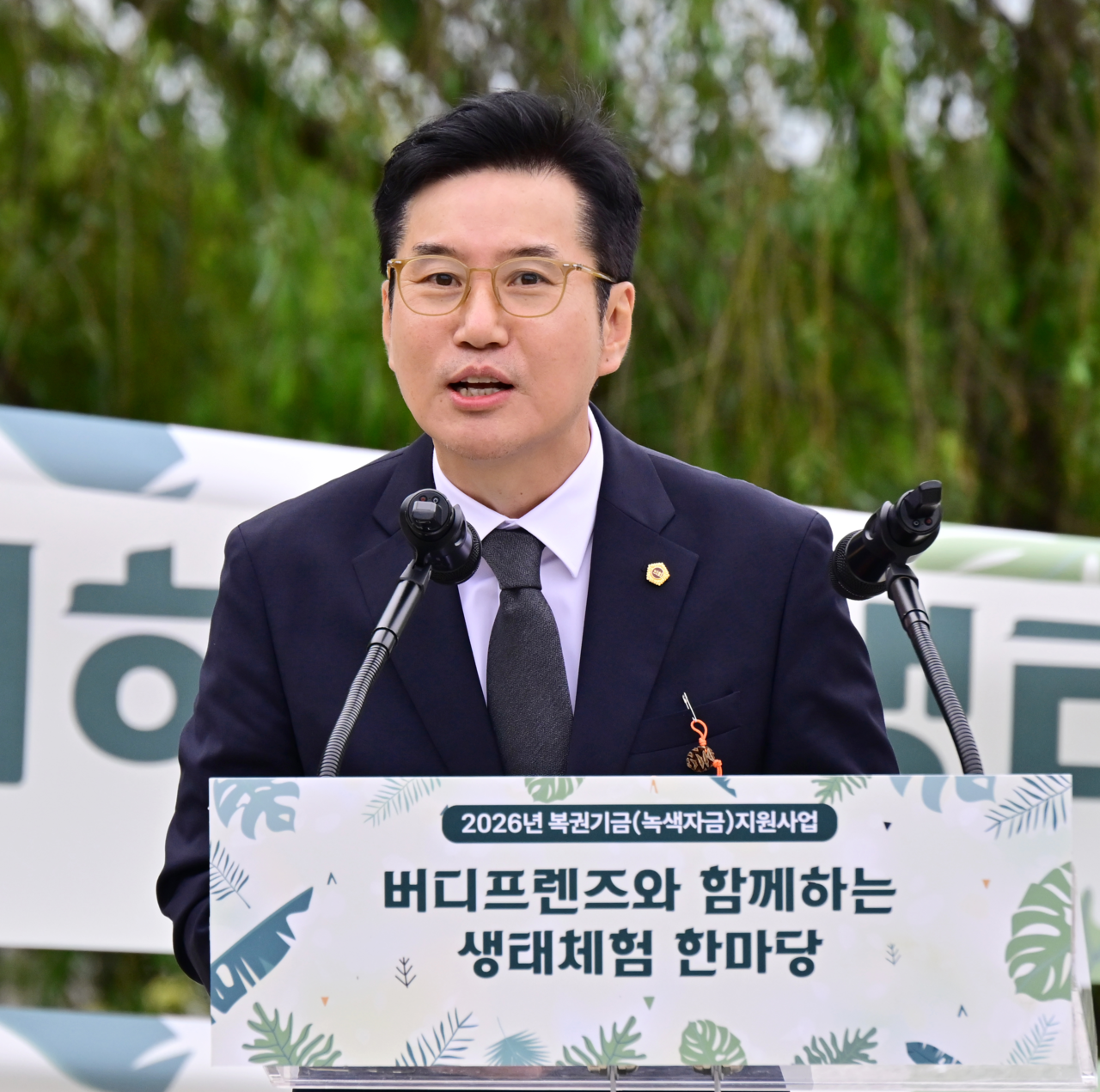
Kim Ho-jin, chair of the Seoul Metropolitan Council's Education Committee and a Democratic Party of Korea member representing Seodaemun 2, said environmental education in the age of climate crisis should begin in early childhood and become part of daily life, calling for the expansion of experiential ecological education.
Kim said environmental education should not be confined to specific subjects or one-off events, but should evolve into everyday learning that lets children observe nature and connect with living things. He added that an educational framework should also be built to link kindergartens, day care centers, homes and local ecological spaces.
Kim visited the scene of early childhood ecological education on Thursday, attending the 2026 Buddy Friends Ecological Play Festival — Learning Biodiversity Through Play, held at Constellation Square in Peace Park in Mapo-gu, Seoul.
That day, Kim toured hands-on programs that used natural materials alongside the children and heard from teachers and parents about the effectiveness of on-site education and the kind of support needed to run such programs.
"Environmental education in early childhood should not simply be about delivering knowledge one-way," Kim said. "It should lead children to see and feel nature directly and understand the value of life."
The event was organized by the Seoul Forest Kindergarten Association and Asia Holdings under the theme "See, Feel, Practice Environmental Education" to raise children's awareness of the climate crisis and biodiversity loss. Programs tailored to young children included lessons on biodiversity and endangered species, Buddy Friends nature experience activities, and storytelling with environmental picture books. Other activities included ecological movement, craft and sensory play, environmental missions and nature-based crafts.
The event also placed greater weight on hands-on spaces than on stage performances. Children touched and examined kudzu vines, acorns, fruit, branches and leaves, comparing their different shapes and textures. By using natural materials as play items, the program aimed to help children see the ecological environment not as something distant or unfamiliar but as part of their everyday surroundings.
Parents and teachers also took part in the hands-on activities. Organizers hoped the experience gained at the event would carry over into homes and classrooms, allowing habits of caring for nature to take root and continue.
"The climate crisis and biodiversity loss are issues that will shape the lives of future generations," Kim said. "The Seoul Metropolitan Council will do its part to expand educational programs and hands-on learning infrastructure so children can learn and practice the value of ecology and the environment in their daily lives."
7toy7@heraldcorp.com