At his first town hall, Jeon Jae-soo says he will make Busan indispensable for shipping firms
Mayor calls Greater Seoul dominance 'fundamental crisis,' points to Arctic route as way forward
Next grassroots push: on-site visits to all 16 districts and 206 towns and neighborhoods
![Busan Mayor Jeon Jae-soo speaks at his first town hall meeting since taking office, held Monday at Asti Hotel Busan in Dong-gu. [Busan City]](https://wimg.heraldcorp.com/news/cms/2026/09/15/news-p.v1.20260915.51614d4763c448718ab5c8e091779d2a_P1.jpg)
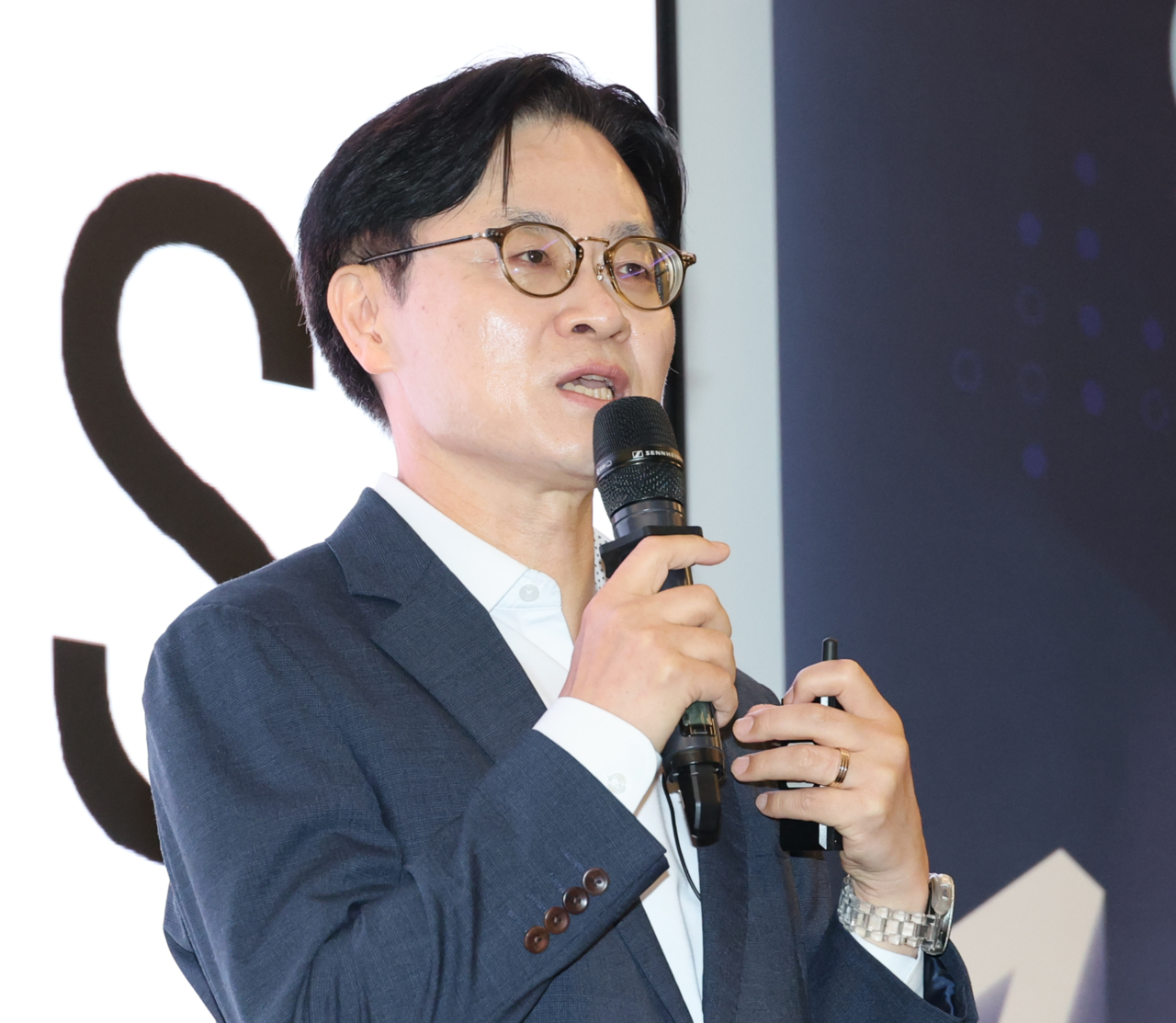
Busan Mayor Jeon Jae-soo held his first town hall meeting since taking office and said he is pushing to relocate Korea Development Bank entirely to Busan, vowing to build a structure that makes the city indispensable for shipping companies. He also identified Greater Seoul's dominance as a "fundamental crisis" for both South Korea and Busan, and proposed the Arctic shipping route as the way to break through it.
Jeon convened the first "Busan Town Hall Meeting" on Monday afternoon at Asti Hotel Busan in Dong-gu, under the slogan "Busan, Maritime Capital Built Together with Citizens." About 200 people attended, including maritime experts, industry representatives and citizens selected through an open application process. Five policy agendas were discussed: establishing Busan as the national hub for maritime policy, building a global maritime business ecosystem, strengthening global shipping and logistics competitiveness, fostering future maritime industries, and positioning the city as a leader on the Arctic route.
During a question-and-answer session with attendees, Jeon explained the specific reasoning behind his push to relocate Korea Development Bank to Busan. He said shipping companies that had already moved to the city consistently raised concerns about access to financial support, noting that the bank's president and vice president — who hold final approval authority over loans — are both based in Seoul, forcing Busan-headquartered firms to travel to Seoul to obtain decisions.
"Korea Development Bank happened to be included on the list of public institutions subject to regional relocation, and that led me to conclude we should bring the largest one — Korea Development Bank — to Busan," Jeon said. He added that he has been mobilizing every official and unofficial channel available, including meetings with the minister of Land, Infrastructure and Transport, the presidential chief of staff, the bank's president and President Lee Jae Myung. On the form of the relocation, he made clear that a full headquarters move is the goal, saying he is "proceeding in the direction of moving it over wholesale."
Jeon described the ultimate aim of relocating Korea Development Bank as creating infrastructure so robust that shipping companies based elsewhere would conclude on their own that staying away from Busan would seriously damage their competitiveness. He said the synergy would grow significantly once the Ministry of Oceans and Fisheries' relocation to Busan is followed by the opening of a specialized maritime court in March 2028, with Korea Development Bank added on top of that. He also pledged that Busan would support the residential and education needs of employees at major shipping company headquarters.
Jeon also made clear his determination to overcome Greater Seoul's dominance through the Arctic route. In a keynote address titled "Busan, Maritime Capital — Speaking of the Future," he diagnosed the concentration of growth in the Seoul metropolitan area as the most fundamental crisis facing South Korea, arguing that dependence on a single growth engine is the root of the problem. He presented the Arctic route as the opportunity to break through it.
"Cargo volume on the Arctic route has grown more than tenfold over the past decade, and countries are racing to stake their claims — China has opened regular container services on the route," Jeon said. He pointed to the United States' orders for icebreakers and its attempts to secure Greenland, as well as China's "Polar Silk Road" policy, to underscore the intensity of global competition for the Arctic route.
He also outlined a broader vision, noting that Busan port ranks 10th in the world for transshipment container volume and third for port connectivity, and that the city holds a geographic advantage in adding the Arctic route to its existing southern and trans-Pacific routes. "We will specialize — Busan in containers, Ulsan in liquid cargo, and Yeosu-Gwangyang in bulk cargo — and bind the entire southern coast together as an 'Arctic route economic zone,'" he said.
Following Monday's town hall, Jeon launched a community outreach project Tuesday covering all 16 of Busan's districts and all 206 of its towns and neighborhoods. For the first stop, he visited sites in Dong-gu — including a riverside pedestrian deck along Dongcheon stream, a hillside road, a steep-slope area and a care center — to hear from residents. In Jung-gu's Nampo-dong, he presented a commemorative plaque to a restaurant owner recognized for acts of community service.
kaf2002@heraldcorp.com