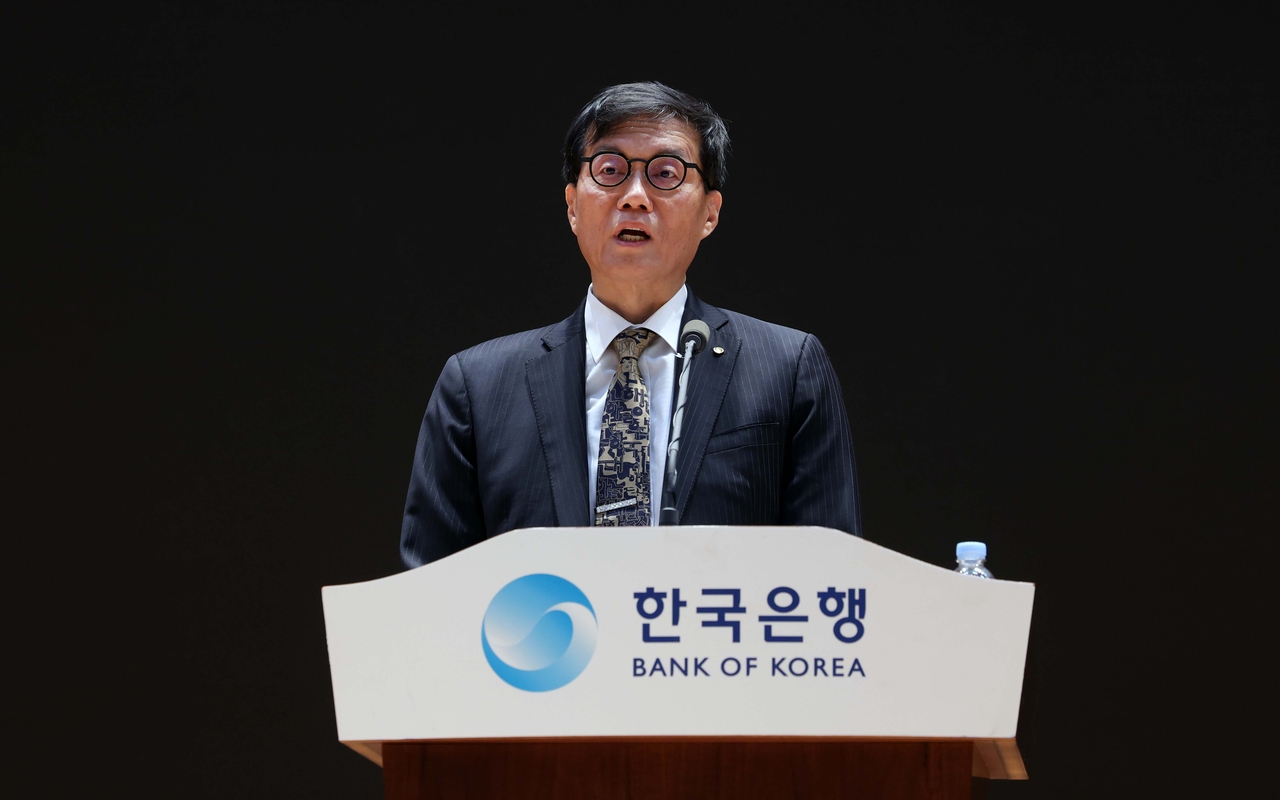
Former Bank of Korea Governor Lee Chang-yong has been receiving 7 million won ($5,070) a month as a non-standing adviser to the central bank since his retirement — yet no records of his advisory activities are being kept, on the grounds that the matters involved are too sensitive, it has emerged.
According to documents obtained from the Bank of Korea by People Power Party lawmaker Lee Jong-wook of the National Assembly's Finance and Economy Planning Committee, Lee Chang-yong was appointed as an adviser to incumbent Governor Shin Hyun-song the day after his retirement — April 21 this year — for a one-year term, with a mandate to exchange views with Shin on an as-needed basis. The monthly advisory fee of 7 million won amounts to 84 million won annually.
The Bank of Korea's governor adviser system dates back to 1950, when the central bank's articles of incorporation were first established.
The original framework allowed the bank to hire foreign experts as advisers to secure the specialized knowledge needed for central banking operations. In 1967, the system was expanded to include both Korean and foreign nationals.
A total of 13 former Bank of Korea governors, including Lee Chang-yong, have served in the adviser role.
His predecessor, former Governor Lee Ju-yeol, received 10 million won per month for two years starting in April 2022, followed by 4 million won per month for one year from April 2024. From April 2025, he was reappointed as adviser without any fee.
The problem, the lawmaker's office said, is that no materials exist to verify what these advisers actually do. Not only are standard documents such as advisory reports, meeting minutes and work logs absent — even basic figures such as the number of consultations held or whether any advice was reflected in policy are nowhere to be found.
Industry observers widely say the adviser appointment has become a customary courtesy extended to former governors. The view is reinforced by the practical difficulty of a retired governor closely coordinating with a sitting governor on monetary policy direction.
A Bank of Korea official told Yonhap that the bank appoints governor advisers in accordance with Article 35 of its articles of incorporation and sets an appropriate advisory fee at the time of appointment. "Since most of the advisory content involves sensitive matters related to monetary policy or the bank's management, we do not maintain separate records of advisory activities," the official said.
Lawmaker Lee Jong-wook said that even if the specific content of advice cannot be disclosed for reasons of monetary policy independence and confidentiality, "the bank should at minimum record when, how many times, and in what areas advice was given, and be able to explain that to the National Assembly."
balme@heraldcorp.com