Moon government's early closure of Wolsong Unit 1, Yoon government's 'Daewang Gorae' project
Every change of government brings audits targeting the previous administration's flagship initiatives
![Minister of Trade, Industry and Energy Kim Jung-kwan announces policy at a public briefing on the three mega-projects held at Cheong Wa Dae, chaired by President Lee Jae Myung. [Yonhap]](https://wimg.heraldcorp.com/news/cms/2026/09/25/rcv.YNA.20260629.PYH2026062911740001300_P1.jpg)
"Just like the Moon Jae-in government's early shutdown of Wolsong Unit 1 and the Yoon Suk Yeol government's 'Daewang Gorae' deep-sea gas project, won't the officials handling Lee Jae Myung's three mega-projects and the US investment push face Board of Audit and Inspection probes and all manner of investigations the moment the government changes?"
That cautious sentiment captures the mood among government officials working on the two flagship initiatives: the three mega-projects, which carry an investment target of around 1,500 trillion won ($1.1 trillion), and the US investment package worth roughly $200 billion.
According to legal circles, a hearing in the case against former presidential industrial policy secretary Chae Hee-bong, former Minister of Trade, Industry and Energy Baek Un-gyu, former presidential policy chief Kim Su-hyeon, former Korea Hydro & Nuclear Power president Jeong Jae-hun and an accountant identified only as A — all charged with abuse of authority and obstruction of rights — was held Sept. 15 before the 11th Criminal Division of Daejeon District Court, presided over by Chief Judge Park Woo-geun.
The trial over allegations that key aides of the Moon Jae-in administration manipulated the economic viability assessment of Wolsong Nuclear Power Plant Unit 1 has been under way for more than five years. The case stems from the Korea Hydro & Nuclear Power board's decision to shut down Wolsong Unit 1 ahead of schedule, followed the next year by the Nuclear Safety and Security Commission's confirmation of its permanent shutdown.
Wolsong Unit 1, which began commercial operation in 1983, was the country's second nuclear reactor after Gori Unit 1. It was taken offline in 2012 when its 30-year design life expired, then received a 10-year operating extension from the Nuclear Safety and Security Commission in 2015 and resumed generating power.
It was subsequently shut down roughly three years ahead of its originally planned operating end date of 2022, in line with the Moon administration's phase-out-nuclear policy.
Prosecutors, acting on a Board of Audit and Inspection finding that "the government unreasonably undervalued the economic viability of continued operation when deciding to close Wolsong Unit 1 early in 2018," launched an investigation and indicted key figures from the Moon administration in 2021 and again in 2023.
The audit of the Yoon administration's Daewang Gorae project followed a public-interest audit request that Minister Kim Jung-kwan filed with the Board of Audit and Inspection last October; the results were made public Sept. 10. The officials responsible spent roughly a year under audit scrutiny.
The Board of Audit and Inspection's findings on the East Sea deep-sea gas project indicate that former President Yoon Suk Yeol pushed ahead with the Daewang Gorae project — whose viability had not been verified — while ignoring the views of relevant ministries. The assessment is that Yoon, whose approval rating had fallen to the 20 percent range in June 2024 amid a deepening political crisis, drove the project forward recklessly as a way to shift the political narrative.
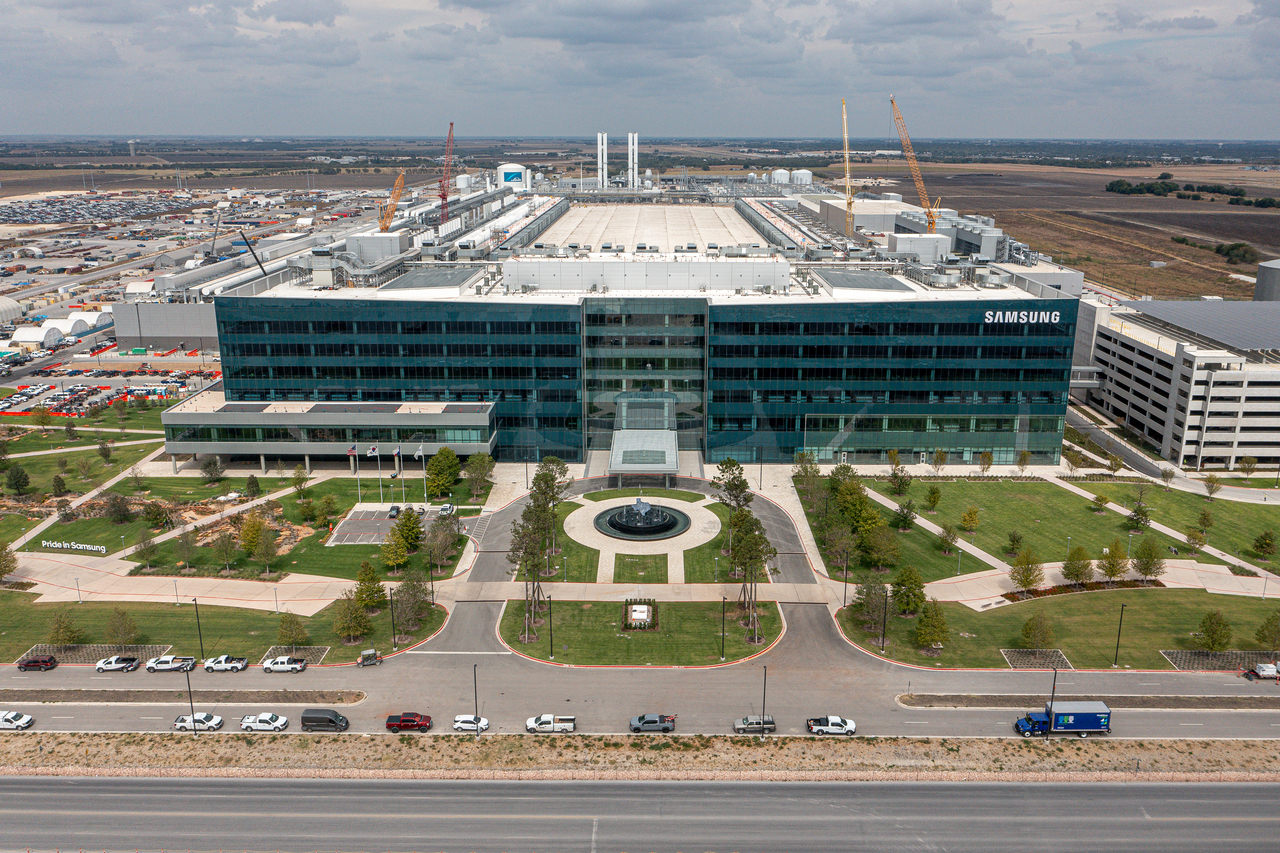
Officials in government circles believe the Lee administration's three mega-projects will be impossible to shield from audits if power changes hands. The government announced in June a plan to channel 1,500 trillion won in investment into non-metropolitan regions as part of the three mega-projects vision, and Samsung Electronics and SK hynix laid out a combined investment blueprint of 4,755 trillion won nationwide, including the Yongin semiconductor industrial complex. A timeline has been set to begin operating a semiconductor fab in South Jeolla Province and Gwangju in 2029.
For the projects to succeed, the government must build infrastructure capable of reliably supplying the vast quantities of water semiconductor factories require, as well as regional power drawn from a mix of nuclear and renewable energy. It must also move quickly to secure the highly skilled workforce advanced industries demand and to develop corporate-style high-tech cities where those workers can settle.
People Power Party lawmaker Na Kyung-won criticized President Lee Jae Myung's June 30 announcement that roughly 1,500 trillion won in corporate investment would flow into three mega-project sectors — semiconductors, physical AI and AI data centers — calling it "President Lee Jae Myung's coercive shakedown show targeting business chiefs."
Na added: "Forcing investment through the exercise of power, without any fundamental structural reform or regulatory overhaul, is like strapping sandbags to a company and tying its hands and feet before telling it to run a marathon. A parliamentary investigation at the National Assembly level is needed, and if necessary, a special prosecutor inquiry as well."
Andrew Yeo, the Brookings Institution's Korea chair, told South Korean journalists in Washington on Sept. 10 (local time) that the United States had wanted semiconductors to be South Korea's first US investment project, but that Seoul's decision to lead with energy and small modular reactors and then announce the three mega-projects — including the construction of a semiconductor fab in the Honam region — in June had further irritated the Trump administration. "The American side felt that Korea was trying to play games with them," Yeo said. "That rubbed officials the wrong way."
![President Lee Jae Myung and first lady Kim Hye-kyung pose for a photo with US Commerce Secretary Howard Lutnick at a reception hosted by US President Donald Trump at a hotel in New York on Tuesday (local time). [Yonhap]](https://wimg.heraldcorp.com/news/cms/2026/09/25/rcv.YNA.20260924.PYH2026092400390001300_P1.jpg)
South Korea decided to prioritize the construction of a gas combined-cycle power plant in Encinal, Texas — judged to have secured commercial viability — as its first US investment project. Two further candidates, the construction of large-scale nuclear reactors and development of Alaska LNG, are under additional review before a final decision on whether to proceed.
The Encinal project involves building a gas combined-cycle power plant in the Encinal area of Texas. It is driven by a surge in electricity demand as advanced semiconductor factories and AI data centers have opened in rapid succession across Texas, and the plant's total installed capacity is expected to reach approximately 6.472 GW.
The profitability of the Encinal gas combined-cycle plant, however, is not fully guaranteed. The facility was designed to supply power directly to nearby AI data centers, but local companies willing to sign long-term power purchase agreements have yet to be identified.
Nuclear power plant construction is the leading candidate for the second project. Known as the "Korea-US nuclear framework," it envisions building eight large reactors in the United States, including two APR1400 units of Korean design. Financing for all eight reactors is estimated at up to $120 billion. Only the broad outline has been agreed upon — where the eight reactors will be built has not yet been determined, nor has a construction schedule.
The Alaska LNG project is widely regarded as commercially marginal, meaning there are no shortage of hurdles to clear before actual investment can proceed.
Officials warn that seemingly minor variables in the US investment projects — a 0.1 percentage point difference in loan interest rates, fluctuations in US Treasury yields, or a construction completion date that slips by a few months — could translate into hundreds of billions of won in profit-or-loss swings down the line, leaving the officials responsible exposed to audits if the government changes.
oskymoon@heraldcorp.com