Study compared equal beta-carotene doses from raw carrots and fresh juice — 24-hour blood exposure also 2.1 times higher with juice
Getting enough vegetables every morning is harder than it sounds. Chewing through a substantial amount of firm vegetables like carrots every day can feel like a burden during a busy morning. Amid that reality, a South Korean study has found that drinking fresh carrot juice delivers more than twice the blood beta-carotene availability compared with eating raw carrots, even when the amount of beta-carotene consumed is identical.
According to the Korea Food Communication Forum (KOFRUM) on Tuesday, a research team led by Park Eun-ju, a professor in the Department of Food and Nutrition at Kyungnam University in South Gyeongsang Province, compared how well the body absorbs beta-carotene from raw carrots versus fresh carrot juice in 16 healthy adults in their 20s and 30s.
Beta-carotene is the nutrient responsible for the orange color of carrots. Once inside the body, it is converted into vitamins A as needed, helping maintain normal vision and immune function. The research team focused not only on how much beta-carotene participants consumed, but on what form they consumed it in.
Participants consumed raw carrots and carrot juice on separate occasions, with both portions calibrated to deliver an identical 25 milligrams of beta-carotene — 320 grams of raw carrots and 530 grams of carrot juice, respectively. Because beta-carotene is a fat-soluble nutrient that is better absorbed alongside fat, both groups also consumed 50 milliliters of canola oil. The team drew blood samples multiple times from before consumption through 24 hours afterward to track changes in blood beta-carotene levels.
The difference was most pronounced at one hour and 30 minutes after consumption, when both groups reached their peak blood beta-carotene concentrations. The raw carrot group recorded 3.74 micrograms per deciliter, while the carrot juice group reached 8.72 micrograms per deciliter — 2.3 times higher. A significant gap between the two groups persisted from 30 minutes through six hours after consumption.
The difference was also large when researchers calculated the total amount of beta-carotene the blood was exposed to over time. That figure was 2.1 times higher in the carrot juice group than in the raw carrot group. In short, consuming the same amount of beta-carotene in juice form resulted in substantially more of the nutrient appearing in the bloodstream.
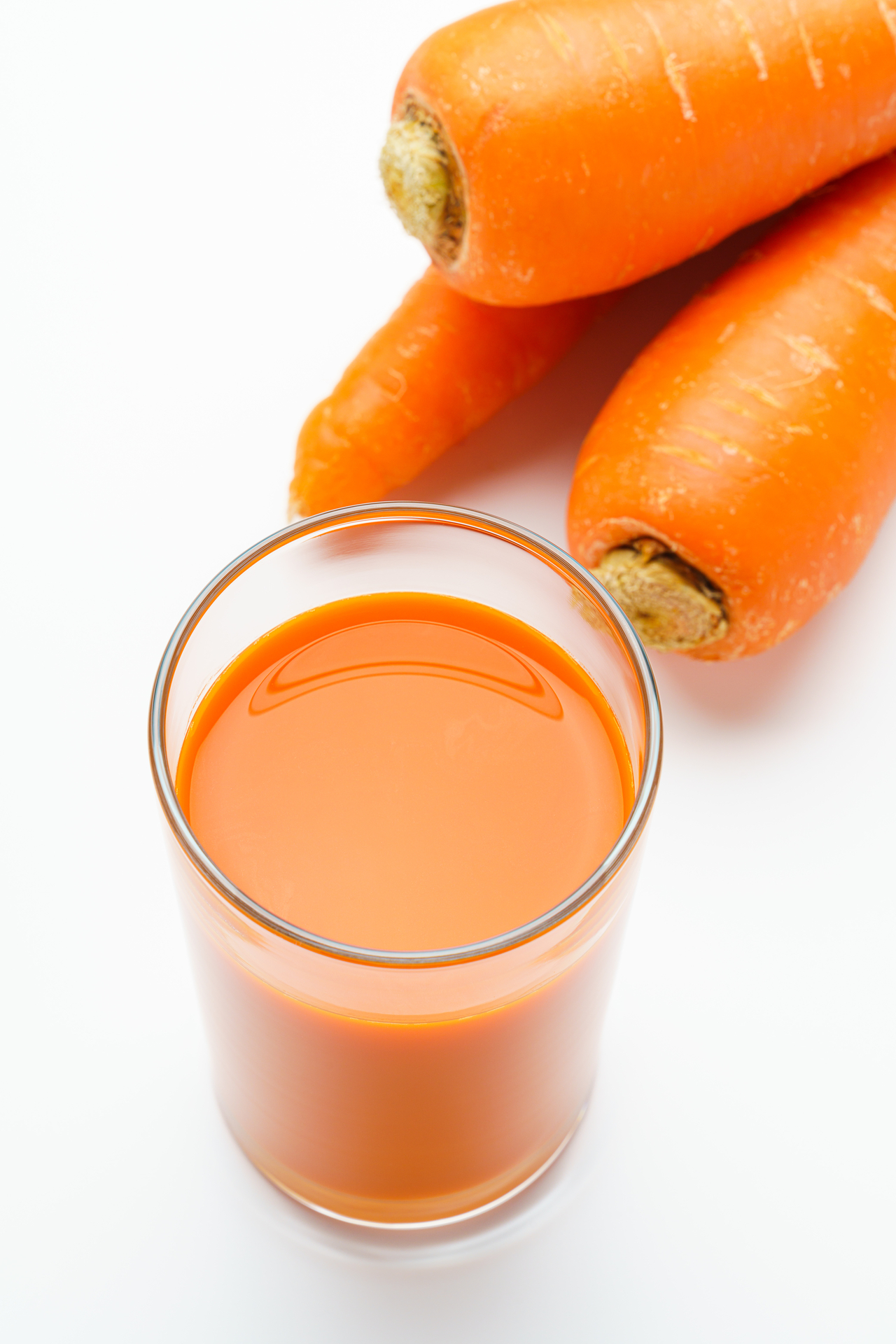
Why does this difference occur? The research team pointed to the physical breakdown of carrots' tough fibrous structure during the juicing process. Beta-carotene trapped within the plant tissue of raw carrots is more likely to be released and made available for digestion and absorption once that structure is disrupted by juicing.
The team concluded that fresh carrot juice, by releasing beta-carotene more readily than raw carrots, can serve as a more effective form of consumption for improving short-term bioavailability. The findings suggest that on a busy morning, it is worth thinking not only about how much to eat, but about what form to eat it in.
"What stands out in this research is that a significant difference in blood bioavailability appeared even when the same amount of beta-carotene was consumed — the only variable was the form," Park said. "It appears that the juicing process broke down the fibrous structure of the carrots, allowing beta-carotene to be released and absorbed more easily."
Park added that while eating a wide variety of vegetables and fruits in sufficient quantities remains the foundation of good nutrition, doing so realistically during a busy morning can be difficult. "In such cases, juicing fresh raw vegetables and fruits without added sugar — rather than reaching for commercial juices laden with additives — can be a convenient way to take in the nutrients they provide," she said.
The study, titled "Comparative bioavailability of β-carotene from raw carrots and fresh carrot juice in humans: a crossover study," was published in the international nutrition journal Nutrition Research and Practice.
kty@heraldcorp.com